Loading document...
79 Parliament Street Ramsey Isle of Man IM8 1AQ
Tel 01624 810810 Fax 01624 810811 www.csarc.im [email protected]
architects
development consultants interior designers project managers planning supervisors
Connerstone Architects is a trading name of Cornerstone Architects Limited. Incorporated in the Isle of Man No. 32225 VAT Reg No: 000 9588 89
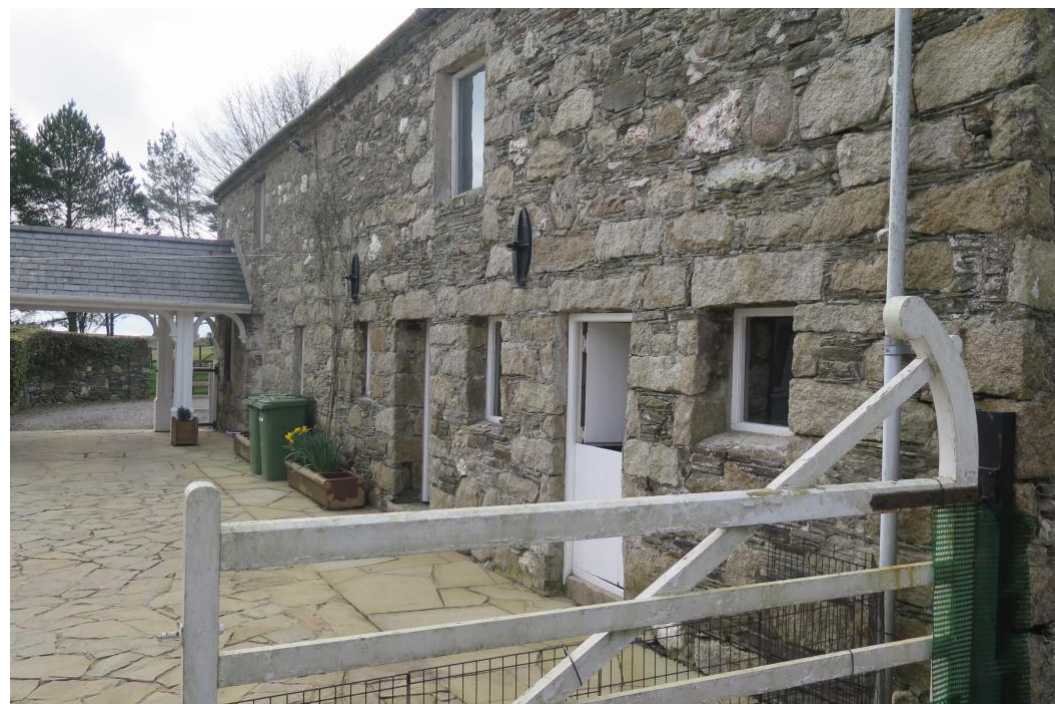
1.1 Ballamoor Farm, formerly known as Ballajeraie Farm is an amalgamation of a 1980's new build replacement dwelling and a traditional two storey barn. The major development works were carried out in late 1985 and through 1986 by the previous owner. 1.2 The property is located on the south of the Mullinaragher Road which links the Moaney Road with the A26 St Marks to Ballasalla Road. 1.3 The buildings on site are a single dwelling of both single and two storey accommodation linked to a two-storey barn and a detached implement shed located along the driveway to the West. 1.4 The dwelling and linked buildings are identified on the 1860's maps of the area and identify as Ballajeraie. {{image:289439}} 1.5 The house is of modern construction with a good quality of finish throughout. The barns have over recent years and architects development consultants interior designers project managers planning supervisors
due to redundancy, since the erection of the implement shed, fallen into a state of repair which requires structural attention and refurbishment to ensure they are preserved.
Photos 1-9 show the current buildings in the context of the setting. {{image:289441}}
Photo 1
Photo 2
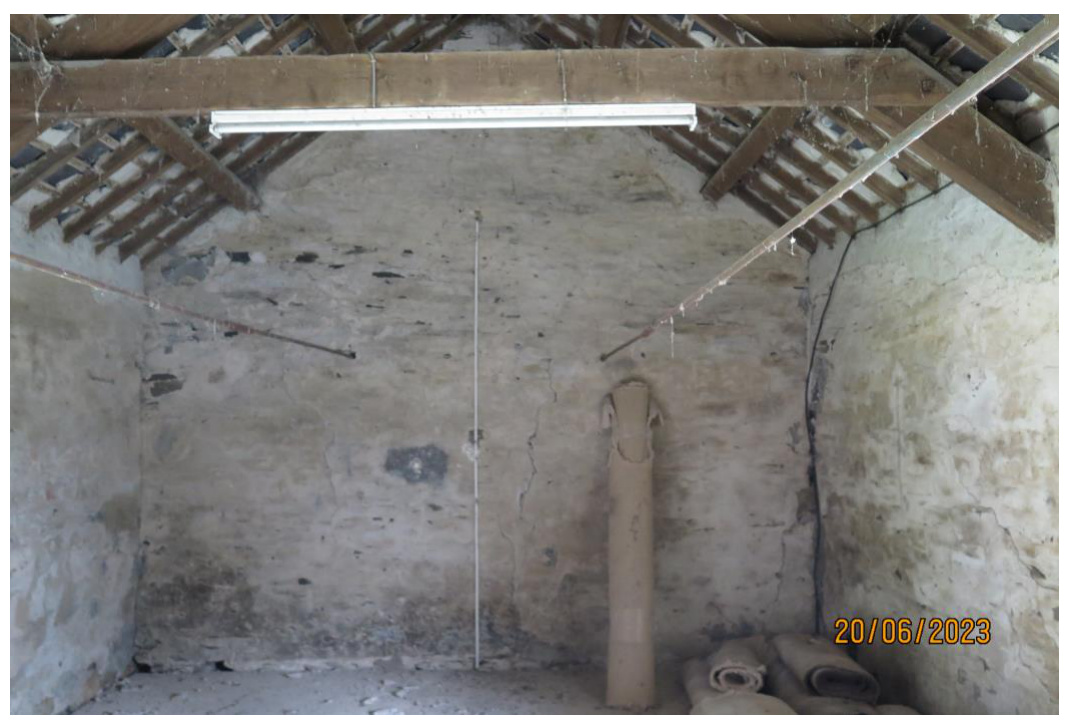
Photo 3
Photo 4
architects development consultants interior designers project managers planning supervisors
Comerstone Architects is a trading name of Comerstone Architects Limited Incorporated in the Isle of Man No. 32225 VAT Reg No: 000 9588 89
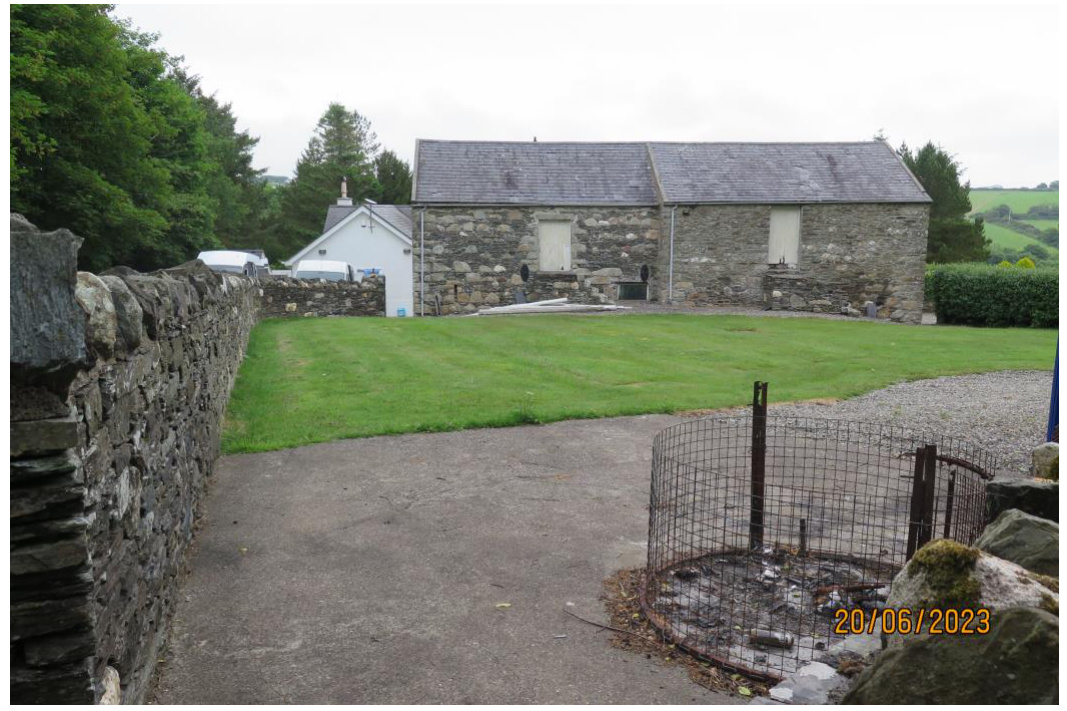
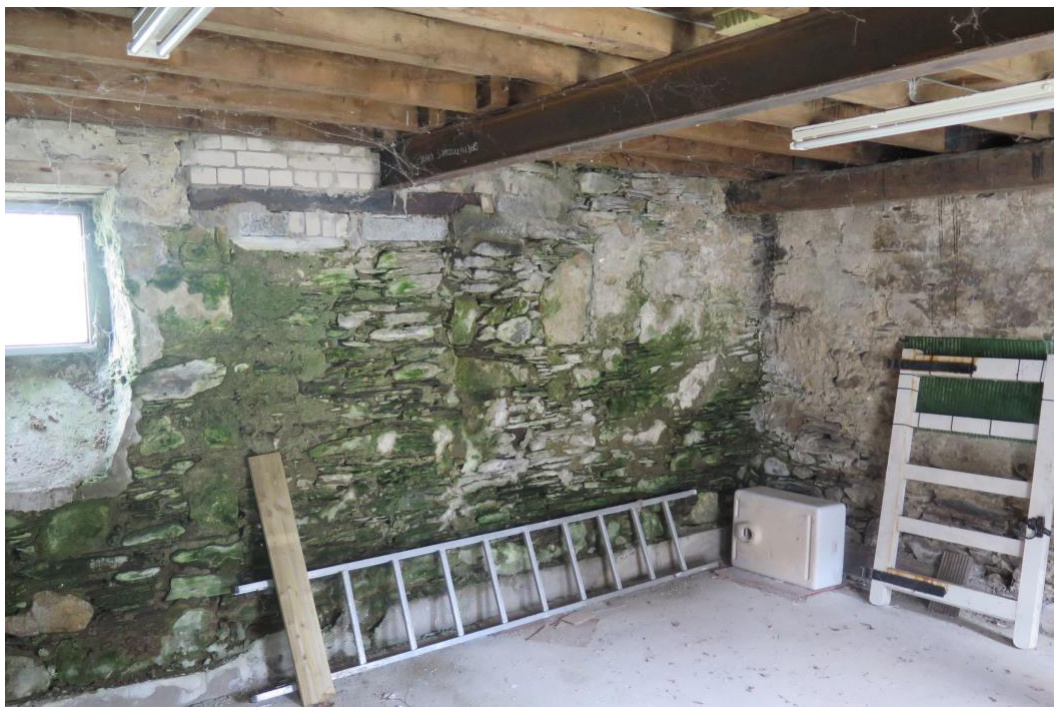
Photo 5
Photo 6
architects development consultants interior designers project managers planning supervisors
Comerstone Architects is a trading name of Comerstone Architects Limited Incorporated in the Isle of Man No. 32225 VAT Reg No: 000 9588 89
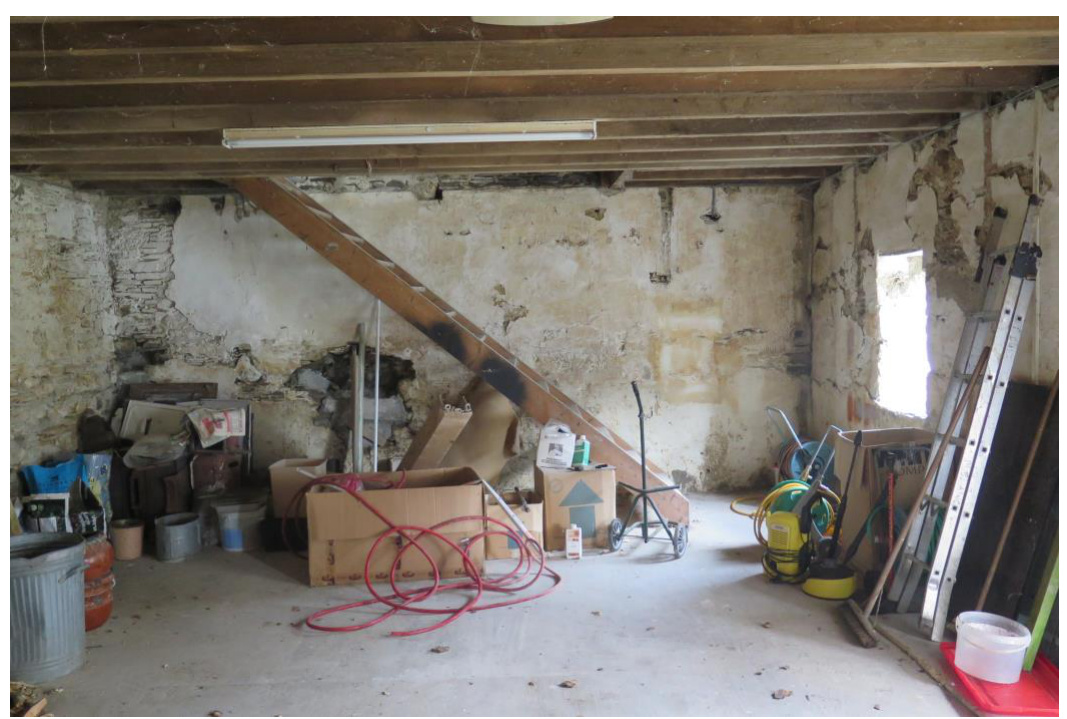
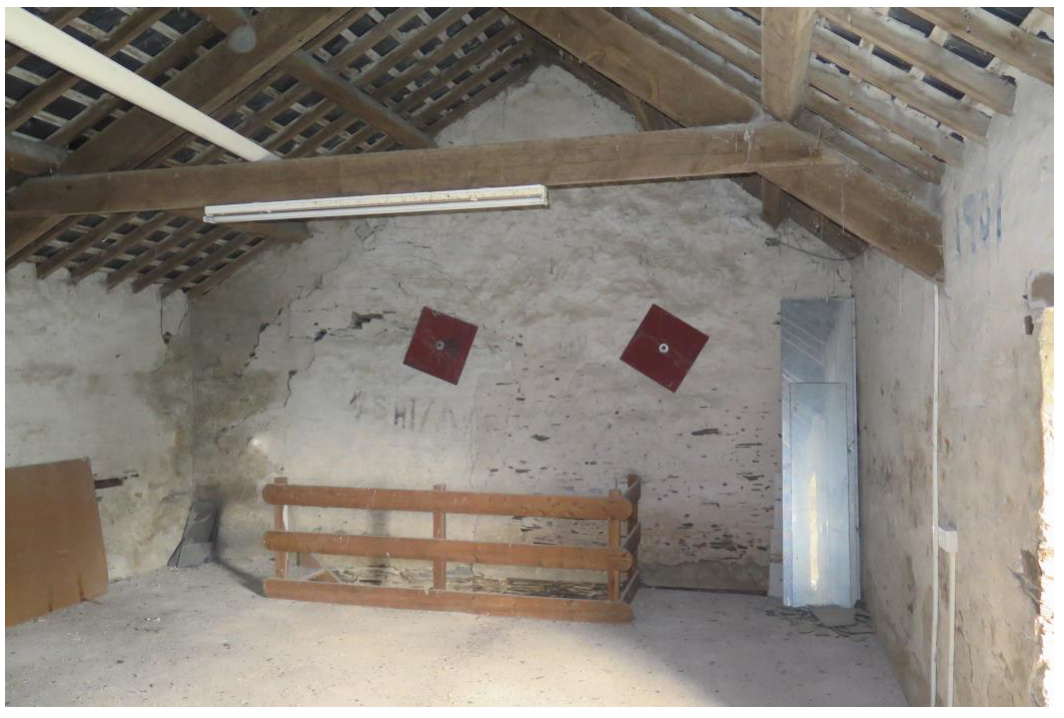
Photo 7
Photo 8
architects
development consultants interior designers project managers planning supervisors Comerstone Architects is a trading name of Comerstone Architects Limited. Incorporated in the Isle of Man No. 32225 VAT Reg No: 000 9588 89
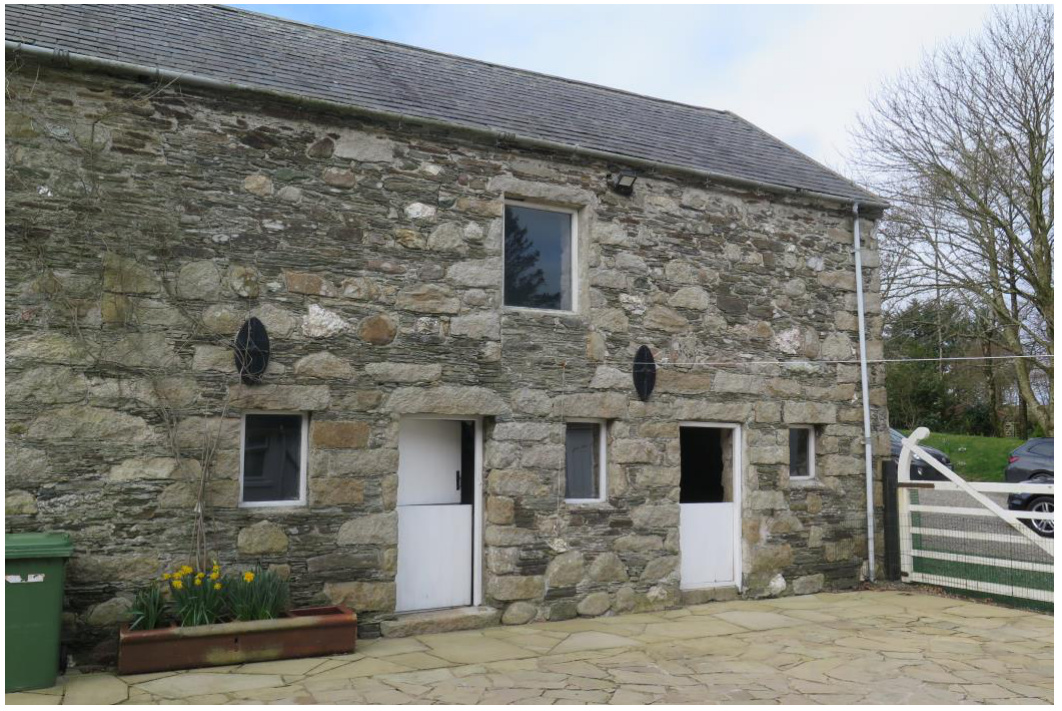
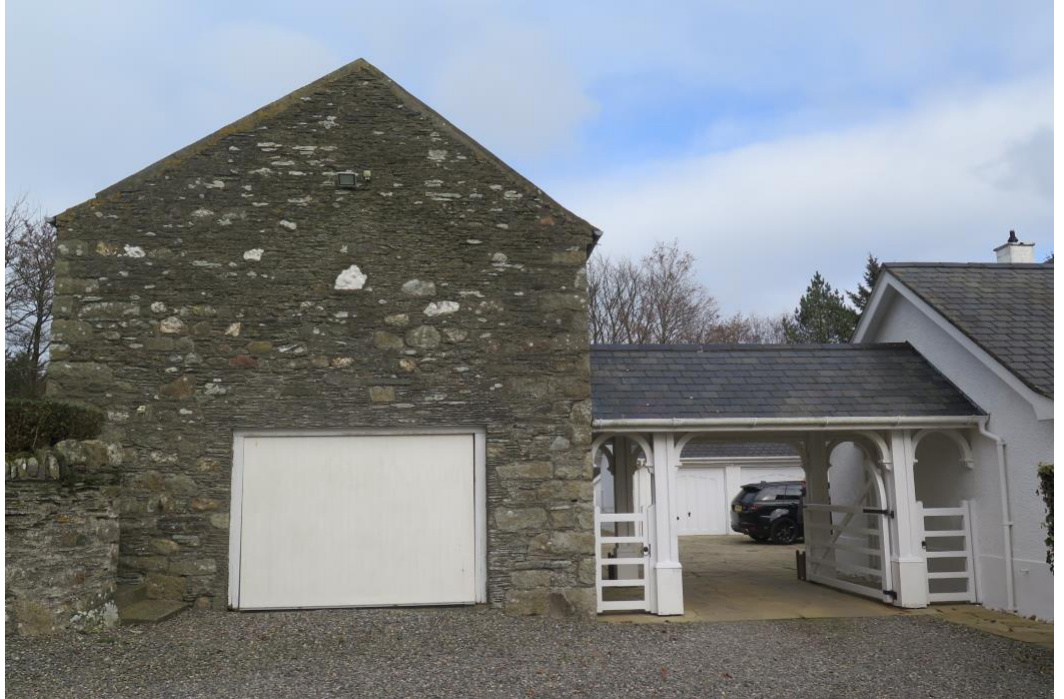
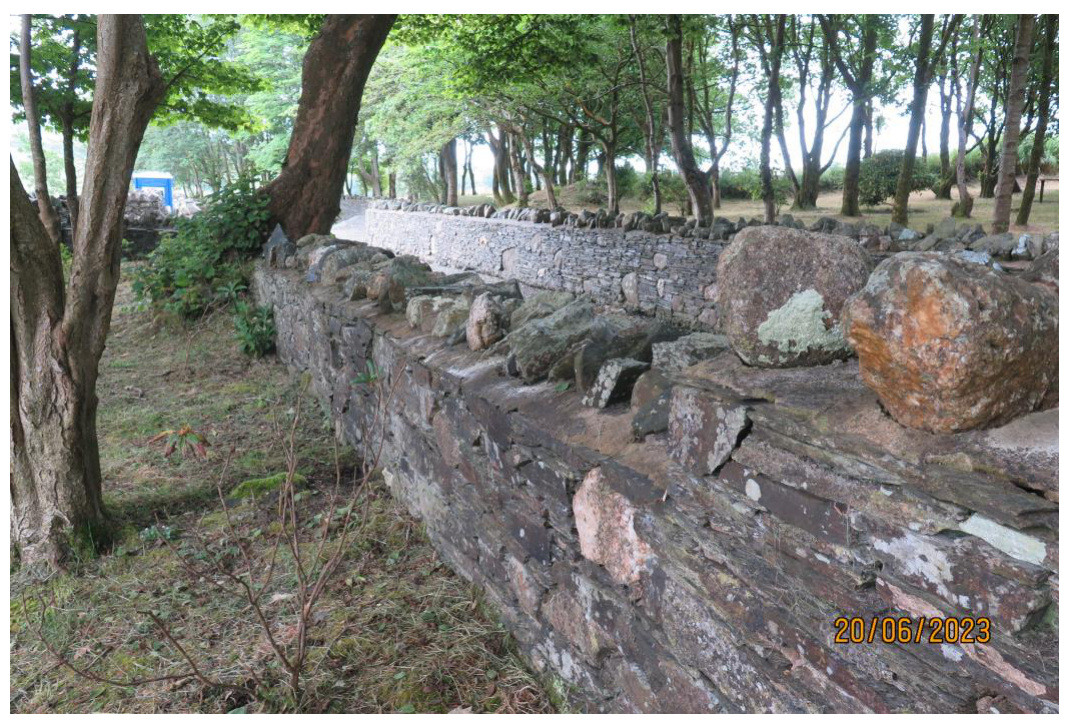
Photo 9 1.6 Access to the house is via a gravel drive which is bounded on both sides by a traditionally laid Manx stone wall. Photos 10 and 11 show the form and heights and enclosure formed by the walls.
architects development consultants interior designers project managers planning supervisors
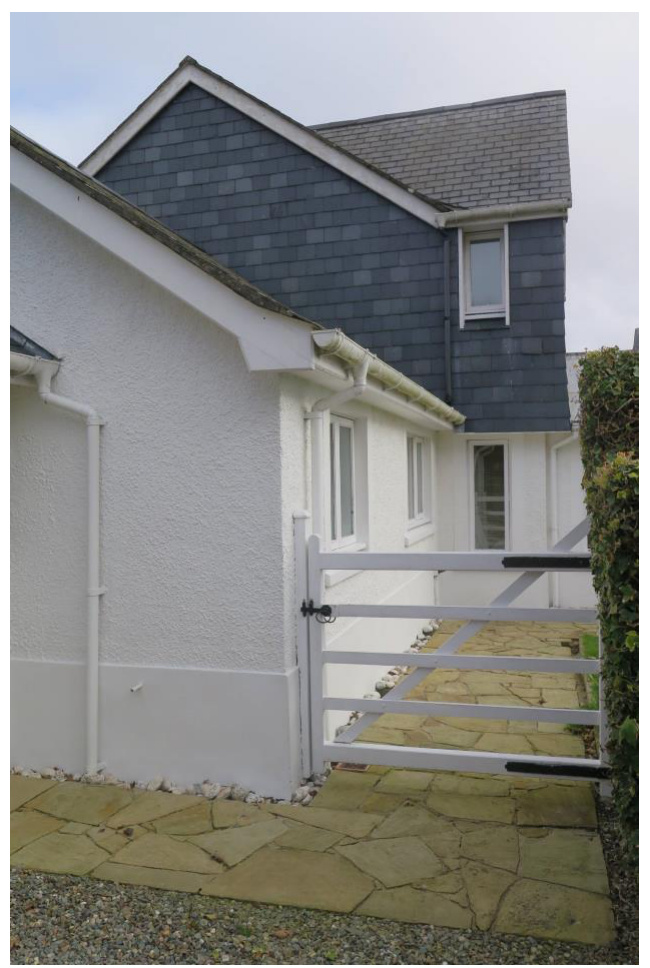
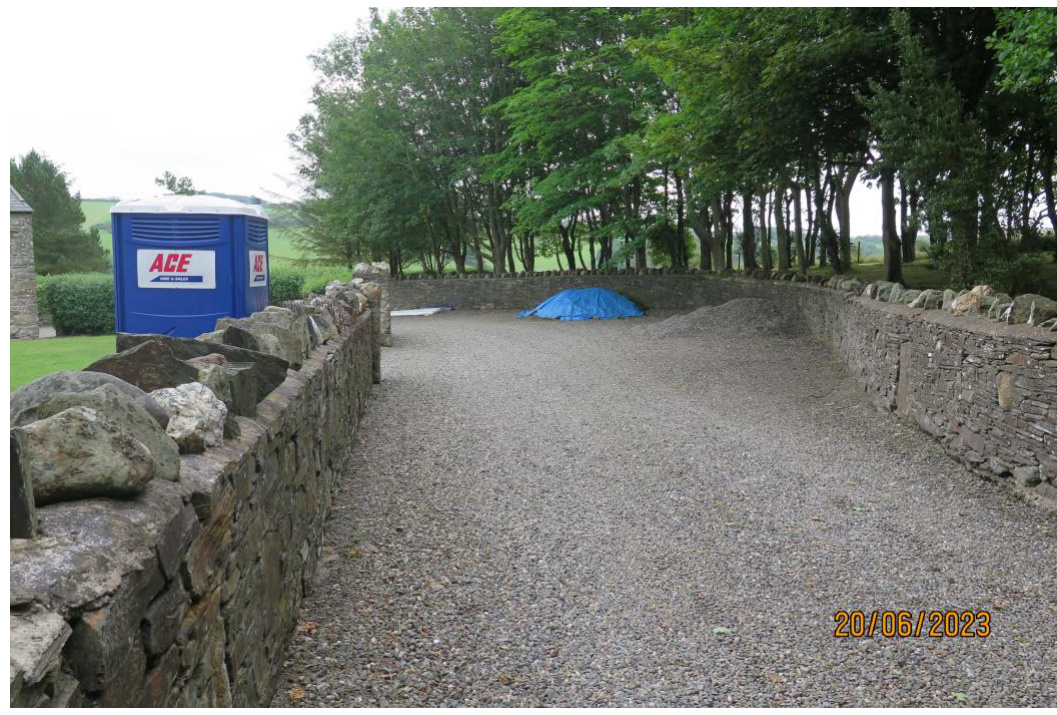
Photo 10
Photo 11 1.7 Need - The joint applicants have a need for additional living accommodation comprising a larger office area to allow working from home and managing significant business interests remote from the office. This is carried out by the applicant directly. 1.7.1 The joint applicants require a study/hobbies room to allow effective daily management of the house and family matters whilst also allowing space for hobbies. 1.7.2 The space for these activities results in the loss of a bedroom with en-suite facilities at ground floor level. 1.7.3 The replacement of the lost bedroom space and additional bedrooms are required to allow the close family to meet up on a regular basis. 1.7.4 The additional living accommodation is required to ensure independence of the family when in residence. The satellite kitchen is required to enable small meals and teas/coffees to be made without disturbing the applicant during the working day. The accommodation is all ancillary and fully integrated with the main dwelling. architects development consultants interior designers project managers planning supervisors
1.7.5 The proposed garden room is to be located to the southwest of the principal accommodation as the house is oriented with the primary living rooms facing north. These proposals allow for this to be complemented with a south and west facing living room to maximise available daylight. 1.7.6 All of the additional space is required to allow the applicant to remain in the property which has significant memories from when their family were growing up. They do not wish to relocate, and the plot is significant. The linking of the buildings together represents an opportunity to bring the barns back into use. 1.7.7 Amount - Gross external floor area of house and barns as existing $=744.85 \mathrm{sq} \mathrm{m}$. Proposed gross external area of house and barns with extensions 983.2 sq m . Representing an increase of 238.35 sq m or an increase of $32 \%$. 1.8 There are registered tress and groups of trees to the Northeast of the site. Identified on Figure 1 by the orangecoloured hatch.
Figure 1. 1.9 The field gazetteer recognises the area as a residential dwelling set in agricultural land. architects development consultants interior designers project managers planning supervisors
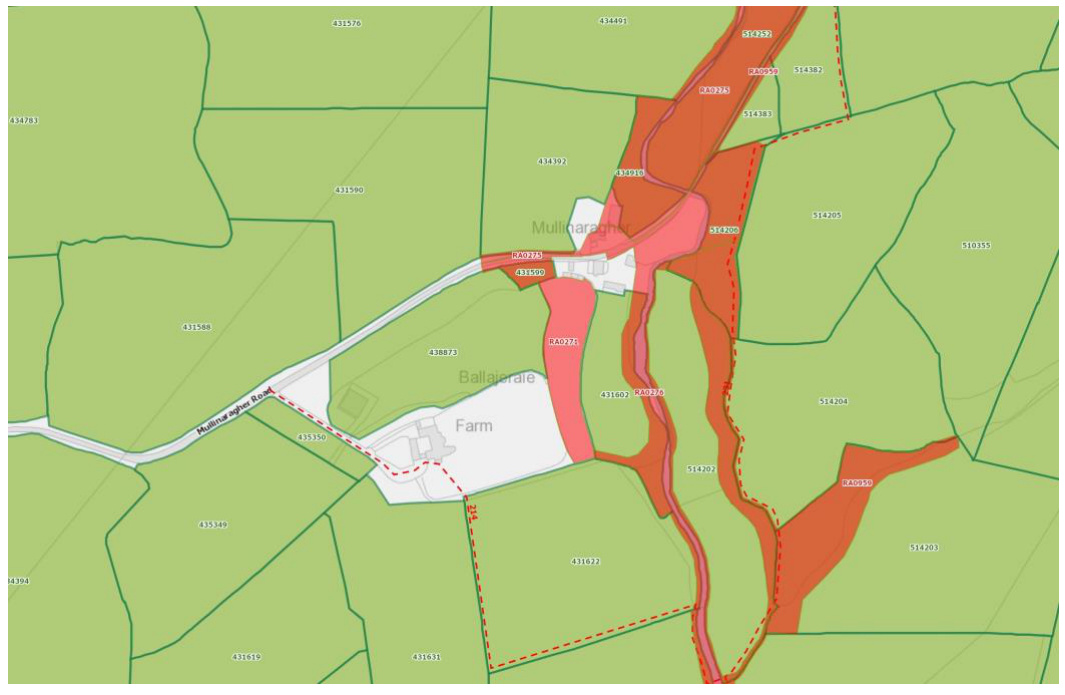
1.10 There is a Public Right of Way Ref 214 which runs adjacent to the property. Identified on Figure 1 by the red dotted line. It should be noted that this is NOT the correct location and is more accurately as depicted on the Island Infrastructure map shown here as Figure 2.
Figure 2.
architects development consultants interior designers project managers planning supervisors
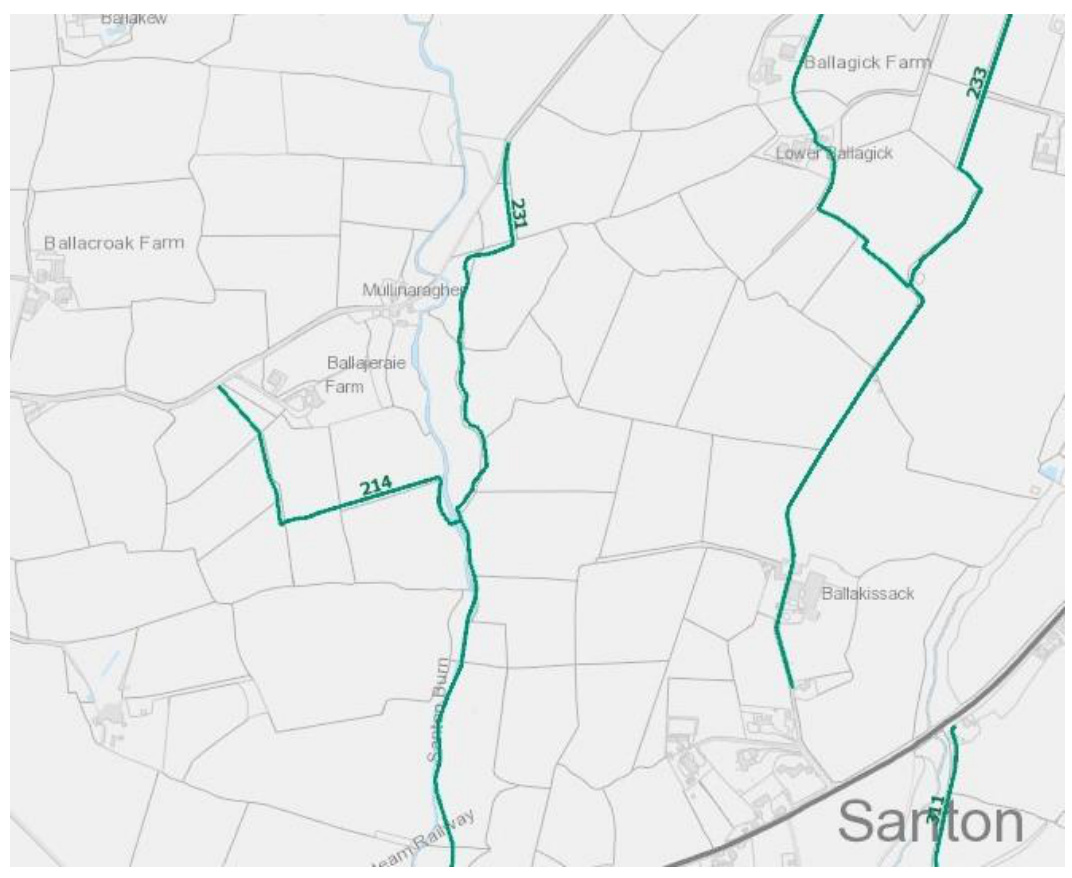
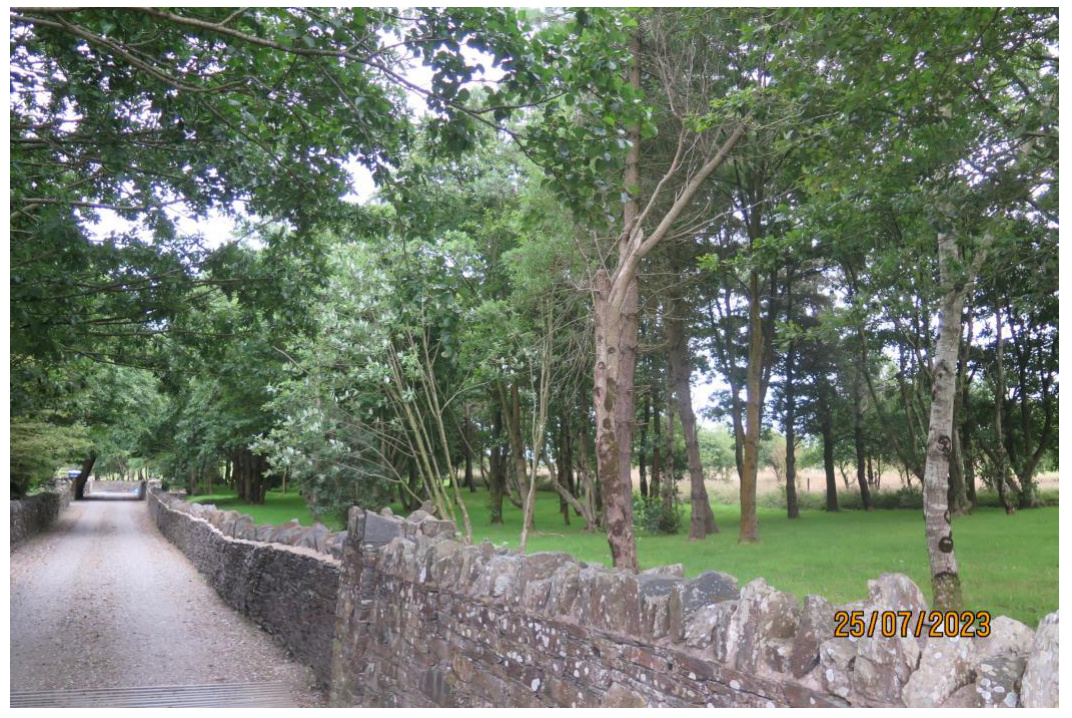
Photo 12 The PROW is separated from the farm be a mature tree copse, walls, and banks and as such public views into the site are limited. 1.11 The fields to the South and West are generally used for grazing and gently fall from South to North.
2.1 The house was erected under planning permission ref 85/00542/B - partial demolition of barn complex and construction of new farmhouse. 2.2 Since that date there has been further applications:
2.3 It is necessary to consider P/A 06/01492/B Conversion of existing stone barn into living accommodation in more detail architects development consultants interior designers project managers planning supervisors
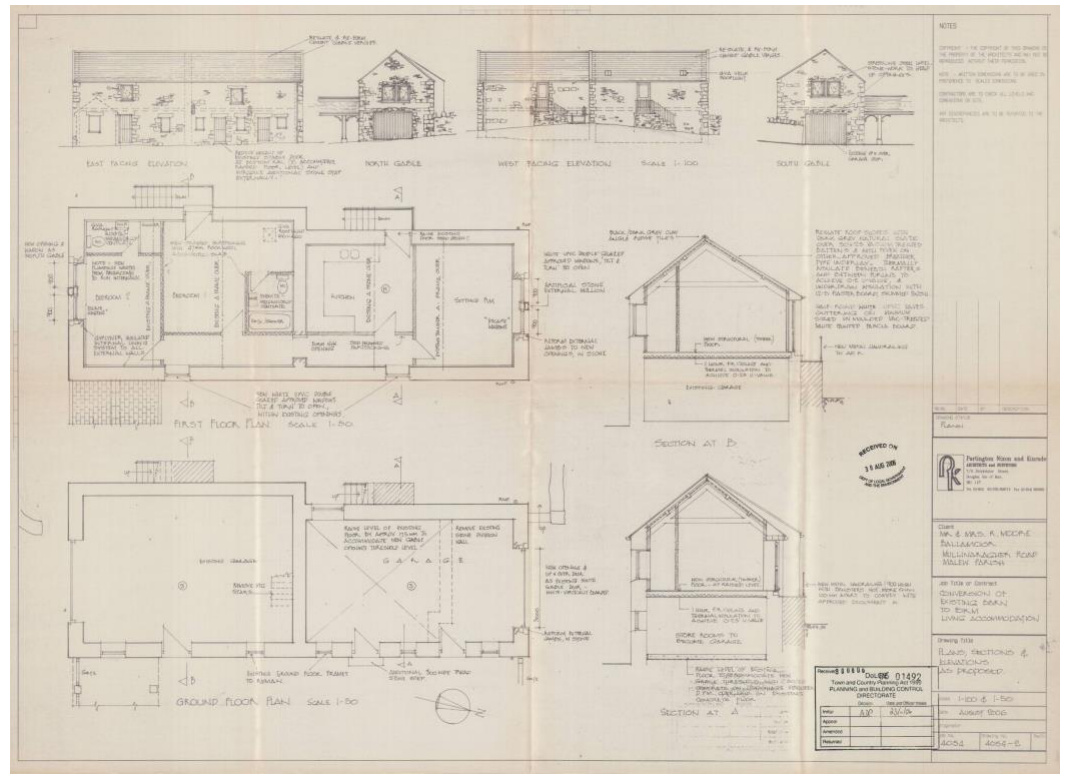
as the principle of development was firmly established by this approval. The extract below is a copy of the planning approval notice (TEXT) and a copy of the approved drawing setting out the conversion proposals. Isle of Man Town and Country Planning Act 1999 The Town and Country Planning (Development Procedure) Order 2005
Partington Nixon \& Kinrade 7-9 Drinkwater Street Douglas IM1 1AT In pursuance of powers granted under the above Act and Order the Department of Local Government and the Environment does hereby APPROVE the following application made on behalf of: Name: Mr \& Mrs R Moore
Proposal: Conversion of existing stone barn into living accommodation at: Ballamoor Ballajeraie Mullinaragher Road St Marks Ballasalla Isle Of Man IM9 3AQ which was considered on 23 November 2006, subject to compliance with the conditions specified below.
Date of Issue: 7th November, 2006
1 The development hereby permitted shall commence before the expiration of four years from the date of this notice.
2 This permission relates to the conversion of the existing barn to living accommodation as shown in drawings reference 4054-1, -2, -5P and -LP all received on 30th August, 2006.
3 The new accommodation must be used only as such ancillary to that available in the main house, Ballamoor.
architects development consultants interior designers project managers planning supervisors
4 Notwithstanding the provisions of the Town and Country Planning (Permitted Development) Order 2005 (or any Order revoking or re-enacting that Order) - none of the following developments - extensions, greenhouses, walls, gates, fences, garden sheds, summerhouses, flag poles, decking, garages, or tanks for the storage of oil for domestic heating shall be erected in association with the proposed accommodation (other than those expressly authorised by this approval.)
2.4 We have sought a pre-application consultation and a response was received from duty planner Lucy Kinrade in directly relating to a request to replace the existing barns with a new build replication. The advice received has been heeded and the proposal retains the existing barns with structural alterations.
3.1 As part of the preparation of the planning application third party information to inform the process has been provided by:
architects development consultants interior designers project managers planning supervisors
The Ballamoar AIA Report (PDF) - the main report. Drawing TS-260623-TD_revA (PDF) - tree constraints plan. Group 1 detail.
Drawing TS-260623-GR_revA (PDF) - tree constraints plan - Groups.
Drawing TR-200723 (PDF) - tree removal plan. Drawing TI-200723 (PDF) - tree impact plan. Drawing OTP-200723 (PDF) - outline tree protection plan. is provided as a principal application submission document to inform the process.
To summarise, there are no trees registered under the Isle of Man Tree Preservation Act 1993. It is proposed to remove 14 Cat C trees and 1 Cat $U$ tree all which form part of a group. There are 2 dominant sycamore trees with all others being codominant and subdominant trees. There is no proposal to remove any registered tress.
The disturbance of the ground will be minimised using geocell products for the new pathway and protective fencing as identified will be provided during the works.
Additional mitigation planting is carried out on a maintenance basis by the applicant and as part of an ongoing continuation programme.
architects development consultants interior designers project managers planning supervisors
To summarise, a desk study and protected species survey (nesting birds) were undertaken to assess the suitability of the site to support nesting birds. This is in relation to plans for a new garage and alteration to the driveway, a link extension between house and barns and extension and landscaping to the rear of the barns. This report offers advice on 'no net loss' of biodiversity (and potentially 'net gain'), measures to avoid offences under the Isle of Man Wildlife Act 1990 (as amended), required mitigation and any need for further survey work.
Key constraints and mitigation are: Evidence of nesting Barn Swallow. Timing of works. Compensatory nesting provision. Lighting plan with minimal impact on birds
It further advises at section 5 of discussion points. 5.1 The main house has limited potential to support nesting birds but has a couple of suitable niches for House Sparrow. These niches are also used by bats and are to be protected during any work. The barn has potential to support nesting birds within internal and exterior wall cavities, roof trusses and ceiling beams. 5.2 There is evidence that the barn has been used by nesting birds, although no current nesting activity was noted during the survey. A Barn Swallow nest was found on the roof beams and a nest recalling Robin or Pied Wagtail was found in an exterior wall cavity. architects development consultants interior designers project managers planning supervisors
5.3 The trees along the northern edge of the site and within the garden have the potential to support nesting birds.
4.1 Flood Risk Assessment. Cornerstone Architects have reviewed the Department of Infrastructure Flood Maps and the colour defined identifies a surface water flood risk of low likelihood. architects development consultants interior designers project managers planning supervisors
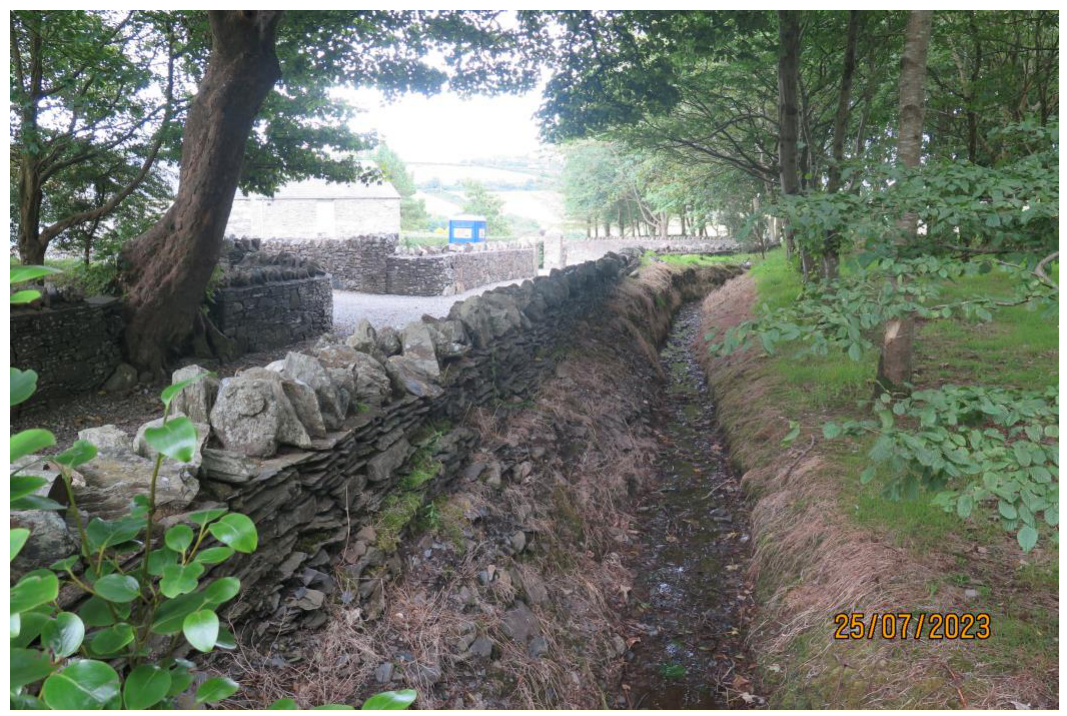
The applicant having lived at the property for more than 20 years is aware of the patterns of storm water and has historically introduced a drainage ditch to the south of the access driveway to protect against events of localised rainfall flooding. This has been successful and there is no recorded flooding in the area.
architects development consultants interior designers project managers planning supervisors
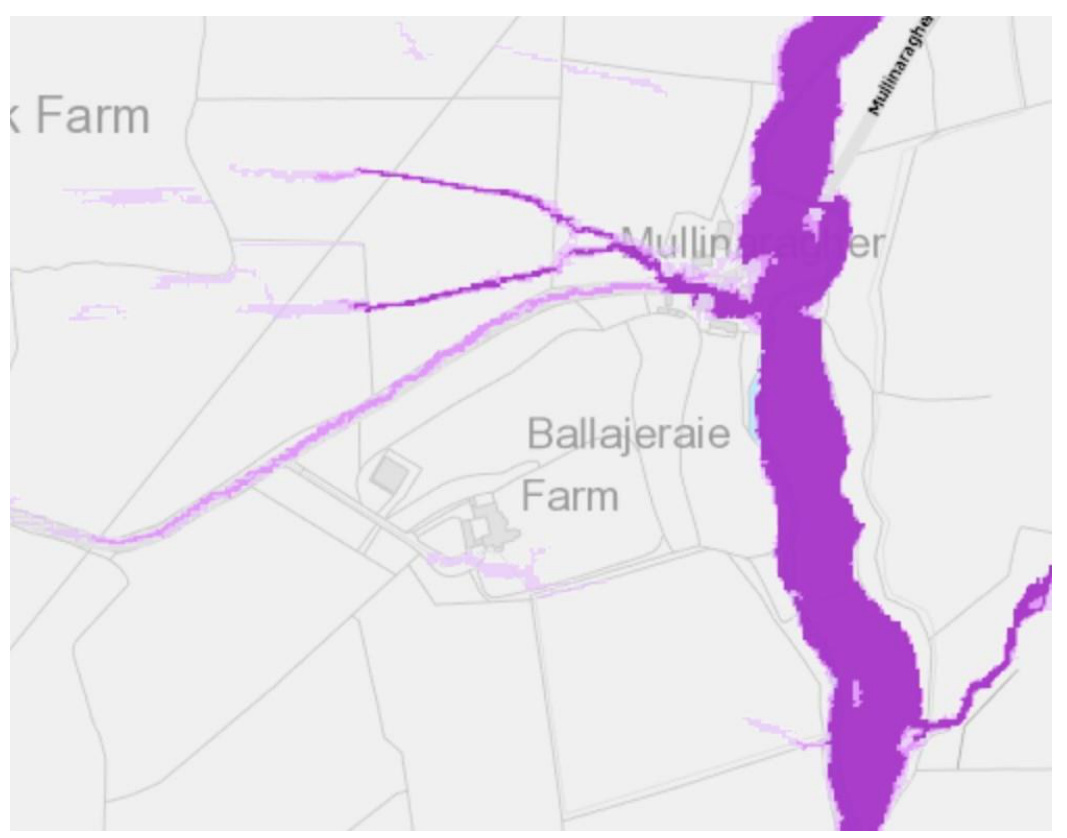
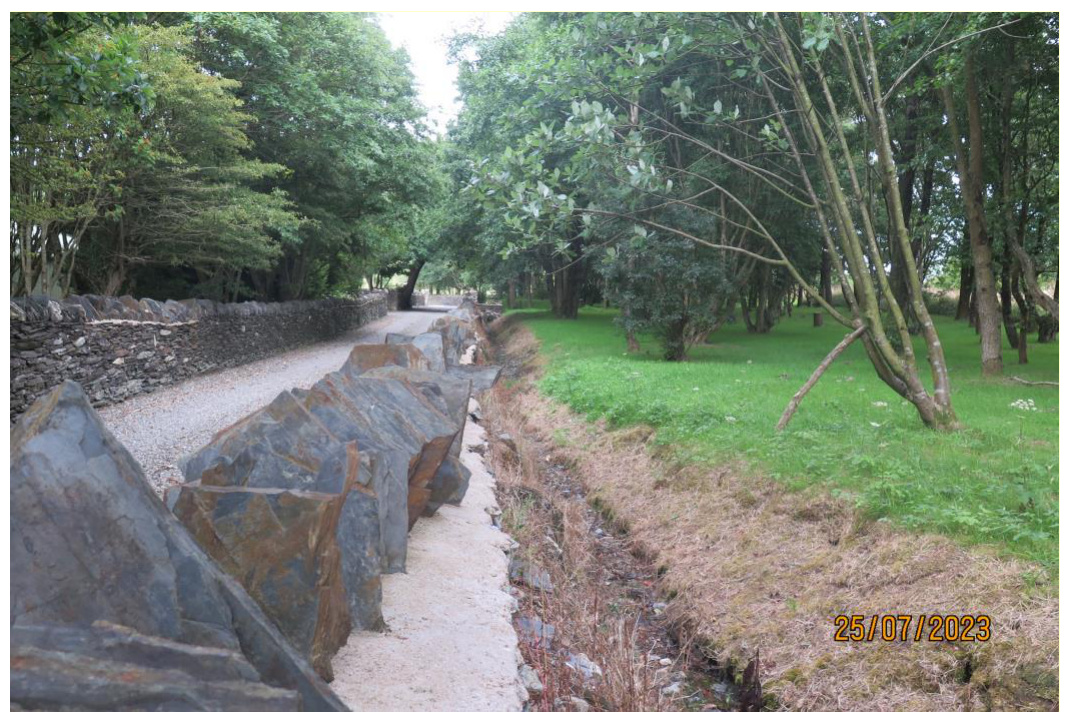
Photo 13
Photo 14 As part of these works it is proposed to introduce a storm water drain to the south of the proposed extension within the walled garden. It is also proposed to introduce a channel drain to the front of the new garage both discharging into the existing drainage ditches. We do not consider these to be likely to impact surrounding areas and conclude that the risk of flooding is minimal. Should it prove necessary, as part of any future land management strategy the field drainage could be extended/improved although it should be noted that as there are no current issues no such works are proposed. 4.2 Landscape. The applicant enjoys their woodland setting with manicured lawns and gardens. The works require removal of a concrete hardstanding and large gravelled area within the walled garden, this area will receive topsoil and turf and it is proposed to reinstate any damaged lawned areas within the area and introduce domestic planting to the resultant bank adjacent to the sunken garden. This will be carried out by the gardener in association with applicant requests, it is not architects development consultants interior designers project managers planning supervisors
considered that a landscape proposal is relevant or appropriate in this case. 4.3 Highway safety. The proposed works are to create additional living accommodation on a residential property. The primary residents do not change and theoretically the number of visitors will be as enjoyed currently. It is acknowledged that for holiday periods and special occasions there may be more use of the access. This is not considered to be extraordinary or indeed represent any change on the safety of the access or to other highway users. 4.4 Planning Pre-App. We submitted the draft proposals to the department for pre-app advice and received a comprehensive response from planning officer Lucy Kinrade. The response is embedded in full for information. Italics are our emphasis.
I see there are a number of works proposed relating to an existing dwelling and a rural building. As you will know all development is assessed against the established policies of the Strategic Plan. HP11 states that rural buildings may only be converted if they meet with the listed criteria within HP11. HP11 strictly states that any rebuilding or replacement of rural building will not be permitted.
HP11, HP15 and PC3/91 contain criteria on sensitive works to traditional buildings and how to best to alter/extend them. Sometimes contrasting modern extensions can be accepted but size, scale design and massing is important and must remain subordinate.
HP16 sets out criteria in any extensions to non-traditional buildings. As it stands based on the information available and the policy tests, I would struggle to first support the proposals due to the principle of demolishing the rural building and its rebuilding. I also have some reservations about the size and scale of large extensions not being subordinate, whilst there is perhaps some flexibility to extensions to non-traditional properties, the culmination of significant works can sometimes tip the balance, so it would be really important architects development consultants interior designers project managers planning supervisors
as part of any application to address this in a supporting statement supporting your proposals.
Whilst I appreciate the above is not the news you were maybe hoping for, I hope it helps to set out the matters of the proposal and how such an application for that proposal might be considered.
I note your second email sent yesterday, please be minded that we are being pressured to deal with current planning applications over pre-app responses, so while we try to get back to people within 10 working days, it can take longer so please be mindful of this, so the sooner you send enquiries the better for you and your clients.
Best wishes Lucy
Planning \& Building Control Directorate (DEFA) 4.4.1 To identify the constraints the policies referred to are quoted in full together with the supporting text in the Isle of Man Strategic Plan 2016:
8.10.1 Throughout the countryside, there are examples of buildings which are no longer suitable or needed for their originally intended use, but which are of sufficient quality or interest to warrant retention and re-use. 8.10.2 Conversion of such buildings into dwellings can make a useful contribution to the housing stock, ensure retention of our built heritage, and improve the appearance of what might otherwise become derelict fabric. The following policy is therefore appropriate:
Policy 11: Conversion of existing rural buildings into dwellings may be permitted, but only where: (a) redundancy for the original use can be established; (b) the building is substantially intact and structurally capable of renovation; (c) the building is of architectural, historic, or social interest; (d) the building is large enough to form a satisfactory dwelling, either as it stands or with modest, subordinate extension which does not affect adversely the character or interest of the building; (e) residential use would not be incompatible with adjoining established uses or, where appropriate, landuse zonings on the area plan; and architects development consultants interior designers project managers planning supervisors
(f) the building is or can be provided with satisfactory services without unreasonable public expenditure.
(a) where practicable and desirable, re-establish the original appearance of the building; and (b) use the same materials as those in the existing building.
Permission will not be given for the rebuilding of ruins or the erection of replacement buildings of similar, or even identical form.
Further extension of converted rural buildings will not usually be permitted, since this would lead to loss or reduction of the original interest and character. 8.10.3 Permission will be given in certain circumstances for the reestablishment of residential use where there is an abandoned dwelling, since such dwellings can sometimes have a negative impact, usually arising from the sense of dereliction and dilapidation.
As there is a general policy against development in the Island's countryside, it is important that where development exists, either in an historic or recently approved form, it should not, when altered or extended detract from the amenities of the countryside. Care therefore, must be taken to control the size and form of extensions to property in the countryside. In the case of traditional properties, the proportion and form of the building is sensitively balanced and extensions of inappropriate size or proportions will not be acceptable where these destroy the existing character of the property. In the case of non-traditional properties, where these are of poor or unsympathetic appearance, extensions which would increase the impact of the property will generally not be acceptable. It may be preferable to consider the redevelopment of non-traditional dwellings or properties of poor form with buildings of a more traditional style and in these cases, the Department may consider an increase in size of the replacement property over and above the size of the building to be replaced, where improvements to the appearance of the property would justify this.
Policy 15: The extension or alteration of existing traditionally styled properties in the countryside will normally only be approved where these respect the proportion, form and appearance of the existing property. Only exceptionally will permission be granted for extensions which measure more than $50 \%$ of the existing building in terms of floor space (measured externally).
Policy 16: The extension of non-traditional dwellings or those of poor or inappropriate form will not generally be permitted where this would increase the impact of the building as viewed by the public. 4.4.3 Reference is also made to Planning circular 3/91. 4.5 Housing Policy 11 - we submit that each of the criteria a)f) inclusive are met and therefore the application is supported by planning Policy. Further that a) and b) relating to 'such conversion must' are also met. The supplementary notes are acknowledged. 4.6 Housing Policy 15 - Strict application of this policy relates only to the extension to the main house and we submit that this is not a traditional property having been built in the mid 1980's using modern materials and styles popular at the time. The proposals do not exceed $50 \%$ of the existing building in terms of floor space. 4.7 Housing Policy 16 - If HP 16 is the governing factor we submit that the proposals are seen only from PROW 214 and then only via glimpses through the trees and small woods scheme which separate the site from the route. See photo 12 above the PROW is located beyond the trees to the right of the image. The extension is to the left and at a lower level, further screened by the walls. There is therefore no consequential harm to the visual impact of the proposals. 4.8 Planning Circular 3/91 in the context of this application is not relevant. 4.9 Consideration has been given to the advice received from the officer and the original dwelling materials are matched architects development consultants interior designers project managers planning supervisors
in the direct extensions with modern materials used in a reduced height ridge to link the house to the barns which will be finished to match existing with the stone repointed with lime mortar. 4.9.1 This treatment creates a separation between the old and the new and allows construction using sustainable methods incorporating modern methods of construction, improved insulation and reduced air leakage in the new works addressing climate change resilience matters. 4.9.2 It should also be noted that an on-going maintenance programme has recently upgraded the original windows to modern energy efficient alternatives. 4.9.3 There are limited opportunities to recycle existing materials however, where this can be achieved it will, for example the crushing of the concrete apron and use of the gravel within the walled garden and used in the backfill for the extensions. 4.9.4 The garage extension is what could be termed 'traditional' in that standard insulated cavity construction and an insulated pitched roof is to be used, a thermal retention benefit is proposed as the existing garage roof and walls are to be upgraded against heat loss during the conversion works. 4.9.5 The single storey modern extension within the sunken garden is designed and orientated to maximise daylight including large windows to allow winter sunshine to penetrate deep into the building. It is a garden room with a solid roof to allow use throughout the year. System built construction methods are being considered to reduce the number of wet trades in the process thus ensuring airtightness and quicker construction times. Large overhangs to the roof and increased architects development consultants interior designers project managers planning supervisors
insultation including triple glazed windows all add to the sustainability of the project. 4.9.6 The external walls within the barns are extensively realigned and lined to enable fully insulated solutions to be incorporated, coupled with the structural amendments and replacement roof structure, together with a new insulated concrete floor the full fabric is revisited thus reducing heat loss through each element. 4.9.7 A new, efficient heating system is being incorporated which will employ a building management system linked to all aspects of the installation. 4.9.8 Our client keenly enjoys the outdoors and its nature. They currently have installed several bird boxes, bat boxes and hedgehog hibernaculum at the property. It is proposed to add open bed Manx walling to enable lizards suitable refugia for shelter. 4.9.9 Engagement with the eco-policy team has ensured continued bat roosts are preserved and there is no intention to deviate from this strategy. Through discussion and agreement with the Manx Bat Group it is agreed that the louvred opening to the boiler room will have slots to allow bats entry into the room and a battened roost will be created along one wall. See drawing No CA-3267-002 for a typical detail. 4.10 We conclude that the policy requirement as referred to in the pre-app consultation is fully understood, the designs respect the intent of those policies and the proposals are congruous in the setting of the property. architects development consultants interior designers project managers planning supervisors
5.1 For the reasons set out in the detail contained in this statement we are satisfied that pre-application engagement has been carried out with relevant parties and that the residual information received from advice given has been incorporated into the detailed submission. 5.2 We submit that the principle of development as proposed is acceptable and that the design is of high quality, addresses constraints identified and mitigates issues raised by third party consultees. By virtue of the previous approvals given on the site, in particular P/A 06/01492/B Conversion of existing stone barn into living accommodation. we suggest that the principle of the works is accepted by the department and the matters of particular interest will relate to the proposals in the context of the existing property and whether the mitigation proposed is adequate. 5.3 During the application consideration we would appreciate an open dialogue with the appointed officer and the opportunity to address any clarifications required.
Copyright in submitted documents remains with their authors. Request removal
View as Markdown