SOC Sarah Corlett Tpc Appeal Rebuttal Statement on Behalf of the Applic
AP24/0034·10 pages·PDF
Appeals & Inquiry›Appeal Statement
2 of 5use ← → arrow keys
Loading document...
SOC Sarah Corlett Tpc Appeal Rebuttal Statement on Behalf of the Applic
APPEAL REBUTTAL SUBMISSION ON BEHALF OF THE APPLICANT IN RESPECT OF
24/00270/B - VARIATION OF OCCUPANCY CONDITION ON 84/00082/B TO ALLOW THE DWELLING TO BE LET TO NON AGRICULTURAL TENANTS, GUESTS AND MEMBERS OF STAFF, FOR TEMPORARY PERIODS WITHIN AN OVERALL PERIOD OF FIVE YEARS,
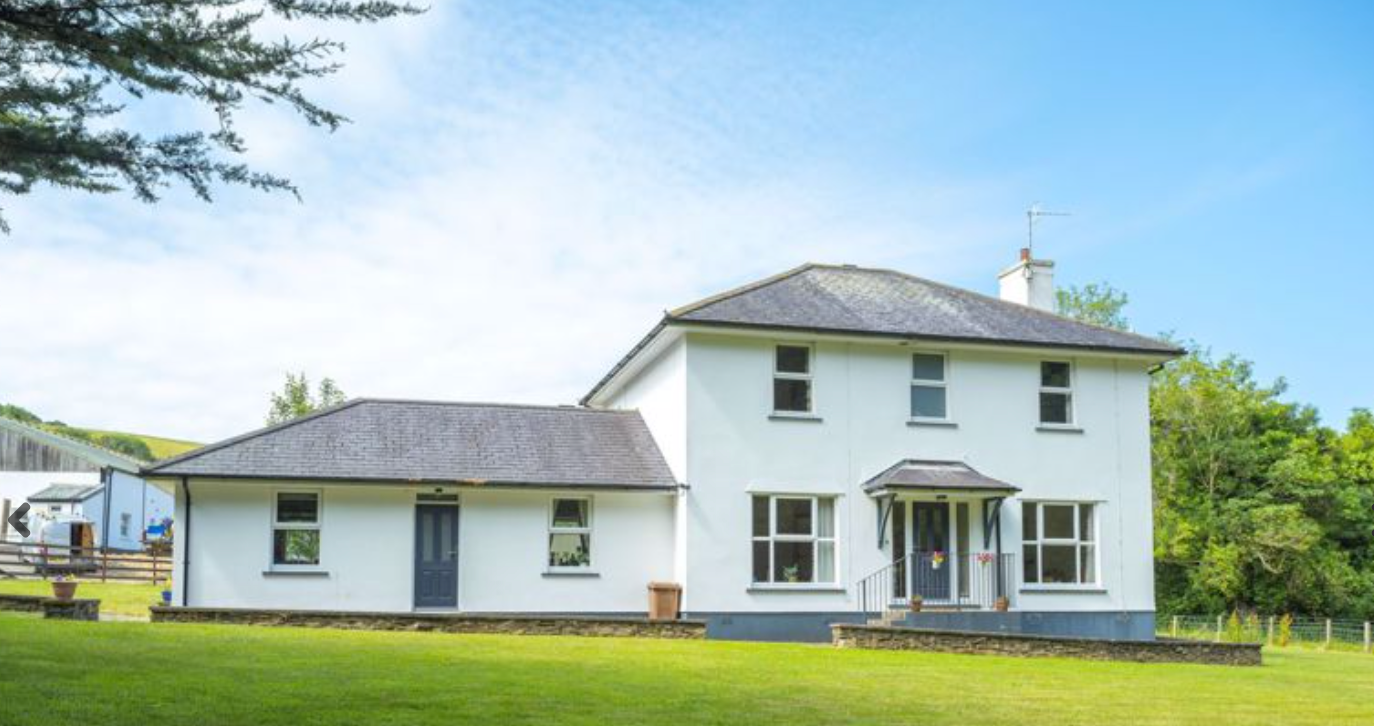
TRAMMAN, BALLAMANAUGH ROAD, SULBY, IM7 2HD
1.0 Introduction
1.1 I am Sarah Corlett, Director of Sarah Corlett Town Planning Consultancy Ltd, established on the Isle of Man in 2021. I have been instructed by the applicant, Ballamanaugh Properties Limited, in respect of the appeal against the refusal of 24/00270/B, to prepare a rebuttal statement which sets out our response to the officer’s appeal statement, which was the only submission to the appeal.
2.0 Officer’s appeal statement
2.1 The officer, in responding to our concern that he had failed to identify any changes that have happened since the previous decision to justify a different one, states that “it is vital to point out that since the initial approval, there has been no material planning changes which have arisen in terms of policy, which should result in more favourable dispositions to the proposal which at the time of approval was considered to be an approach that has never been tested on the island or the United Kingdom, nor has the applicants provided any evidence to justify further suspension of the occupancy condition for the dwelling.”
2.2 With respect, that does not respond to the point that was being made which was that there was no evidence which demonstrates any changes since the previous decision which would justify a different decision. We did not suggest that the test is whether there have been any changes since the previous decision which would justify a more favourable disposition towards the proposal, just a different decision.
2.3 The officer confirms that there has been no change in policy since that decision and we would submit that there has been no material change in the circumstances behind the application - there is no current need for the property in agricultural terms, nor has there been for the most recent three years. With no change in policy or circumstance, we would submit that there is no evidence why a decision different to that taken in 2014 should be taken here.
2.4 He goes on to state that “The fact that the property has been occupied by someone engaged in agriculture for most of the 10 year period points to the extent need for agricultural occupancy and a justification as to why the suspension of the condition would not be necessary in this case.”
2.5 We would submit that the period of agricultural occupancy throughout the approval period is irrelevant if at any time during that period the property was not required for agricultural occupation and we would say that it is particularly relevant that it is the last three years, which reflect the current position, that it was not needed, nor is there any evidence that it is likely to be required for agriculture in the imminent future.
2.6 The officer states that in his view “there is nothing within the application to demonstrate that there is no current short term or long term need for the dwelling to support those currently engaged in agriculture, or last engaged solely in agriculture; or a widow or widower of such a person, or any resident dependants. As such, it is not considered that sufficient justification has been demonstrated for the proposal to be allowed.” We would suggest that there is no evidence that the property IS needed for agricultural occupation, the farm having been on the market for some time and with no recent need for it. It is particularly relevant that there are a number of houses available in association with this holding and none is occupied by or required for an agricultural worker.
2.7 The farm is now under offer. The potential purchaser has liaised with us and has confirmed that they are unsure how they will operate the holding should their offer be accepted, and that there is currently no requirement for Tramman to be occupied by an agricultural worker. They are in support of the application to provide flexibility in the use of the dwelling and fully accept that should the need for Tramman to be occupied by an agricultural worker, this would occur as required. Should the operation of the farm by a future owner necessitate accommodation for an agricultural worker, there is no reason why Tramman would not be so used or indeed any of the other dwellings available to and associated with the holding some of which may be better sized or located according to any such need: why would a future owner rent or buy another agricultural property to satisfy that need when they own a property suitable for that purpose?
2.8 We would stress that the application is not seeking to completely remove the agricultural occupancy condition and the wording of the occupancy restriction approved previously, would require that should such a need arise, Tramman would have to be made available for an agricultural worker so we are struggling to see how there would be, as a result of the approval of this application, a failure to “protect available agricultural workers dwellings, with the goal to guarantee a continued supply of agricultural workers
dwelling to those engaged or last engaged solely in agriculture” as suggested by the officer.
2.9 The officer has helpfully provided details of the applications to which he referred in his original report, which illustrate current need for agricultural properties in the north of the Island. We would comment as follows:
22/00991/A and 24/00533/REM at The Lhen, Andreas.
21/00031/B - Ballavarry, Bernahara Road, Andreas
20/00675/B Ballacamaine Farm, Bride
19/00749/B - Loughan Farm, Jurby
19/00292/A Mount Karrin, Sulby Glen
17/00988/B - Orrisdale, Michael
14/01341/A and 17/003660/REM, Magher Grianagh, St Jude’s Road, Sulby
13/91022/A Ballanybaa, Blue Point
2.10 Before commenting specifically on these applications, all are on land owned by the respective applicants and all, we would suggest would prefer to have their own property built on land they already own rather than renting a property owned by others and some distance from their farm holdings. None of these farmers approached the applicant to see if any of their properties, particularly Tramman which has the agricultural occupancy condition attached, was available to rent to satisfy their need and no question was raised by the Department before approving them, to see if Tramman was available for occupation. The occupation of Tramman during the approval period was directly associated with the farming of the land around the dwelling, not a separate agricultural unit.
2.11 Commenting specifically on these applications:
22/00991/A - The Lhen, Jurby. The agricultural justification for this property, given by the applicant stated, “Residing on site is an essential part to observing stock and also ensuring their management, handling, wellbeing and the security around livestock, medicines, fuels, machinery is a priority” and also, “Scott and Bayleigh wish to build a new home on Ballalhen Farm rather than purchase a house in the vicinity for the reasons already sited above and also the cost implications.”
This site is 7 miles from Tramman.
21/00031/B, Ballavarry, Bernahara. This appears to be an application to replace an existing dwelling with one new one, resulting in no additional agricultural properties so do not understand how this demonstrates agricultural need relevant to the current application. In any case, the supporting information states, “the dairy herd is calving all year round, which is common practice for herds yielding 8000 litre per cow or more. The Ballavarry Herd are in this category. As a result there is a regular, high demand for labour to be onsite so as to monitor calving and fresh calved cows and their calves. Thus ensuring that the animals health and welfare is not compromised. Residing on site is an essential part to observing stock and also ensuring their management, handling, wellbeing and the security around livestock, medicines, fuels, machinery is a priority. The herd is milked twice a day, starting at 4.30am and finishing at 6.30pm.”
This site is 4 miles from Tramman and this application has yet to be determined.
20/00675/B - Ballacamaine Farm, Bride. The supporting information states that “the family wish to build a house on the farm so that the farmer’s son can live on site to assist with, and eventually take over, the running of the farm.” It goes on, “Residing on site will allow them to drive the business forward by increasing the livestock operation which will require an increasing amount of management and observation so as the health and welfare of the stock is not adversely affected...they have actively looked for suitable dwellings in the near by area but without much luck. There are tied farm workers’ dwellings within a 3 mile radius of Ballacamaine Farm but nothing available or within a farm worker’s price range...it is likely that he could construct a new dwelling for somewhere between half and two thirds of the price of purchase with reduced ongoing costs for maintenance and operation (heating etc). For the farming business, with a
considerable investment required it makes sound financial sense to build cheaper than buy off site and have improved cash flow to grow the business enabling everyone involved to have a wage. Residing off site brings both time and financial implications to the business which would likely limit the business growth. A likely consequence of not residing on site is that the suckler cows would have to be sold. Should the applicant not be able to reside on site at a cost-effective price then the farm is likely to decline further with the amount of agricultural activity continually reducing until the farm requires a significant investment.”
This site is 6 miles from Tramman.
19/00749/B - Loughan Farm, Jurby. This dwelling was permitted, despite the farm holding already having a farm dwelling which was the subject of an application for the agricultural occupancy condition being removed (which was ultimately refused). The supporting information with this application includes the statement that, “There is always the ongoing requirement to tend the livestock, avoid health hazards, continually improve animal welfare and site/animal security. Therefore an increased presence at the premises in walking distance of the farmyard is essential...trying to operate and grow this scale of farm from a distance in isolation will not work. To maintain the highest standards of annual welfare, it is essential that personnel are living permanently on site, making approval of the tied dwelling essential for the farms management and development”.
This site is just over 3 miles from Tramman.
19/00292/A - Mount Karrin Farm, Sulby Glen. This is the closest site to Tramman, being only just over a mile from the application site and was refused on the basis that it was not considered that there was sufficient agricultural need for the dwelling to justify the proposal. We would suggest that this decision supports our application in demonstrating that there is no agricultural need for Tramman as an agricultural dwelling.
17/00988/B - Orrisdale, Michael. This too was refused for lack of agricultural justification and is some 4 miles from Tramman.
14/01431/A - Magher Grianagh, St. Jude’s Road, Lezayre. The applicant stated that “it is essential to be on-site as to ensure the welfare of the animals - especially at times of kidding and rearing young pullets. Moreover this need will grown with the increase in size of the herd and flock” and also refer to burglarisation of the site, trespassing and inclement weather resulting in the loss of stock as they did not reside on site.
This site is around 1.5 miles from Tramman.
13/91022/A was refused for the principle of a farm dwelling at Blue Point. Again, the application was refused for lack of agricultural need, supporting our suggestion that there is no agricultural need for the occupation of Tramman as an agricultural dwelling. It is also noted that this application dates to prior to the approval of Tramman’s alternative use for non agricultural occupation and the decision is over ten years old so would question its relevance to the current case.
2.12 Whilst the planning officer states in his appeal submission that “the application sites are within short driving distances from Tramman Farm, which should lend the Tramman site as a suitable farm dwelling site for these farms, meaning that there would be reduced need for these farm dwellings if the Tramman site was made available for rental or sale at workable estimates suitable for agricultural workers”, the individual statements of need for these proposed dwellings demonstrates that two factors are key in these farmers’ need for their proposed dwellings: firstly to be able to live on site and secondly the cost of building or renting someone else’s property as opposed to utilising land of their own to provide their dwelling. This supports the conjecture at paragraph 2.7 that should an agricultural need arise for a dwelling for the farm holding in the current case the owner would not choose to buy or rent another property when they have an agricultural dwelling available to them for nothing.
2.13 In terms of livestock, the applications cited all state that living on site is essential for the supervision of the animals, one application suggesting that the house needs to be within walking distance of the farmyard and another considering a radius of 3 miles from the farm. It is also clear from the applications from the smaller scale farm holdings, that finances are not plentiful and careful use of money which could otherwise be invested in the farm is essential. Spending money when they do not have to is clearly preferable and we would suggest that no farmer would voluntarily continue to rent premises some distance from their
holding when their need is to live on site more cheaply, in the interests of ensuring that there is sufficient finance to invest in the farm and keep it operational and ideally result in its growth and development.
2.14 These are arguments against the current application are even less relevant when one considers that the application seeks to retain Tramman not only in the ownership of the farmland it serves but also to ensure that should an agricultural need arise, Tramman is and will be made available for this. If Tramman were rented out to an adjacent farmer and a need arose for Tramman to be occupied by an agricultural worker through a change of ownership or management of Ballamanaugh then it would not be available for its own farm as it would be occupied by a farmer associated with another holding. This would not be in the interests of either Ballamanaugh or the farmer renting Tramman who might be asked to leave. There is no intention of selling Tramman separately from Ballamanaugh as it is an important element of the farm holding and needs to be available should an agricultural need arise, which would be facilitated by the wording of the agreement as was the case in 2014.
2.15 The planning officer when discussing the notion of harm, and our suggestion that there is no evidence of harm, suggests that the harm lies in the non-availability of Tramman for its intended use. This misses the point that the proposed wording of the variation of occupation requires that should an agricultural need arise for it, Tramman must be made available for such purposes. There is no loss of an agricultural dwelling for Ballamanaugh, only that when there is no such need, the house may be used for other purposes.
2.16 We do not consider it relevant that the sales particulars for Ballamanaugh Estate only refer to the agricultural occupancy condition once. As long as it is referred to and is clear to any intended purchaser, this is sufficient and need not be repeated throughout the documentation. Again though, the planning officer seems to be implying that the owners should have attempted to sell Tramman separate from the rest of the farm to demonstrate its lack of demand but to do that would remove the only tied dwelling from the holding which we consider would undermine its original justification and be detrimental to the holding.
3.0 Conclusion
3.1 We would emphasise the conclusions of the officer in the case of 12/01203/C that:
•that the approval would “allow for the use of the dwelling for a non agricultural worker whilst the dwelling is not needed by a farmer, but help retain the dwelling should the need arise”
•“the impact on the countryside of built development would remain neutral” and
•“such an approach would also help meet the intention of the policy to keep buildings available for long term need”.
3.2 We would submit that the situation is very similar now to how it was at that time, ie that there is no current or imminent need for Tramman to be occupied by an agricultural worker and that the variation of the condition would, in the previous officer’s words, allow for the use of the dwelling for a non agricultural worker whilst the dwelling is not needed by a farmer, but help retain the dwelling should the need arise for agricultural occupation.
3.3 We do not understand how, in such similar circumstances, the same conclusion has not been reached by the officer in the current case and fail to see any demonstration of harm through the continued variation in the original condition to allow a range of non agricultural occupation of the property until the future of the farm and estate is decided.
3.4 There is no intention of selling or renting Tramman separate from the farm as is clear from the way the estate is being marketed and again, why would any owner of the holding sell the only property on the holding which has an agricultural occupancy condition attached to it? The additional applications cited by the Planning Officer demonstrate that farmers generally need to live on the site they are operating, not within the vicinity of it and that owning their own property is essential compared with renting or purchasing another, due principally to the cost difference. It is also clear that the farm has three other houses available to it which are not subject to occupancy restriction. There is no proposal in this application for the permanent removal of the occupancy condition. It is very clear that the variation of the condition in 2012 was successful not only in enabling the occupation of the house to create income to fund its refurbishment but also that when the need arose for agricultural occupation, that need was met and Tramman was available for agricultural occupancy.
3.5 The information provided with the application and subsequent documentation on behalf of the application to the appeal, demonstrates that there is currently no agricultural need for
Tramman and what is proposed, as was the case in 2012 would represent, we would submit, a reasonable and sensible approach to the use of the farm and its buildings for the current time without any harm to the environment nor undermining of the planning policies.
3.6 We would request that the appeal is allowed and the application is permitted with the single condition, as was the case in 2012 that
This approval shall be considered implemented upon the completion of the legal agreement pursuant to it setting out the terms of the variation/temporary derogation
and with the applicant entering into a legal agreement as was undertaken in 2012 a copy of which is included in Appendix One to this document.
3.7 We would suggest that the recommended condition 1 should reiterate the terms of the original occupancy restriction rather than referring to it as “the agricultural occupancy restrictions”. The original condition we understand, restricts its occupancy to persons whose employment or latest employment is or was employment in agriculture on the Island and including also the dependants of such persons as aforesaid and such tenancy must be subject at all times to enquiry and approval by the Committee.
Sarah Corlett 31.10.24
Copyright in submitted documents remains with their authors. Request removal