Loading document...
RECEIVED 21 APR 2008 REGULAR LOCKING 100 LOCKING GROUNDER REQUIRED 21 APR 2008 INCLUDES COMMENT LETTERS 100 Report: The Revd. Nigel P. Godfrey 30.05.07
Index Page The need for a parsonage house ..... 3 The brief ..... 4 The Cathedral: part of the Peel conservation area ..... 5 The Garth and Corrin hall ..... 6 The Cathedral precinct ..... 7 The Close ..... 8 The Woodland ..... 11 The parsonage's contribution to the conservation area ..... 11 The Close and architectural references ..... 11 The Garth and architectural references ..... 14 The preferred development option ..... 16 The parsonage: Cathedral Close ..... 16 Building materials ..... 16 Massing and fenestration ..... 18 Roof pitch and chimneys ..... 20 Fenestration ..... 20 Parking ..... 21 Grass, gravel and trimmed edges ..... 21 Landscaping of the 'close' ..... 22 Changes to the Green Guide requirements ..... 22 Conclusion ..... 24 Bibliography ..... 24 Map and Sketch Parsonage site options: 'A' Close, 'B' Garth ..... 15 Sketch elevations and plan for parsonage ..... 18 Photographs Photograph 1 Derby Road vehicular access to the Cathedral Garth ..... 6 Photograph 2 Unofficial parking on the Garth ..... 6 Photograph 3 Gothic railings with stone piers ..... 7 Photograph 4 Detail of Gothic railings ..... 7 Photograph 5 Railings on the eastern boundary of the Garth ..... 8 Photograph 6 The Close with central war memorial ..... 8 Photograph 7 Centenary Hall to the north side of the Close ..... 9 Photograph 8 Centenary Hall to the north side of the Close ..... 9 Photograph 9 Sandstone wall to the south side of the Close ..... 10 Photograph 10 Padlocked gates to the Cathedral from Atholl Street ..... 10 Photograph 11 Woodland to the south-east of the Cathedral precinct ..... 11 Photograph 12 Preferred site for the proposed parsonage ..... 12 Photograph 13 South porch of the Cathedral with disabled access ..... 13 Photograph 14 Ancient sandstone wall with two blocked up openings ..... 14 Photograph 15 Property built in Peel conservation area in recent years ..... 17 Photograph 16 Porch added where house lies slightly back from the street ..... 19 Photograph 17 Symmetrical house with recessed door and detailing ..... 19 Photograph 18 Guttering and down-pipe detail on the south porch ..... 20 Photograph 19 An inset Victorian doorway, Peel Conservation area ..... 21

The current parsonage is located to the north-east of the Cathedral in Albany Road, beyond the curtilage of the Cathedral. The house falls a long way short of the requirements of the green-guide produced by the Church Commissioners and is also in need of major repairs. A decision has therefore been made to dispose of the property. Ideally what is required as a replacement is a green guide parsonage which meets the top end of the requirements of the current standards and exceeds them in terms of the long-term reduction of carbon emissions.
The possibility of developing the parsonage house within the curtilage of the cathedral is the most attractive option, providing a number of clear advantages:
This report therefore looks at the design constraints of developing such a building within the Cathedral precinct.
[^0] [^0]: www.cofe.anglican.org/about/churchcommissioners/pastoral/whatsnew/parsglebeadmin/parsdesign/parsdesignguide. pdf Preface (accessed 13.05.07) The guide has the categories: Category 1 (Fundamental/Basic Use Category 2 (Very Desirable) Category 3 (Desirable)
The parsonage will be the working home of the sub-dean and as the green guide, states, it needs to be ' 'a happy hiding place' as well as a base for mission.' While the report is simply about the parsonage it needs to be considered in a wider context, namely that of a working Cathedral and its role in the twenty-first century. The Cathedral chapter have indicated their vision for the future and if this challenge is to be met then it is likely to put pressure on the cathedral church and require expansion in order to meet the need. The particular aspects of the Cathedral Chapter's vision that are likely to affect building development are those associated with making use of the Cathedral for community purposes, educational outreach, and the ministry to visitors and tourists. Reference to any English Cathedral, even those in small towns such as St. Edmundsbury, show Cathedrals have seen a great deal of expansion in recent years. Indeed it is now unusual for Cathedrals not to have gift and book shops, restaurants, song schools, educational centres, libraries, treasuries and a range of other ancillary services associated with them. Often these new facilities have to be incorporated in to Grade I listed buildings in conservation areas. Sometimes the result might be startlingly modern, as in the case of the glass refectories at Norwich and Salisbury, while at other times new buildings mirror the old, as in the case of the recently completed Gothic cloister at St. Edmundsbury.
Glass roofed refectory slotted into the historic buildings, Salisbury Cathedral.
The new refectory and hostry, Norwich Cathedral incorporated behind an historic wall.
[^0] [^0]: www.cofe.anglican.org/about/churchcommissioners/pastoral/whatsnew/parsglebeadmin/parsdesign/parsdesignguide. pdf Preface (accessed 13.05.07) Here the guide quotes George Herbert. The Chapter's Vision The Chapter looks to the following ways in which the cathedral's work can be enhanced in the coming years:
www.salisburycathedral.org.uk/visitor.refectory.php (accessed 30.05.07) www.cathedral.org.uk/pages/html/cathedral_news.html (accessed 30.05.07)
A successful Cathedral is likely to put pressure on the site for further accommodation, so while this report has as its focus a parsonage, the longer term vision should be taken into account. This will avoid the danger of building a parsonage which may prevent further development or being in an inappropriate style that does not easily fit the larger plan. An example of this kind of planning error is Southwark Cathedral's millennium project which required the demolition of buildings that were less than ten years old to make way for a greatly expanded project.
The Cathedral: part of the Peel conservation area
[^0] [^0]: www.gov.im/dlge/planning/conservation/ (accessed 13.05.07)
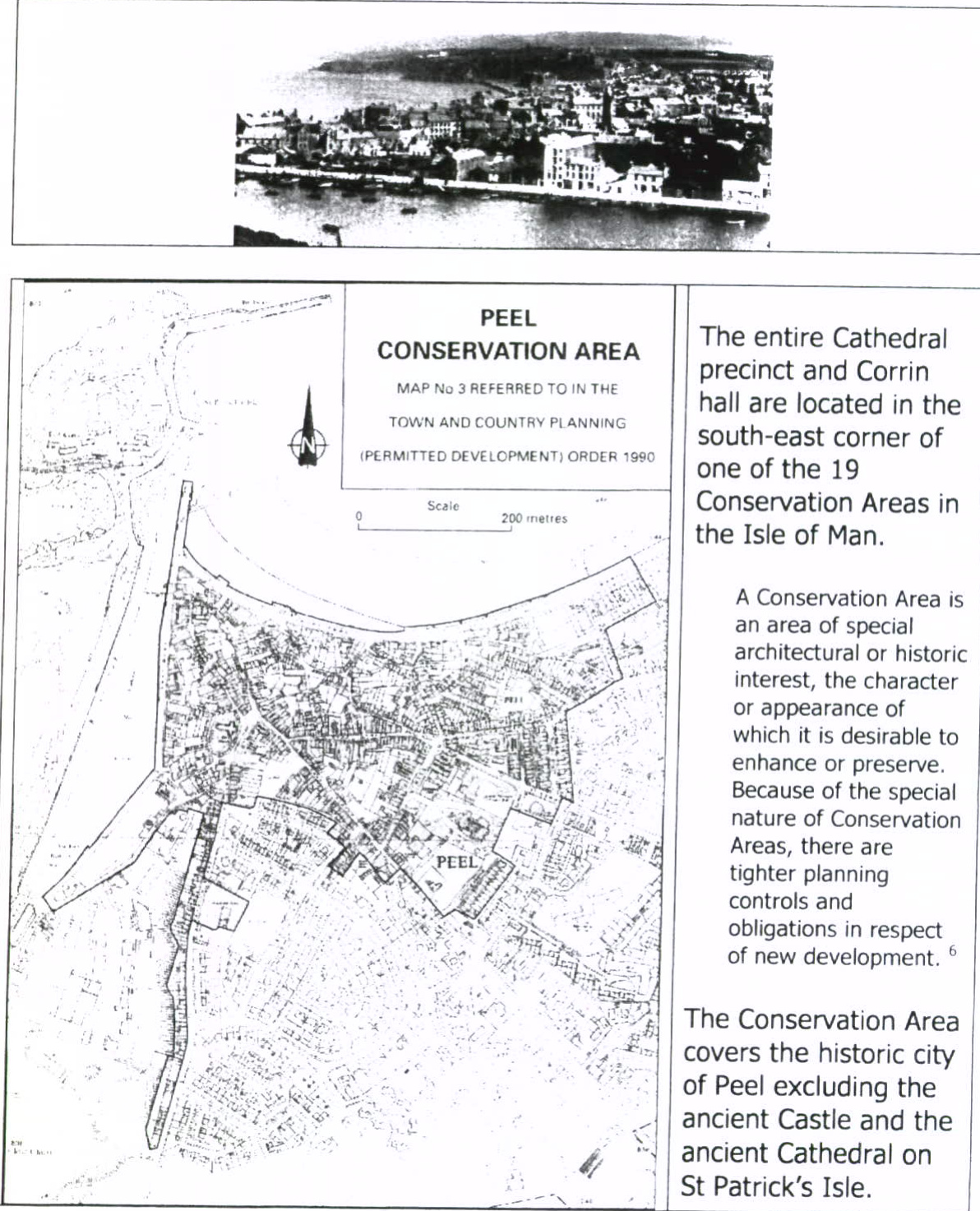
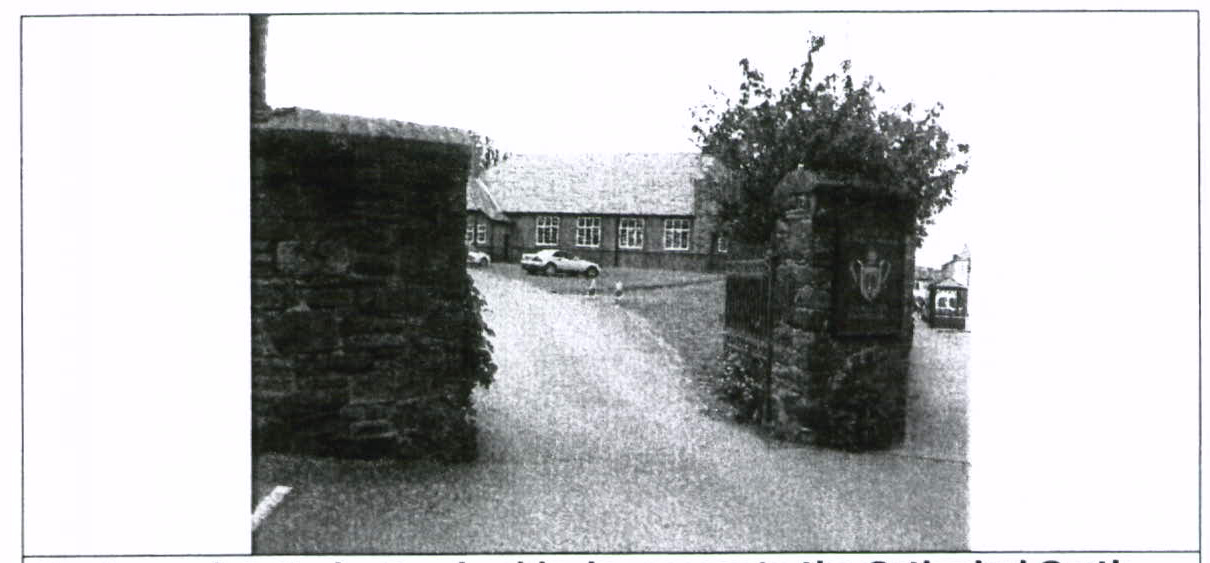
The Cathedral and all its grounds fall within the boundary of the Peel conservation area at its south-eastern edge. The conservation area is large, covering most of the ancient city of Peel and those parts of the ancient city beyond the conservation area are in national ownership, largely as a museum. The Cathedral grounds are made up of a number of distinct areas. On the north of the site there is an open square of grass, with a gentle gradient rising towards the Cathedral. This offers vehicular access from Derby Road, which has gates that are permanently open (photograph 1).
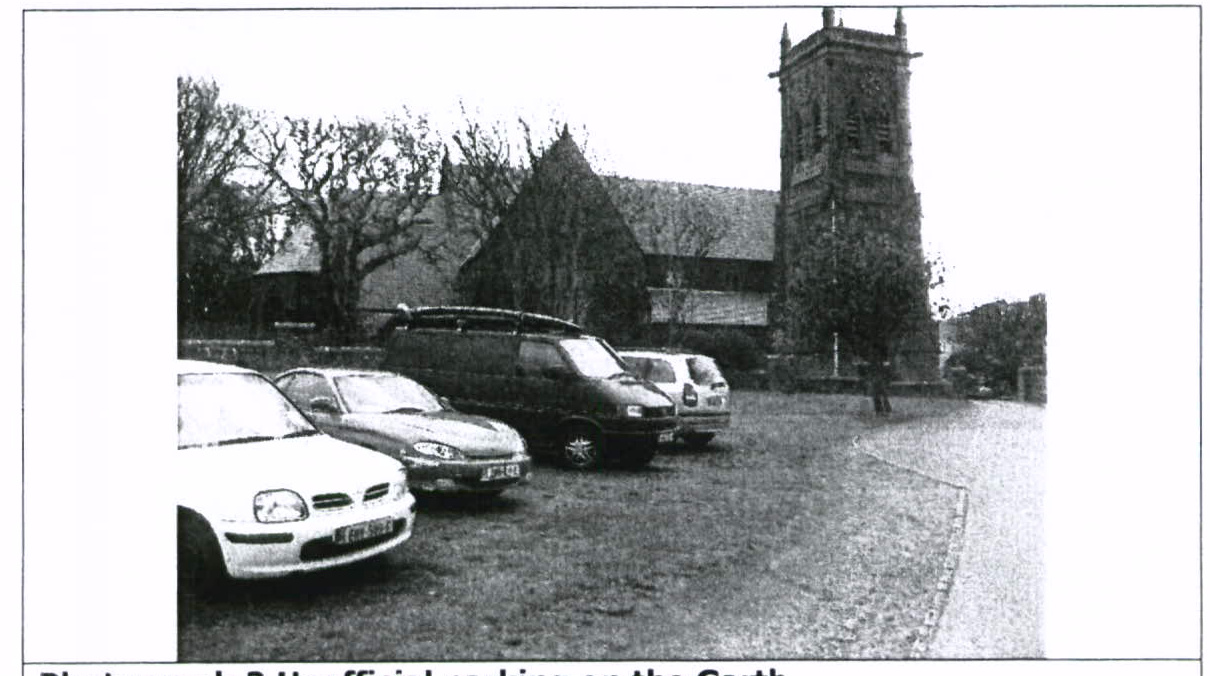
Photograph 1 Derby Road vehicular access to the Cathedral Garth The grass area is diagonally dissected by a metalled roadway with some places for parking and a great deal of space for unofficial parking on the grass (photograph 2). The area is alongside the church hall (The Corrin hall), a pebble-dashed 1920s building with a slate roof to the west of the site. This area will be referred to as the 'Garth' in this report.
Photograph 2 Unofficial parking on the Garth
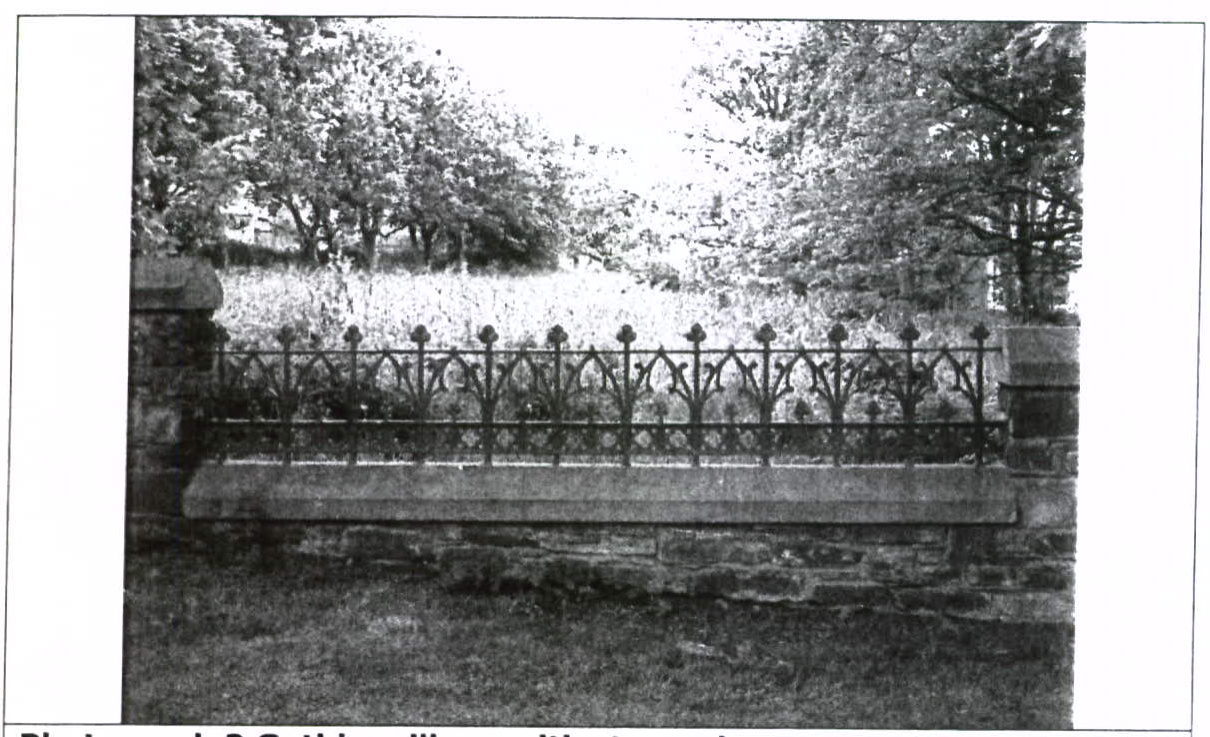
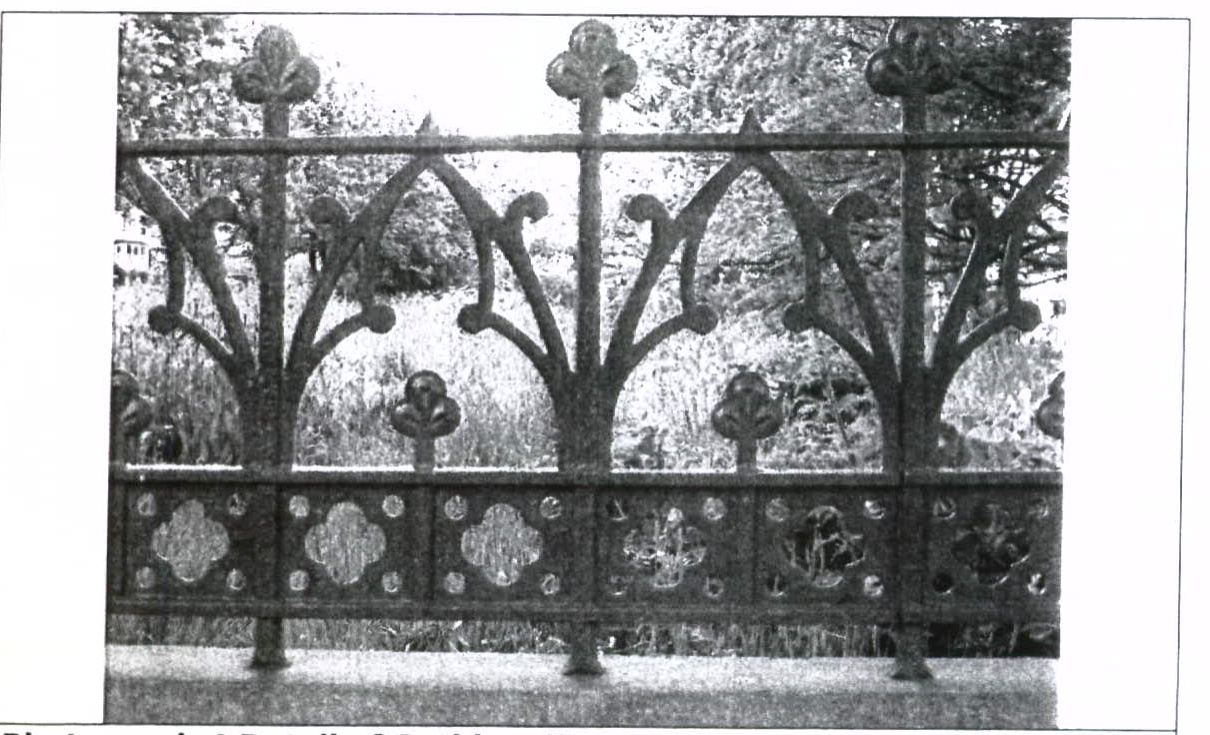
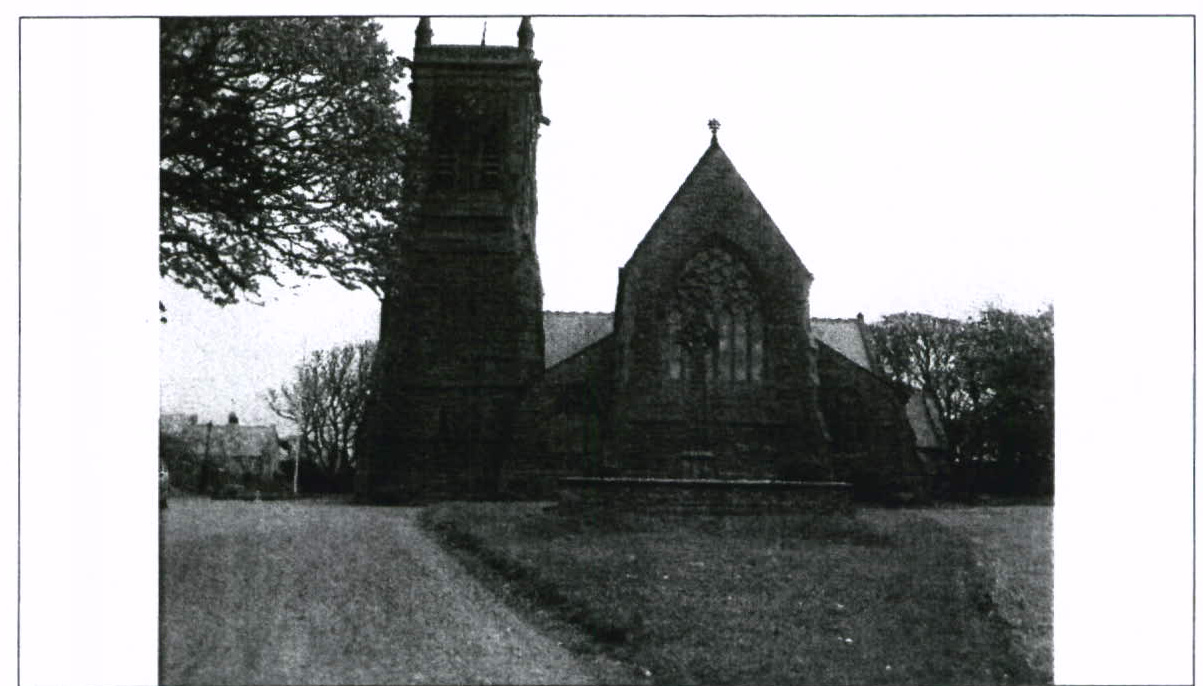
The red sandstone Cathedral with its nave and transepts, apse and tower, aisles and vestries covered with steep pitched slate roofs (photograph 2) is located within its own boundary fence. This precinct is wedge shaped, offering an access at the point of the wedge to Athol Street on the western boundary. The boundaries to the north (photograph 3) and the south (photograph 4) are a combination of sandstone/slate walls with cement rendered capping and pillars interspersed by 'Gothic' iron railings.
Photograph 3 Gothic railings with stone piers
Photograph 4 Detail of Gothic railings
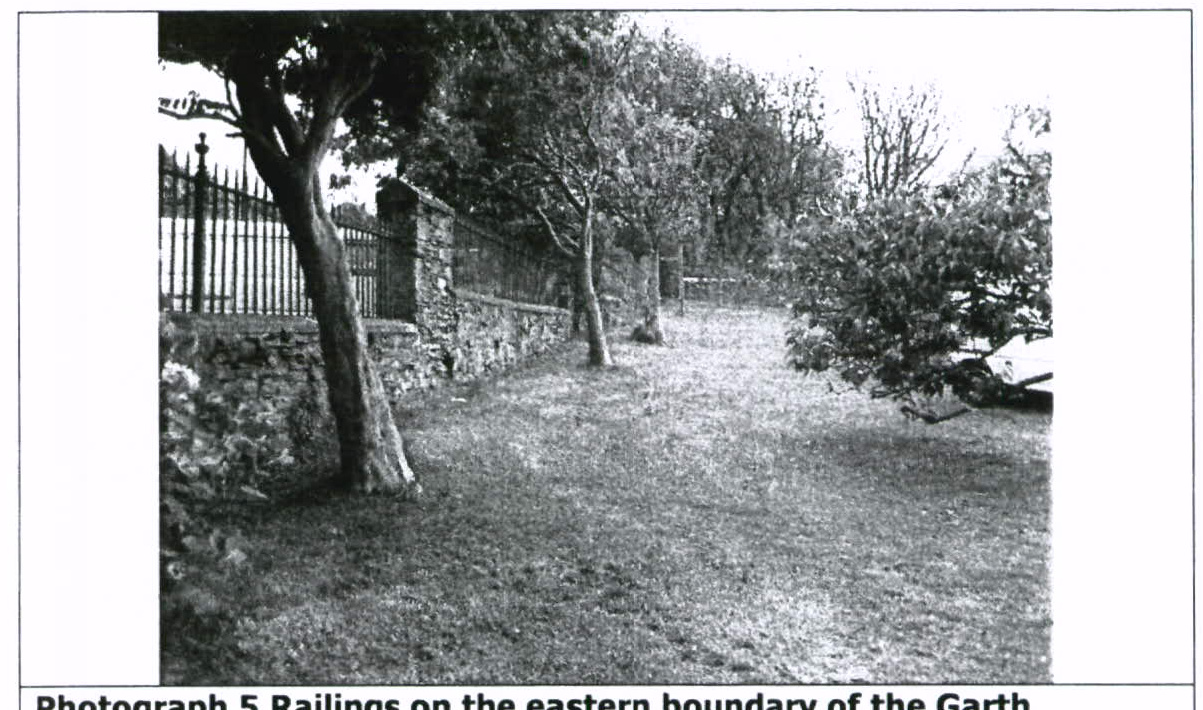
The east side of the area has more traditional railings (photograph 5) and walls, which are in need of attention.
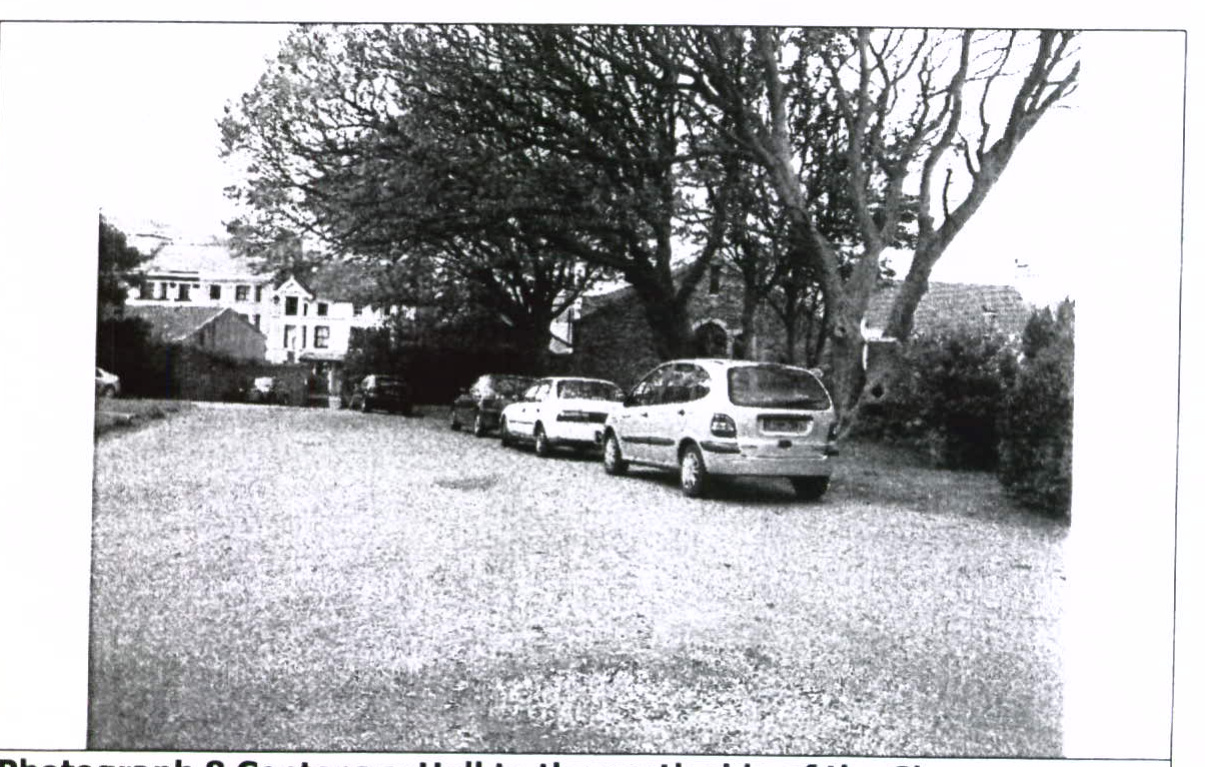
Within the curtilage of the Cathedral there are two distinct areas. To the south is what might be described as a 'Close', which has as its focus a war memorial (photograph 6).
Photograph 6 The Close with central war memorial (rough cut sandstone with dressed stone trims at waist height and three courses of dressed stone trims below great west window)
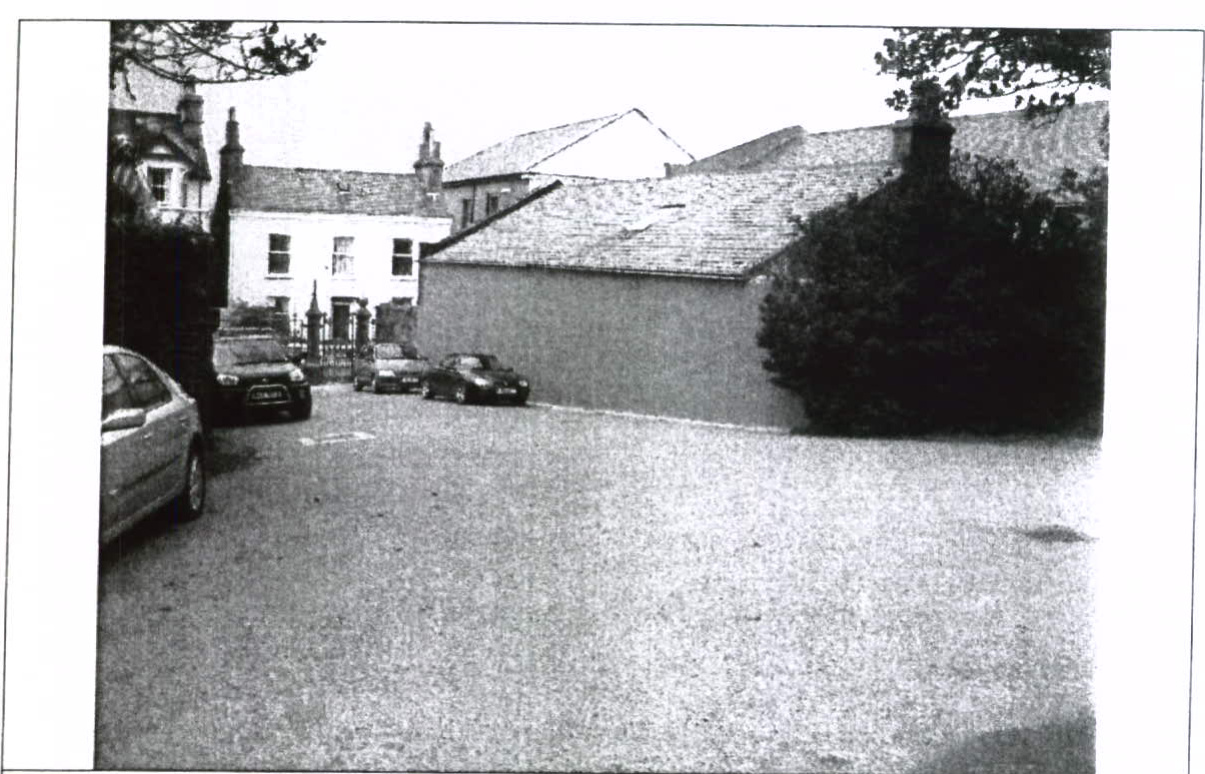
The area has significant amounts of grass, but the overwhelming impression is of hard surfaces, some with un-made surfaces. The area nearest the Athol street entrance to the grounds is bounded by high walls (partly cement rendered and partly sandstone) associated with the 'Centenary Hall' to the north (photograph 7 and 8).
Photograph 7 Centenary Hall to the north side of the Close (Cement rendered and painted)
Photograph 8 Centenary Hall to the north side of the Close (Sandstone with limestone trimmings to windows)
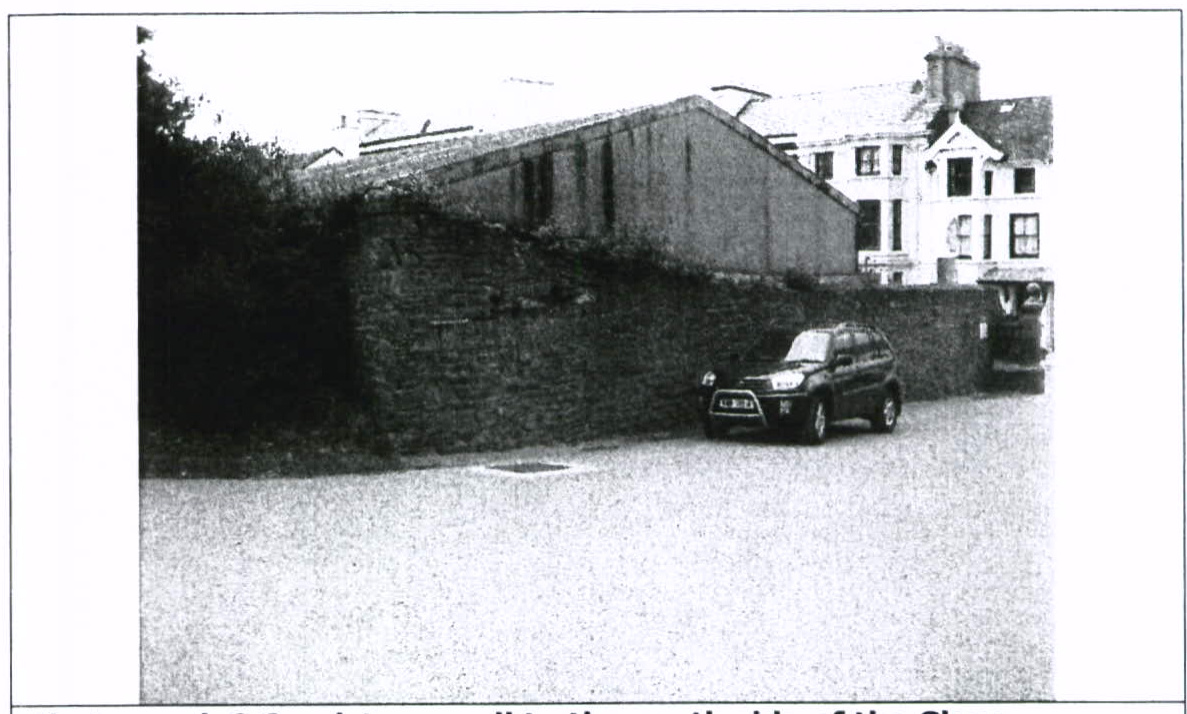
To the south there is a high perimeter sandstone wall which forms the boundary with a petrol station (photograph 9). Photograph 9 Sandstone wall to the south side of the Close (Garage to the rear)
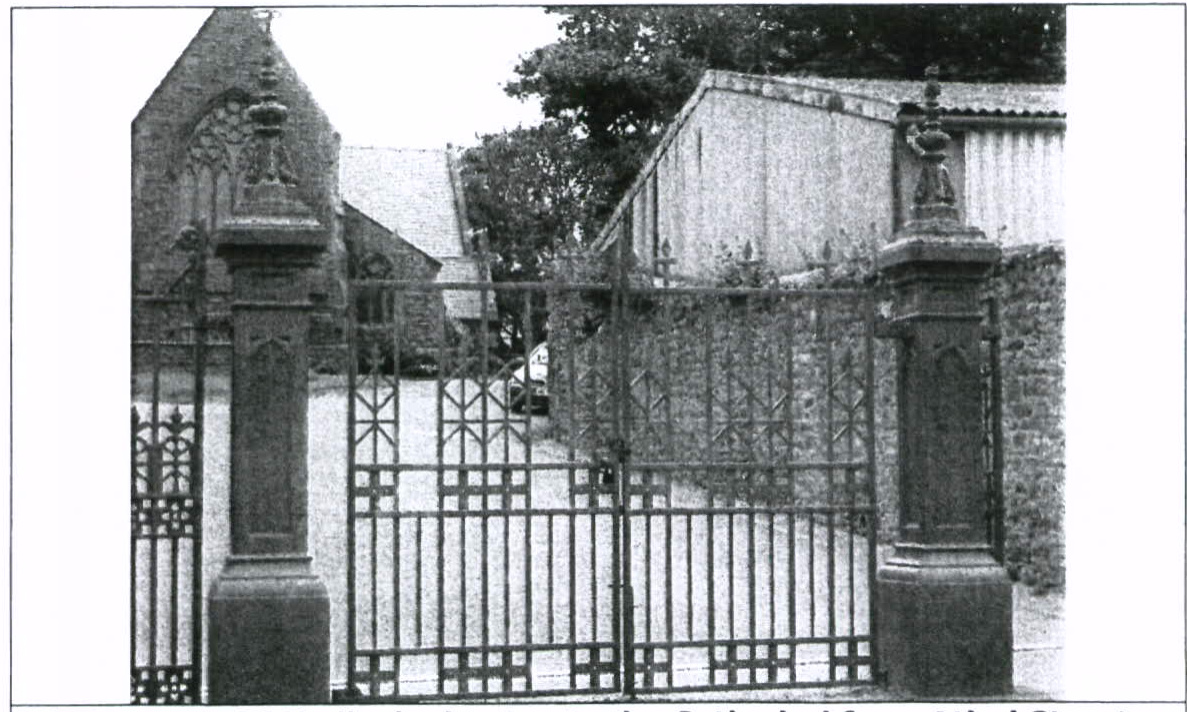
Again casual parking by non-Cathedral users is a visual intrusion on the site with vehicular access to the grounds being gained via the Garth. The impressive iron gates leading more directly to the Close from Athol Street are kept padlocked only offering pedestrian access (photograph 10).
Photograph 10 Padlocked gates to the Cathedral from Athol Street
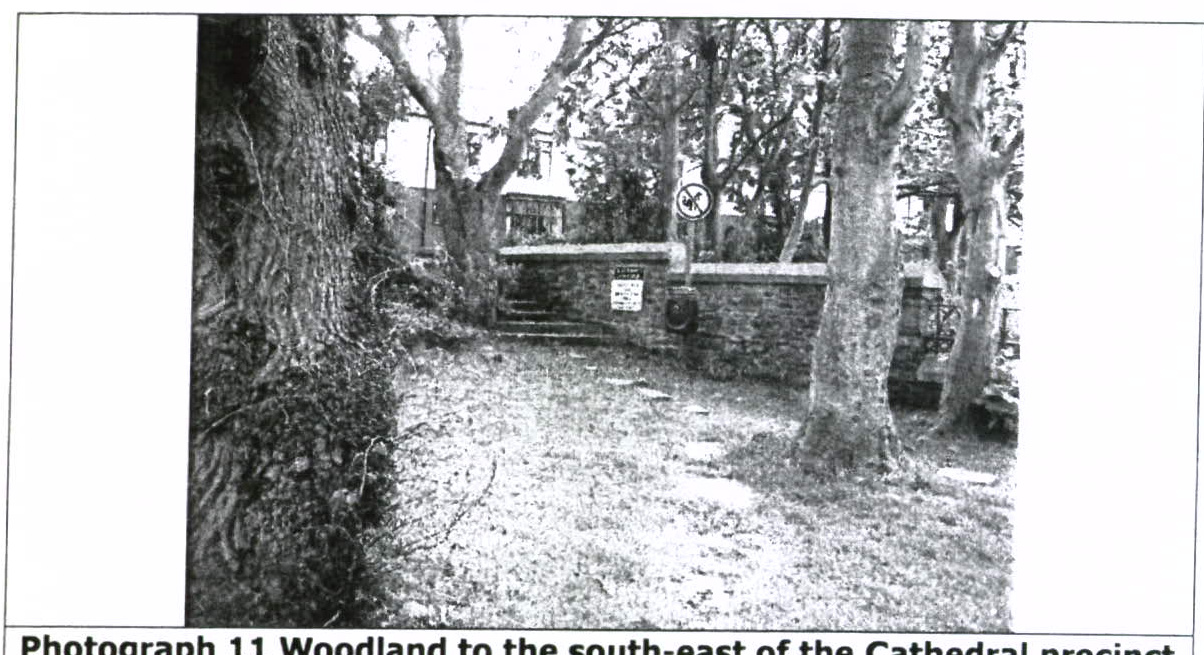
The third area is largely woodland and is particular evident to the south of the Cathedral. The land in this area rises more steeply to the south-east corner of the site (photograph 11). The trees are non-manicured, probably largely self-seeded, deciduous species (such as the sycamore) that have been indigenous to the Island for hundreds of years.
Photograph 11 Woodland to the south-east of the Cathedral precinct
The parsonage has to be a positive addition to the site and enhance the quality of the Cathedral environment. It is therefore important that the location within the grounds of the Cathedral precinct itself or the Corrin Hall Garth is carefully considered. The precise location of the parsonage in relation to other buildings on the site will affect the architectural references made in the new structure.
If the Close to the west of the Cathedral is chosen as the parsonage site then the further away the building mass is from the Cathedral the more appropriate it is for it to reflect the vernacular architecture of Peel generally (see below), while the closer the building is to the Cathedral the more it may need to make specific reference to the Cathedral itself.
Vernacular architecture within the conservation area
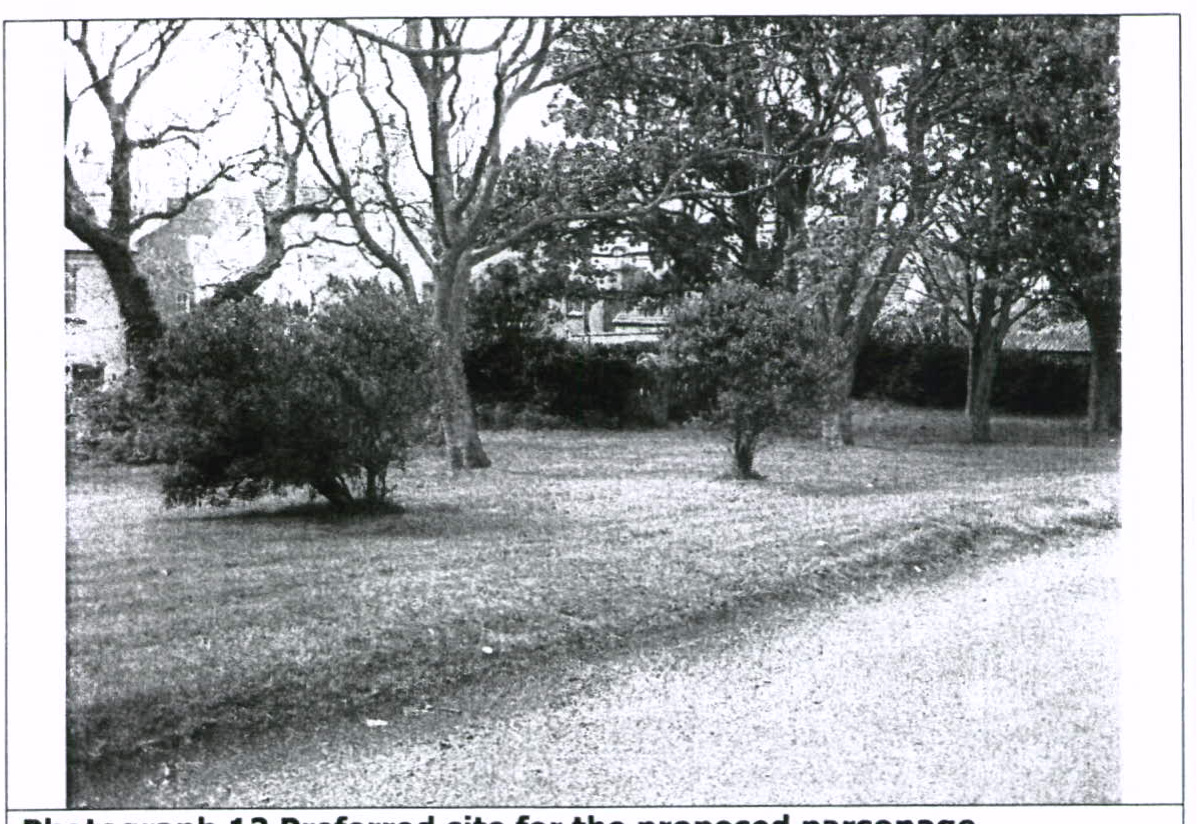
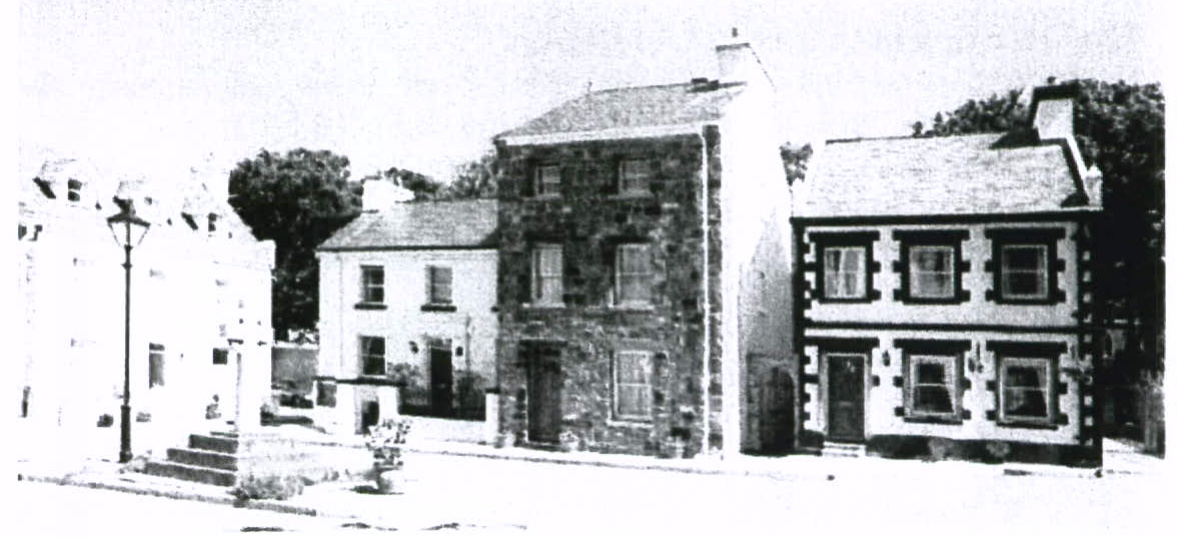
The site that appears to be the favoured plot for the parsonage (photograph 12) is located as far from the Cathedral as possible and would suggest a vernacular approach. Immediately to the south of this site is the recently built square called 'The Grove', which has as the focus a Celtic cross. This uses a variety of vernacular architecture echoing that of the city.
Photograph 12 Preferred site for the proposed parsonage (The Grove, a recent development, visible through the trees) The Grove: new development reflecting vernacular architecture adjoining the Cathedral precinct
Building closer to the Cathedral would suggest adopting something more in keeping with the Cathedral itself. If a range of buildings was eventually to be developed bridging the gap from parsonage to Cathedral and catering for the needs of a modern Cathedral, then consideration will need to be given as to how elements of the Cathedral might be used in further development.
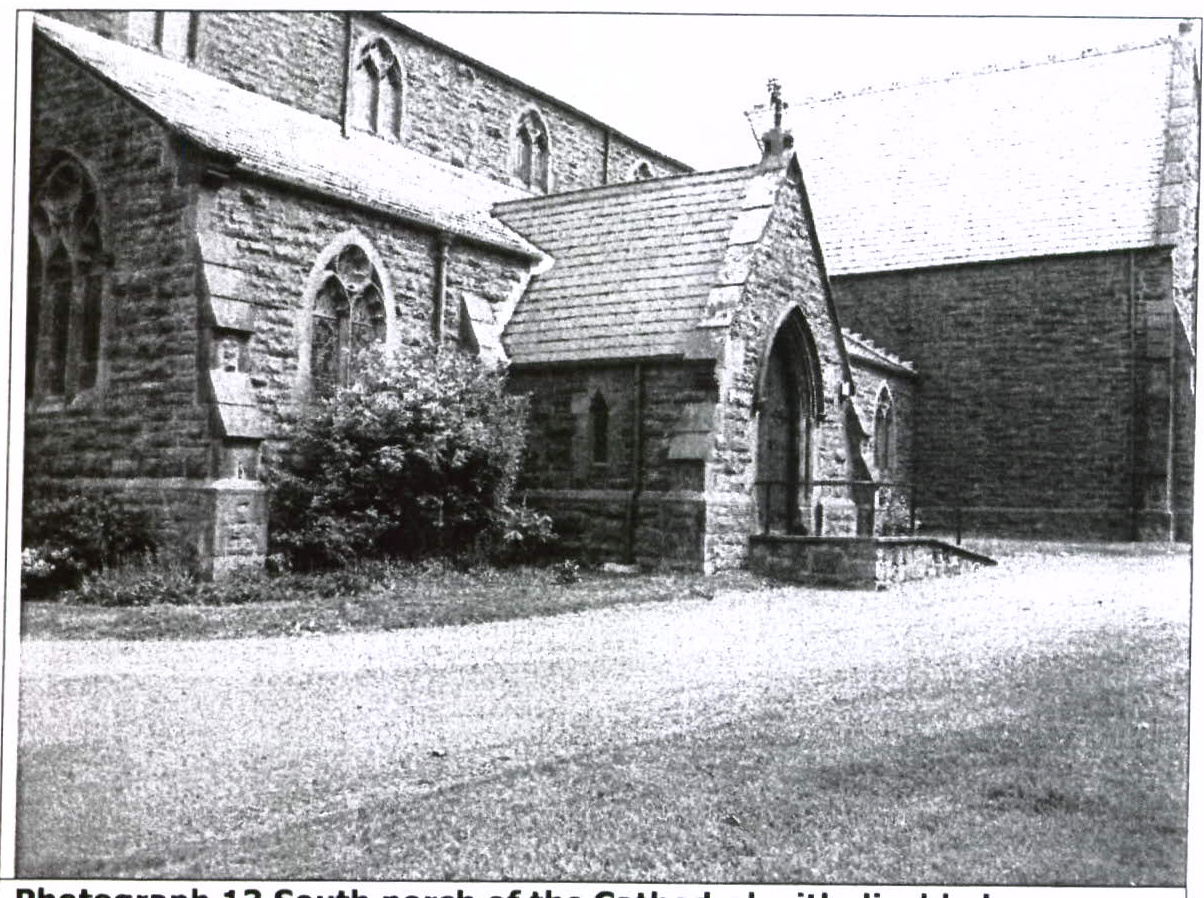
This might be done by building 'visually' a corridor that continues the architecture of the Cathedral's south porch outwards (Photograph 13) and then create a red sandstone 'garden wall' which links it to buildings at the west end of the Close.
Photograph 13 South porch of the Cathedral with disabled access (Slate roof with red ridge tiles)
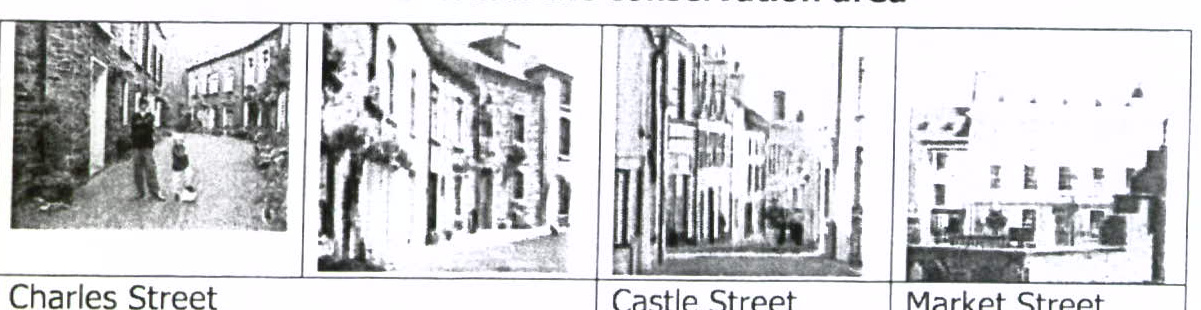
The wall might be designed to match the banding on the Cathedral below the great west window (photograph 6 page 8). Here there is a single course of dressed stone about waist height with a further three courses of dressed stone below the window, which might make a visually suitable capping to a 'garden wall', even if the scale is reduced. This wall might then be punctured by openings to a corridor giving access to single storey structures hidden from view behind the 'garden wall'. This would then link to a group of buildings in the vernacular style, perhaps echoing the almost haphazard arrangement in Charles Street with its houses at slightly different angles within the sweep of the street and with a variety of surfaces, but all sharing a strong family resemblance (vernacular architecture page 11).
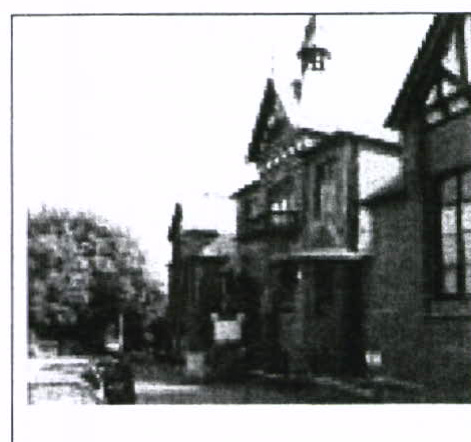
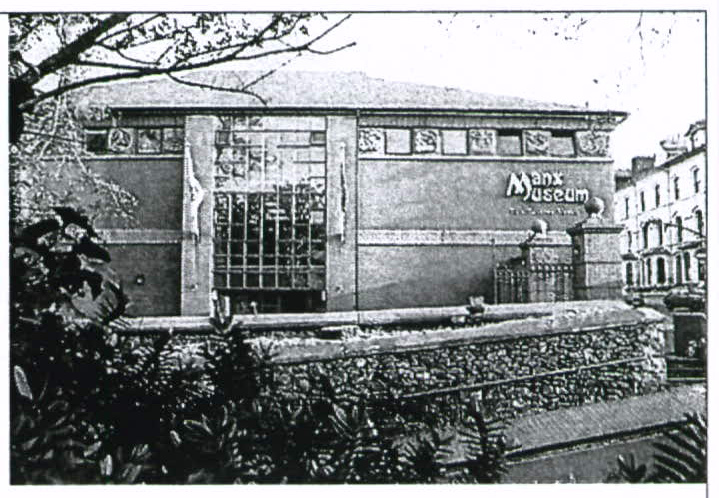
The site to the north of the Cathedral would require a rather different approach reflecting the architecture of the cathedral offering a more selfconscious architectural approach. The parsonage might become the first phase of a cloister with an internal quadrangle, perhaps made of red sandstone, with Gothic features and steep pitched roofs reminiscent of the cathedral itself. This would be a much more costly solution generally, requiring a much higher standard of craftsmanship with a good deal more dressed stone. An example on the Island of a contemporary extension to a historic building, which, while acknowledging the parent structure creates its own new form, is the Manx Museum. The extension has a major frieze around the top which picks up various historic symbols, something quite new, while the walls are built in red brick which matches the original 1920's building. The precise site of the parsonage, if it was to have a southern aspect, might be located on the north-east corner of the Cathedral. The development of this site would be seen in the overall context of creating new Cathedral facilities that might link the Cathedral with the Corrin Hall. The accompanying map (Parsonage site options: 'A' Close, 'B' Garth page 15) indicates the two suggested sites for the parsonage and the two possible areas to guard for possible expansion in the future.
The Manx Museum, Douglas (The main 1920s building)
The extension to the Manx Museum built in the 1990s in the same red brick with a strong architectural frieze at the upper level
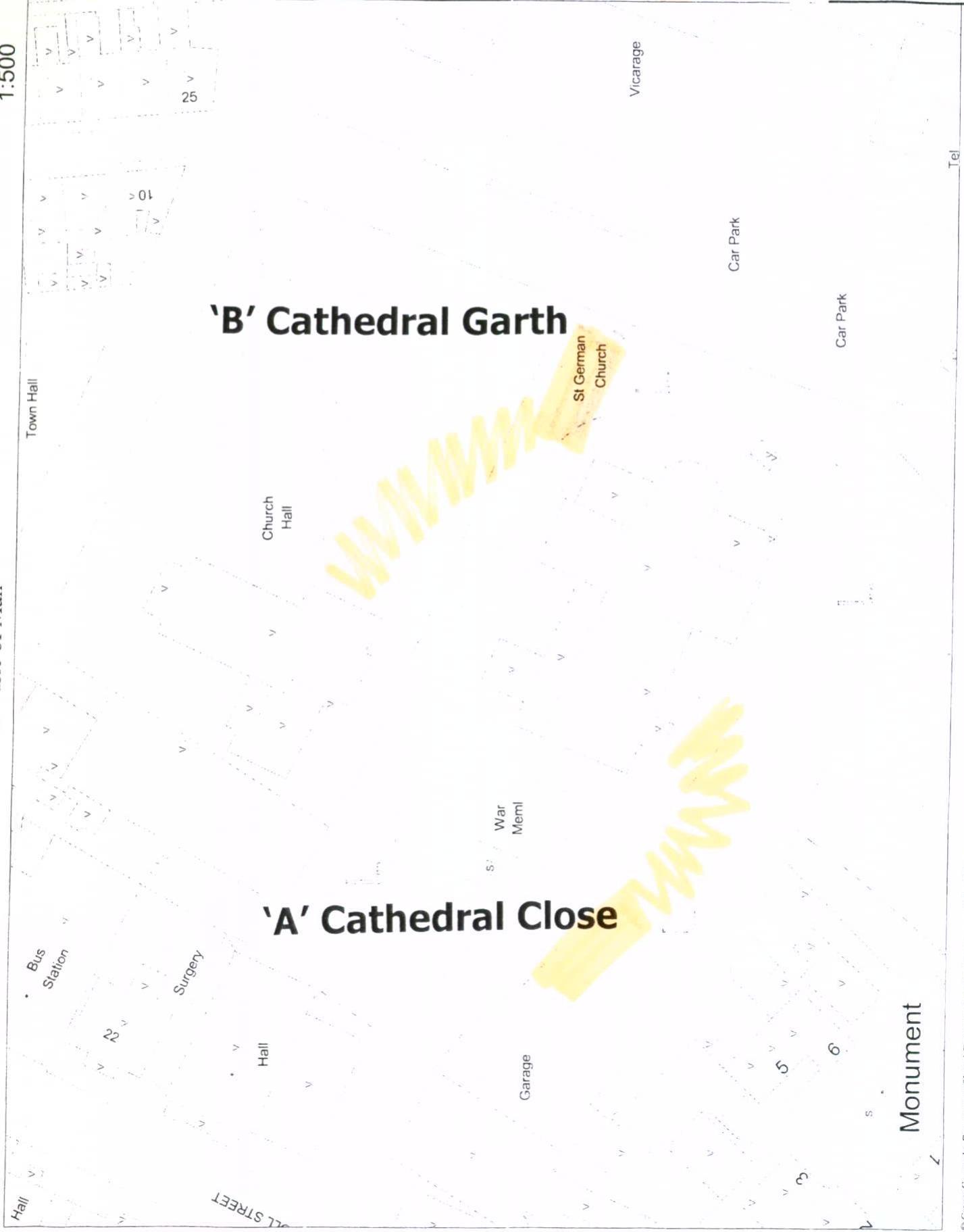
Area kept open for possible future development
The option to develop the 'Close' as opposed to the 'Garth' might be preferable on cost grounds and permit a great deal more flexibility in gradually developing the area over time as opposed to a grand scheme, which may never look aesthetically right until completed in entirety.
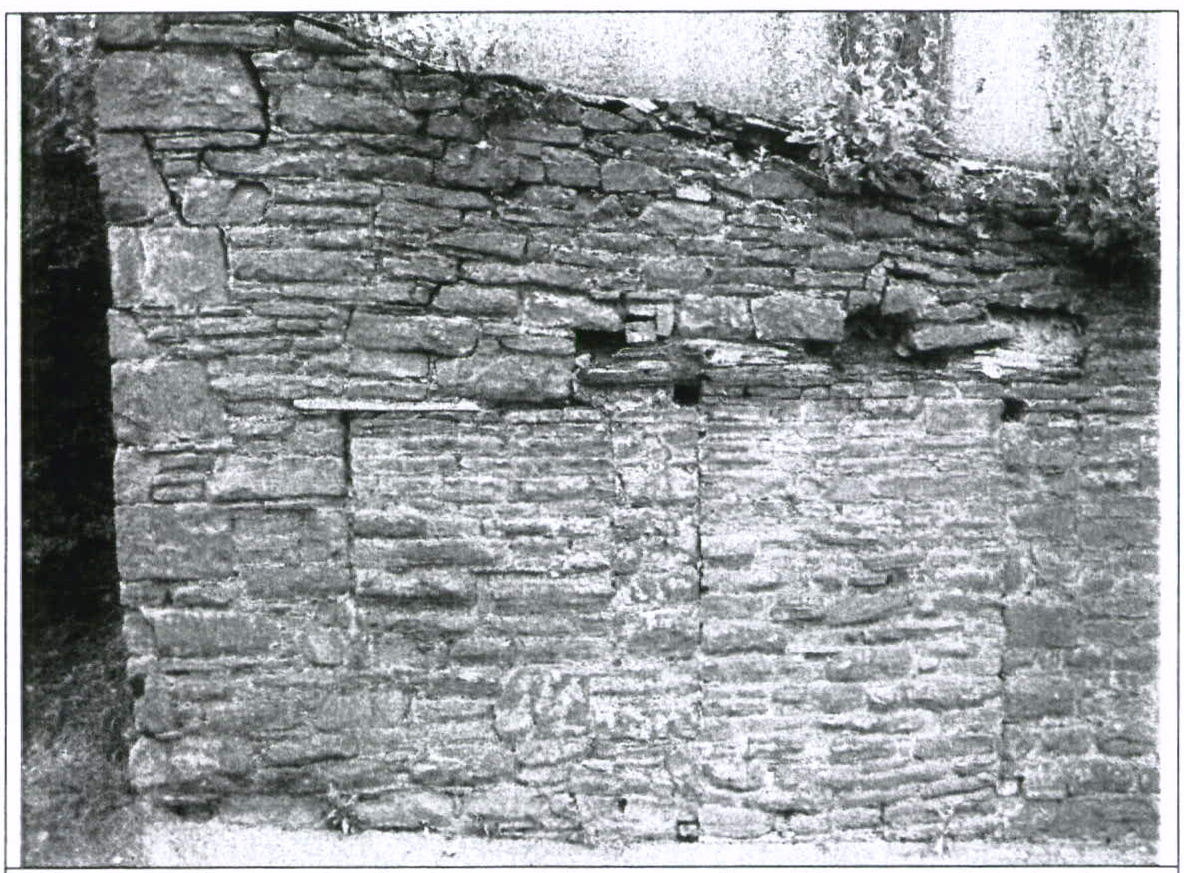
The suggestion is that the parsonage itself is built in the vernacular style, and that it is built adjoining the wall of the petrol station (photograph 9). This ancient wall is of red sandstone. The wall clearly once had two openings in it at the point where it is suggested that it adjoins the parsonage (Photograph 14).
Photograph 14 Ancient sandstone wall with two blocked up openings
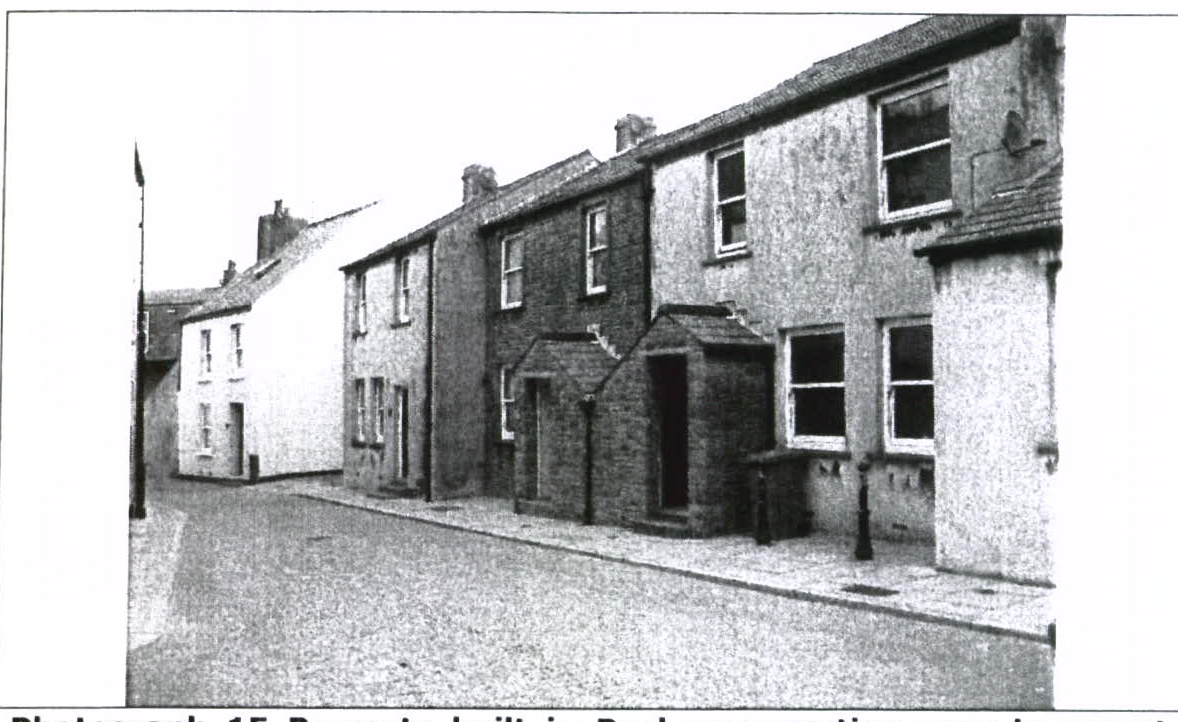
The suggestion would be to put the parsonage garage in this immediate area and hide the structure of the garage behind a new red sandstone wall with a dressed course at waist height and capped by dressed stone mirroring the Cathedral's decoration on the west wall (photograph 6 page 8). There may have to be a bit of merging as one rubble wall merges with a new 'dressed stone' wall. It is important that this wall is not of re-constituted stone to simulate sandstone as the result can very quickly look like red concrete (Photograph 15).
Photograph 15 Property built in Peel conservation area in recent years, where poor quality substitute sandstone has been used
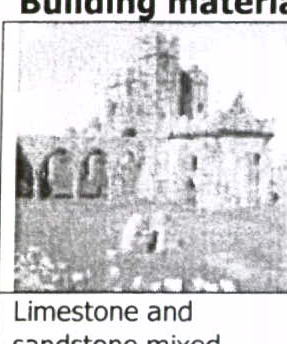
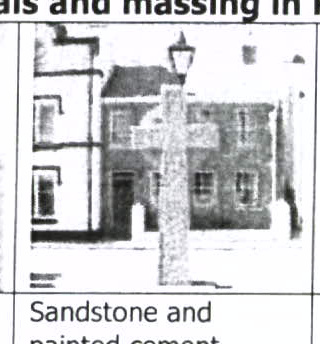
If the style of Peel generally was picked up this would suggest that the house might be in rendered cement, which is not favoured by the Green Guide planners, who would prefer the walls to be in 'stone' or a material that did not require regular maintenance, but as they state, it is a 'guide' and not a 'blueprint'. Below are indicated some of the features of vernacular architecture.
Building materials and massing in Peel.
Limestone and sandstone mixed
Sandstone and painted cement rendered walls with Georgian or Edwardian windows
Slate single pitch roofs (occasionally with dormers), only rarely having porches)
Chimneys at either end of symmetrical buildings
Bearing in mind the vernacular style the building with a garage to the west of the site might look something like the example on page 18 (Sketch elevation and plan for parsonage).
[^0] [^0]: 7 www.cofe.anglican.org/about/churchcommissioners/pastoral/whatsnew/parsglebeadmin/parsdesign/parsdesignguide. pdf see 2. Building Performance: External Walls. (Accessed 13.05.07) Ibid Preface
Sketch elevations and indicative plan for parsonage (not to scale)
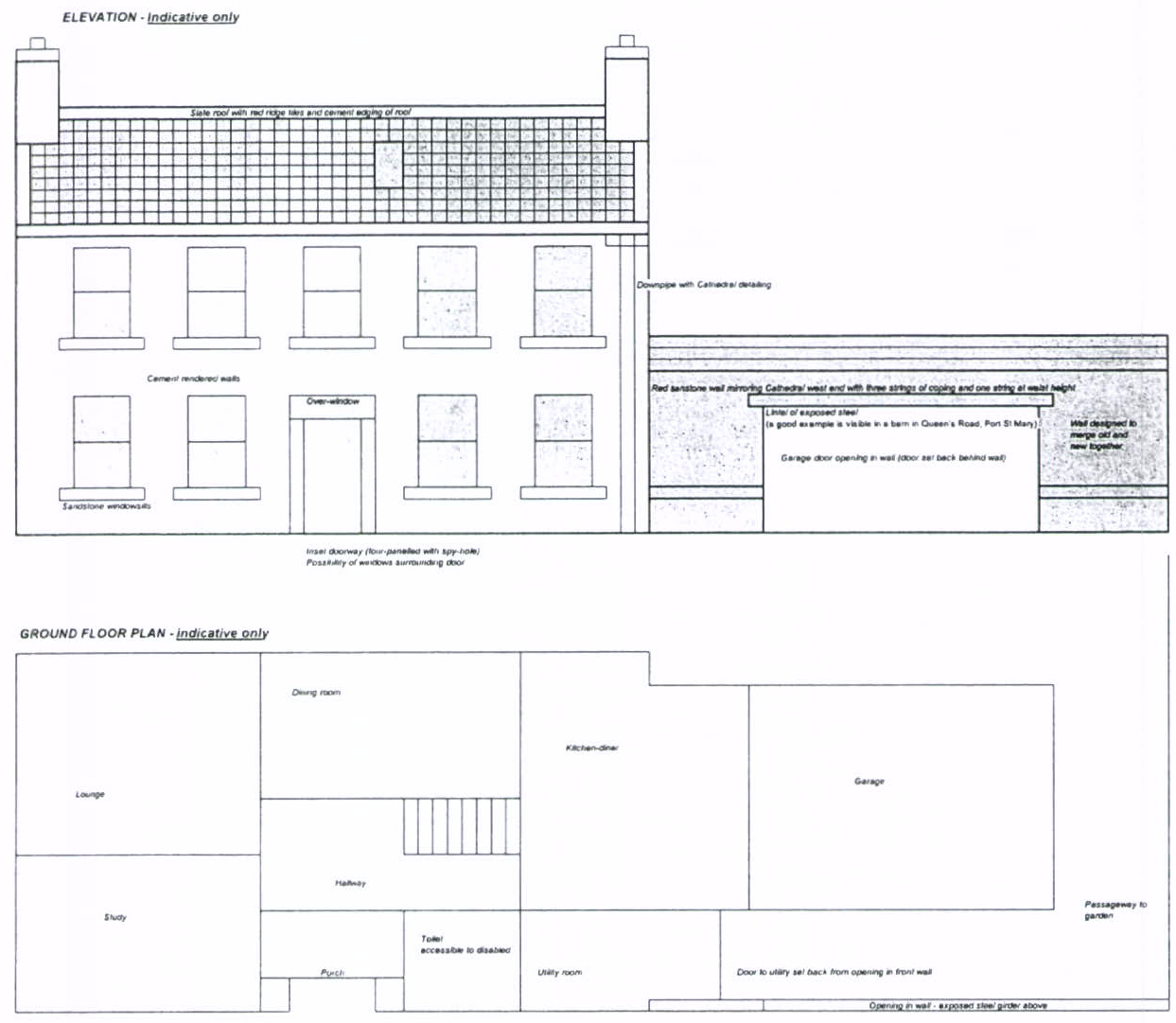
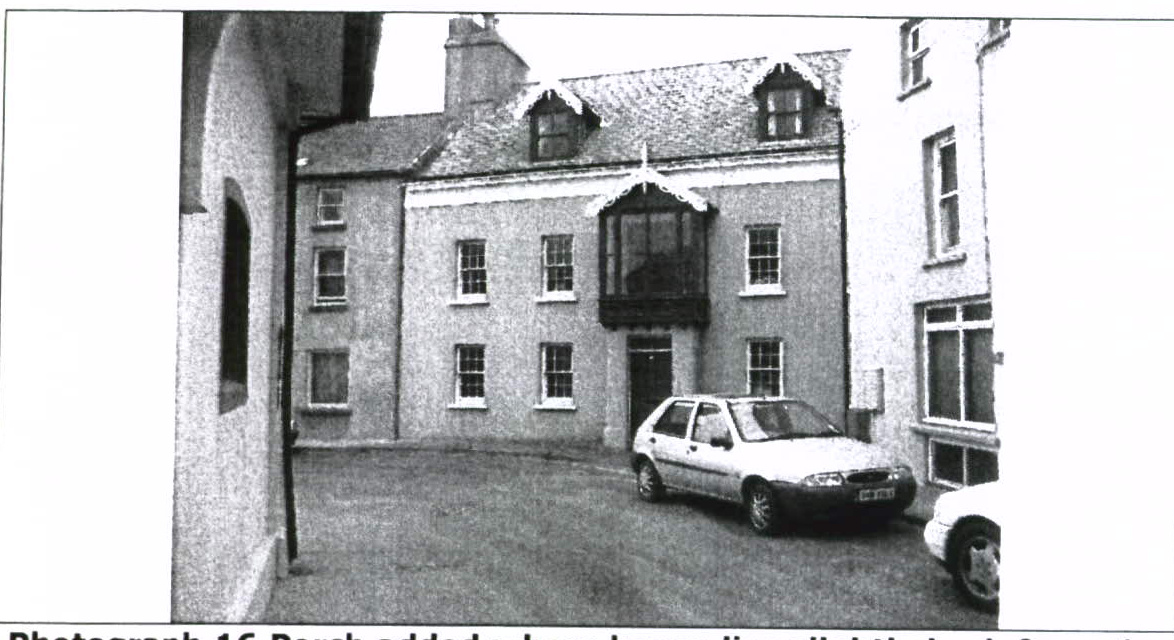
Because it is suggested that the style of architecture should be vernacular, this means that it will occasionally be in conflict with the green guide. The guide, for example, suggests a protruding porch, but this would not normally be used in traditional street architecture in Peel city conservation area unless the site was slightly quirky and set back. An example of a protruding porch with a later added over-porch is given in photograph 16.
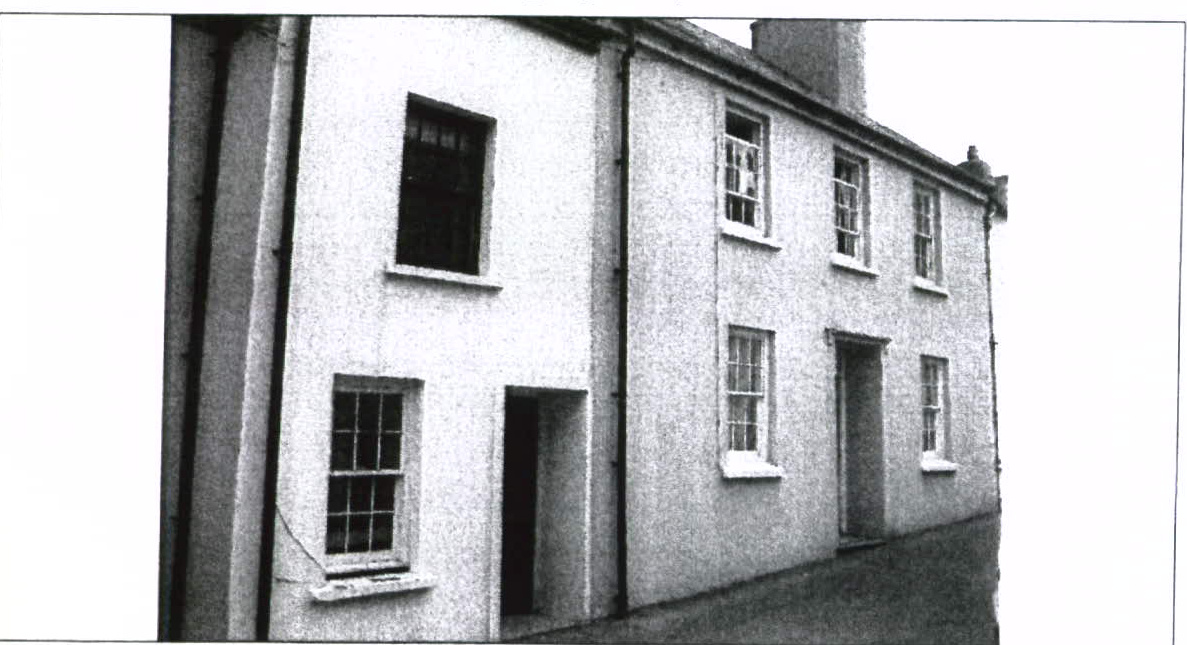
Photograph 16 Porch added where house lies slightly back from the sweep of the street The general pattern appears to be a central door with one window either side (two for larger houses) and three windows above (five for larger houses). The central door is often recessed, sometimes with a thin window light above and to each side of the door and very occasionally with a very modest decoration above the door (Photograph 17).
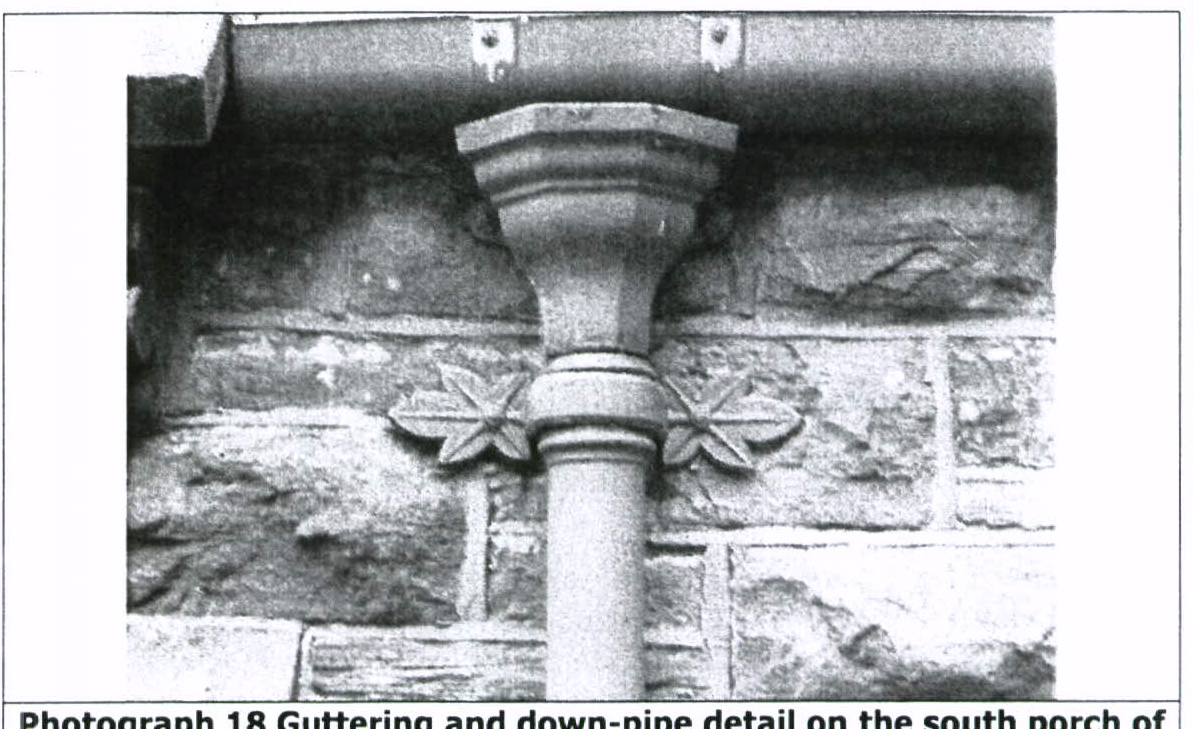
The pitch of the roof should be the normal angle of Manx roofs and if the ridge is likely to arise to too high a point, because of the depth of the house, the rear roof of a Manx house would traditionally be given two pitches, the lower part of the roof having a more gentle gradient. The structure would have a chimney breast at either end of the house. The material would be slate with red ridge tiles to match those of the Cathedral (photograph 13 page 13). The Green Guide suggests that a chimney breast should be located in the centre of the house in order to make maximum use of the heat of the fireplace, but again this is not traditional. The guttering and down-pipes might also match those of the Cathedral (Photograph 18).
Photograph 18 Guttering and down-pipe detail on the south porch of the Cathedral
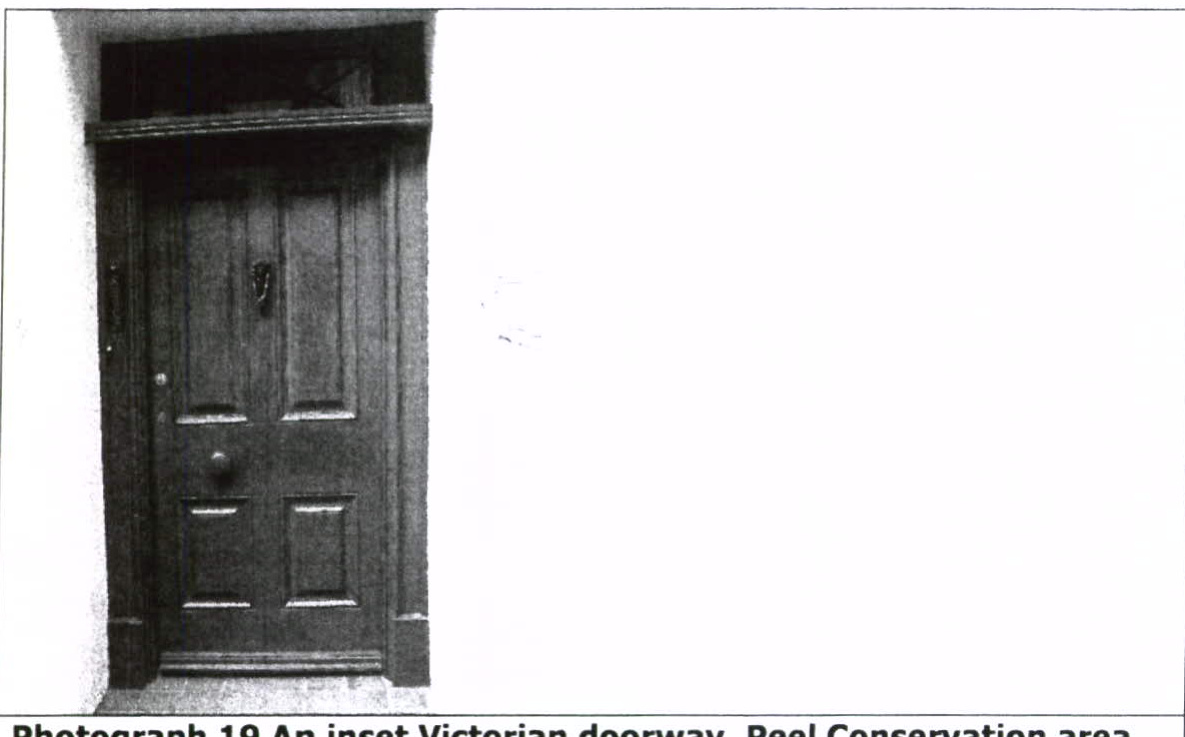
The windows would be either Georgian in style or the simpler Edwardian pattern of two panes with a central horizontal division, both styles are visible on Photograph 16. Either would be appropriate, provided they were not 'fussy' and the latter would be more cost effective. The door, of course, should match the style chosen (six panels for a Georgian door, with no side lights in the door opening and four panels for a Victorian/Edwardian door). An example of a Victorian doorway with over-light is given in Photograph 19. The southern aspect of the house will not be visible to the general public, so might have more generous windows and features that would only find their way into a Manx house because of alterations: for example, French windows in the lounge. There should be no windows to the eastern side of the building to allow for future extension of the 'Close', though provision might be made at the outset for a possible door opening from the parsonage study to a Cathedral office next door.
All cars should be removed from the Close. It might be possible to have a limited number of car parking spaces for special occasions such as those associated with the attendance of the Lord Bishop of Sodor and Man and the Lieutenant Governor. The Green Guide suggests there should be three (or more) external car parking spaces associated with a parsonage and these could double-up for Cathedral functions. The main gates on to Athol Street should be opened and submersible bollards placed in front of the entrance to prevent traffic access to the court when not invited. Similarly traffic needs to be controlled over the whole Cathedral site (see Report 2 Landscaping and Parking Design Considerations St. German's Cathedral, Peel 30.05.07).
The 'Close' should have as much grass as practical, with no fences or wall dividing the buildings (parsonage in the first instance) from the Close itself. There should be a generous strip of grass in front of the parsonage to keep people from peering in the windows and offering an amount of privacy. There might be a fixed gravel roadway (not tarmac) from the main gates that sweeps past the parsonage to the west end of the cathedral, where there is a possibility of a sufficiently wide piazza to allow cars to turn and to set people down near the Cathedral entrance.
While beyond the scope of this report the entire grounds of the Cathedral and Corrin Hall need to be re-landscaped. The removing of any trees related to this development will of course require permission, but any trees removed will be more than compensated for in new landscaping. If any trees to the south of the parsonage cause the building to be permanently in shade; then requests will be made to remove them.
It is suggested that the property follows the current guidelines (the sixth guide) of the Church Commissioners where possible, though changes are recommended, some on the grounds of it being a conservation area and some on the grounds that the Green Guide does not sufficiently take into account current thinking on carbon emissions:
[^0] [^0]: www.pooilvaaish.com/html/black_marble.html - 2k (accessed21.05.07)
of course assumed there will be no steps into the parsonage. (Disability specialists might be consulted to advice on plans in detail.)
[^0] [^0]: 10 www.cofe.anglican.org/about/churchcommissioners/pastoral/whatsnew/parsglebeadmin/parsdesign/parsdesignguide. pdf Site Planning (accessed 13th May 2007) The cost implication for building a greener property are still very significant and even at Manx fuel prices may not be perceived as economic at this stage. I am therefore willing to fund the difference in cost between a normally proposed system and the greener option if it makes long-term economic and environmental sense. I am fully aware that this does not come cheap. www.secondnatureuk.com/ - (accessed 14.05.07) Alan Broadway (Birmingham Diocesan Surveyor) 07.07.2006 email re proposed parsonage at All Saints Church Kings Heath and The Diocese of Birmingham, Finance Investment \& Property Sub-Committee: Energy Efficiency 31.01.2007 Ibid
generated into the grid, so photovoltaic panels are probably inappropriate.
Planning permission should be sought for a Green Guide parsonage with a double garage in the vernacular style in the south-west corner of the Close, which allows for other buildings to be connected with it at a later stage as additional services and buildings are required in association with the Cathedral. Materials should be appropriate to the conservation area and be of the highest quality and durability, avoiding synthetic commodities wherever possible. The house should be as energy efficient and as carbon neutral in its running as is practicable, given the current state of proven technology. It is anticipated that this process of acquiring planning permission, seeking tenders and building might take a considerable amount of time, so in the meantime financial advice should be sought about selling the vicarage and investing the money appropriately for release as the building develops.
www.cofe.anglican.org/about/churchcommissioners/pastoral/whatsnew/parsg1 ebeadmin/parsdesign/parsdesignguide.pdf (accessed 13.05.07) www.en.wikipedia.org/wiki/Geothermal exchange heat pump (accessed 10.05.07) www.gov.im/dlge/planning/conservation/ (accessed 13.05.07) www.gov.im/mnh/ (accessed 30.05.07) www.iomguide.com/manxmuseum.php (accessed 30.05.07) www.peelonline.net/peelcom/photos_peel_2006.htm (accessed 13.05.07) www.peelonline.net/peelcom/ (accessed 13.05.07) www.pooilvaaish.com/html/black marble.html (accessed 21.05.07) www.secondnatureuk.com (accessed 14.05.07) www.streetheritage.com/documents/marinerswharf 000.pdf (accessed 13.05.07) www.visitnorwich.co.uk/norwich-cathedral-info.aspx (accessed 21.05.07)
Alan Broadway (Birmingham Diocesan Surveyor) 30 October 2003 Alan Broadway (Birmingham Diocesan Surveyor) 07.07.2006 email re proposed parsonage at All Saints Church Kings Heath The Diocese of Birmingham, Finance Investment \& Property Sub-Committee: Energy Efficiency 31.01.2007
Straine G. and Oxley N., For Creed and Creation: A simple guide for running a greener church (London, Aldgate Press, 2007)
Copyright in submitted documents remains with their authors. Request removal
View as Markdown