Loading document...
Daniel Watt CIBSE Accreditation Nos: LCCSIM084077 LCCD084077 LCEA084077 Watt Energy & Consulting Engineers Ltd 40 King Street, Manchester, M2 6BA t. 0161 43 43 103 w. www.wece.co.uk
Issue Status
Director Daniel Watt
Redacted
Energy and Sustainability Consultant Jack Sewell
| First Issue Date | Revision Issue Date | Issue Revision | Issued By |
|---|---|---|---|
| December 9, 2020 | DW |
Page 3 of 37 December 2020
This Environmental Standards Statement has been prepared by Watt Energy on behalf of OT One Limited to support a planning application for the development of Ballacroak. The statement specifically addresses the Town and Country Planning (Amendment) Act 2019, the Isle of Man Strategic Plann 2016, the Climate Change Bill 2020 and the Isle of Man Government Action Plan for Achieving Net Zero Emissions by 2050.
The statement details how the development will incorporate sustainable design and resource efficiency in line with the Energy Hierarchy, so to meet the targets outlined within the relevant documents and as a result, reducing its overall environmental impact. The methodology and calculations are consistent the Building Regulations and all figures used within this report have been based on the most recent issue of drawings and modelled using SAP 2012 to accurately predict Energy Usage and CO2 reductions.
In relation to the mentioned climate change documents, the proposed development is looking to achieve a status of net zero carbon (NZC) by offsetting 100% of its operational carbon emissions on site whilst also paying close attention to reducing its potential embodied carbon to the highest extent possible.
In order to achieve this NZC status, the development has been designed with a holistic low energy, passive design concept involving a fabric first approach and high emphasis on passive solar gain. The Uvalues, design air permeability and ventilation targets all aspire to Passive House design standards along with the application of the multiple low zero carbon renewable technologies.
Following the LZC feasibility assessment, it is proposed that the development will benefit from a ground source heat pump (GSHP) for providing the main heating and hot water and photovoltaics (PV) to offset any remaining carbon emissions.
As a result of the above the predicted site wide reduction in CO2 over Building Regulations standards can be summarised as
This statement also examines how the design, specification and characteristics of the proposal will contribute to sustainability overall and the creation of a sustainable development. The measures assessed included:
Page 4 of 37 December 2020
The development therefore complies with the net zero carbon targets promoted within the Town and Country Planning (Amendment) Act 2019, the Isle of Man Strategic Plan 2016, the Climate Change Bill 2020 and the Isle of Man Government Action Plan for Achieving Net Zero Emissions by 2050 whilst also providing additional contributions to the wider scope of sustainability and sustainable development.
Page 5 of 37 December 2020
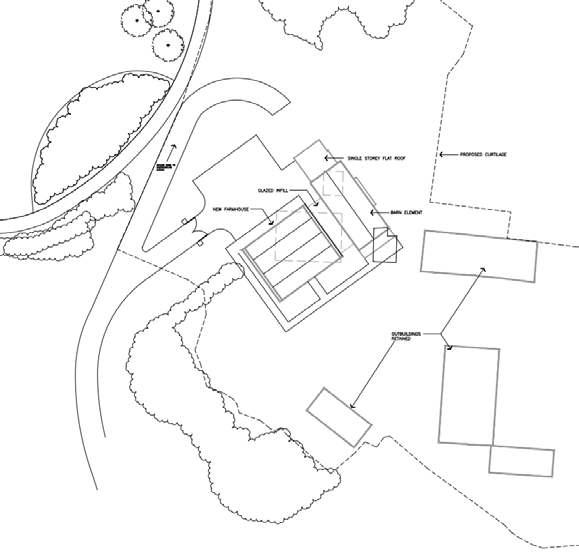
The following statement relates to the proposed development at Ballacroak, Mullinaragher Road, St Marks, Ballasalla, Isle of Man
The site is located approximately 1.5km south east of St Mark’s and occupies approximately 0.8 hectares of land. A site location plan, with the site’s extents denoted by the red outline seen in Figure 1 (shown later in this subsection).
The site is bounded to the east, north and west by an expanse of fields and by Mullinaragher Road to the south, which is accessed via a single lane track. Currently the site is occupied by a, now unused, farm with an existing farm house and multiple outbuildings.
The development being applied for is the erection of a two-storey detached dwelling with a central farmhouse section and a modern barn section to the east, linked together via a two-storey glass stack. Partially underneath the barn section is a subterranean garage accessed from the north via a drive with associated plant rooms.
Notable developments on the island which have recently received decisions as a result of proposing similar, highly energy efficient designs are Hillside Cottage in Braddan, (19/01383/B), Ballacain Cottage in Dalby (19/01441/B) and Ardonan in Andreas.
Figure 1 below shows the location of the site and surrounding development areas. Figure 1: Site Location Plan Page 6 of 37 December 2020
2.2.1 Local Planning Policy
The Climate Change Bill is split into separate clauses that need to be understood and achieved. The relevant of those to this report are summarised below:
Clause 9 – The Council of Ministers must ensure that the net Isle of Man emissions account for the year 2050 (the “ net zero emissions target year”) is at least 100% lower than the baseline; and provides that the Council of Ministers by regulations substitute for the year 2050 an earlier year.
Clause 12 – The domestic effort target will require that domestic developments achieve the net zero emissions targets and reduce their emissions by 100%
Clause 16 – If emissions targets are not met then offset schemes will be provided for applicants. These will for applicants to pay into in order to offset additional carbon emissions and therefore continue to contribute to the removal of greenhouse emissions from the atmosphere and further push for the net zero carbon 2050 target. Refer to the Climate Change Bill 2020 for examples.
The Isle of Man Government Action Plan for Achieving Net Zero Emissions by 2050 is split into various sections on action plans that collectively aid into achieving island wide NZC. The most relevant of these actions to the proposed development are summarized below:
Action 3.1 – Develop a plan for delivering 75% of the Island’s electricity from renewable sources.
Action 5.7 – Develop a comprehensive blue carbon management plan to maximise carbon sequestration and maintain and restore the biodiversity and wide ecosystem services.
Action 5.9 – Develop planning advice on maximising carbon sequestration, minimising emissions and maintaining and restoring ecosystem services, and work towards a requirement for biodiversity net gain and for appropriate Sustainable Drainage Systems in future planning policy.
The Town and Country Planning Act 2019, has stated that the following must be considered when reviewing the development plan:
Page 7 of 37 December 2020
2.2.1.4 The Isle of Man Strategic Plan 2016
Strategic Policy 1 – Development should make the best use of resources by:
General Policy 3 – Development will not be permitted outside of those areas which are zoned for development on the appropriate Area Plan with the exception of:
Page 8 of 37 December 2020
Environmental Policy 1 – The countryside and its ecology will be protected for its own sake. For the purposes of this policy, the countryside comprises all land which is outside the settlements defined in Appendix 3 at A.3.6 or which is not designated for future development on an Area Plan. Development which would adversely affect the countryside will not be permitted unless there is an over-riding national need in land use planning terms which outweighs the requirement to protect these areas and for which there is no reasonable and acceptable alternative.
Housing Policy 12 – The replacement of an existing dwelling in the countryside will generally be permitted unless:
In assessing whether a property has lost its habitable status by abandonment, regard will be had to the following criteria:
Housing Policy 14 – Where a replacement dwelling is permitted, it must not be substantially different to the existing in terms of siting and size, unless changes of siting or size would result in an overall environmental improvement; the new building should therefore generally be sited on the “footprint” of the existing, and should have a floor area, which is not more than 50% greater than that of the original building (floor areas should be measured externally and should not include attic space or outbuildings). Generally, the design of the new building should be in accordance with Policies 2- 7 of the present Planning Circular 3/91, (which will be revised and issued as a Planning Policy Statement). Exceptionally, permission may be granted for buildings of innovative, modern design where this is of high quality and would not result in adverse visual impact; designs should incorporate the re-use of such stone and slate as are still in place on the site, and in general, new fabric should be finished to match the materials of the original building.
Consideration may be given to proposals which result in a larger dwelling where this involves the replacement of an existing dwelling of poor form with one of more traditional character, or where , by its design or siting, there would be less visual impact.
Page 9 of 37 December 2020
| Terminology: | Carbon / Energy targets: | Definition: |
|---|---|---|
| Net Zero Carbon | Net Zero carbon emissions | Buildings that generate 100% of their energy needs on-site without the need to import energy. |
| Carbon Neutral | Net Zero carbon emissions | Buildings achieving net zero carbon emissions by offsetting through the use of a renewable energy supplier (electricity only) or via a financial contribution. |
| Low Carbon | Carbon emission % reduction normally over the building regulation standards. | Buildings achieving reduced carbon emission through energy-efficient design. |
As a result of ever changing and improving carbon emission targets, developments are required to take more sustainable approaches to the construction of their buildings which commonly differ from site to site. This results in buildings being explained under many definitions and using various terminology when they incorporate sustainable design to reduce these carbon emissions.
The most common of these terminologies can be summarised as:
The below table outlines the formal definitions of each of these terminologies. Table 1: Overview of Sustainable Design Definitions
2.3 Sustainable Design Strategy 2.3.1 Energy and Carbon Emissions Building Services Strategy
In response to the policy requirements and climate change targets set out in section 2.2, developments should aim to assist and achieve the following carbon reduction targets:
To achieve the most accurate calculations and estimates, the proposed dwelling has been modelled using SAP 2012 the governments Standard Assessment Procedure for residential dwellings.
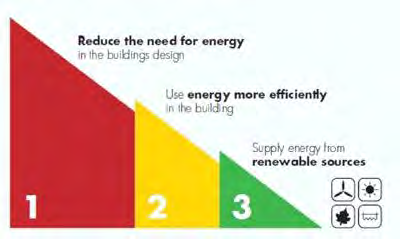
The proposed strategy for minimising energy use and carbon emissions is based on the energy hierarchy described in CIBSE Guide F 2012 (Energy efficiency in buildings). The energy hierarchy has been adopted for the development to ensure that the correct approach to design is taken to promote an energyefficient low carbon solution (see figure 2). This has ensured that the benefits of effective methods of energy use reduction have been maximised first. The approach adopted is as follows:
Fig 2: Energy Hierarchy
Minimise energy demand – Implement passive design measures and optimise the building envelope in terms of orientation, air tightness, and insulation. The current proposal is targeting a low carbon classification, which it aims to achieve through a holistic low energy design concept, involving a fabric first design approach whereby Passive House design standards are aspired to for all fabric U-values and air permeability targets. Additionally significant emphasis has been put on optimising passive solar gain which omits the need for any reliance on mechanical ventilation whilst simultaneously reducing the overall heating demand. The proposal includes a large fully glazed stack which pushes the overall footprint above the allowable 50% increase as stipulated in Housing Policy 14. However, this glass stack
Page 11 of 37 December 2020
is essential in benefiting passive solar gain. This is due to it providing a natural source of heating which reduces the overall heating demand of the dwelling whilst also, through the stack effect, naturally ventilating the building as a result of the varying areas of pressure created from its self-heating and openable windows, omitting the need for mechanical ventilation. These points subsequently make NZC a more achievable target and the larger footprint acceptable as, as Housing Policy 14 states, they provide evidence of environmental improvement.
Meet demands efficiently – Specification of cleaner energy heating systems, energy efficient lighting and system controls to facilitate efficient operation. For example, the design will be proposing a ground source heat pump (GSHP) as the main heating system which can be as a low carbon technology and is deemed as providing clean energy.
Additionally, particular attention is being paid to the wellbeing of occupants. The natural ventilation strategy including significant glazing has been developed to minimise reliance of artificial lighting and mechanical ventilation systems. A proposal which included staggering the development down the east facing slope with large portions of the dwelling being subterranean within the hill was discussed. However, this would require a substantial reliance on use of mechanical ventilation systems in order to adequately ventilate the property as a result of minimal to no cross ventilation or and decreased passive solar gain. It would also result in the reliance of artificial lighting which has been proven to have negative impacts on the well-being of occupants as well as requiring additional energy for their powering. See section 2.3.5 for carbon emissions impacts of progressing a subterranean proposal.
Additional Renewable Energy Measures
Opportunities for incorporating low and zero carbon technologies (LZCT) have been considered for this development. The viability of several separate technologies was examined in a LZCT study (see section 3) which helped to identify potential opportunities for the inclusion of PV panels.
Roof-mounted PV panels, are to provided in this project on suitable roof-top areas. These will contribute significantly to the emissions performance of the development and allow the achieving of NZC, as they will offset any remaining emissions.
Page 12 of 37 December 2020
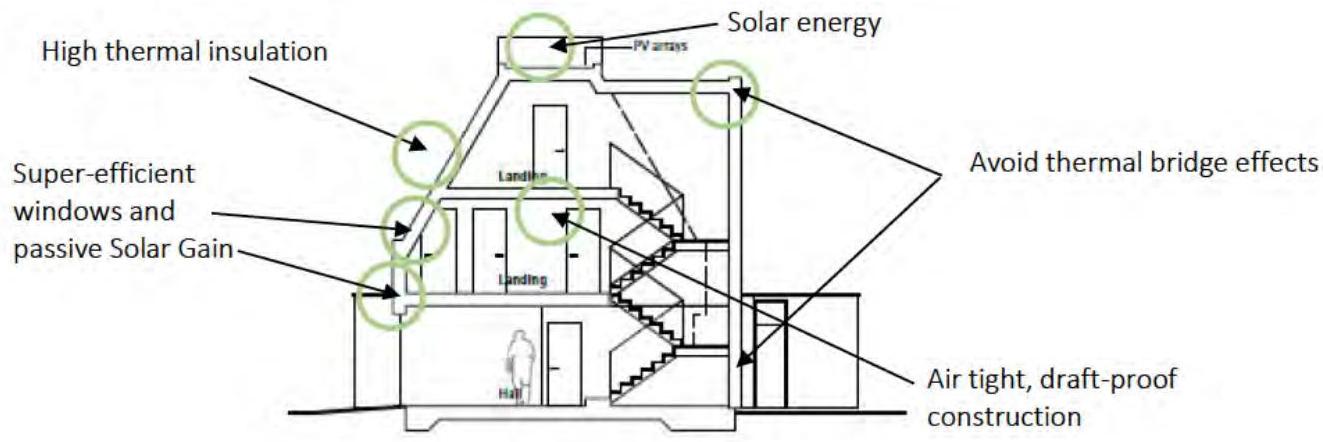
In line with the above Sustainable Design Strategy, the following Energy Efficient design measures are specified.
Fig 3. Efficient Design Measure examples
The Proposed specifications and key energy efficient design measures are as follows:
2.3.2 Choice and Impact of Renewable Technology All reasonable technologies were investigated for their suitability to the site and development; please refer to section 3 for details. In addition to energy efficiency measures, it is proposed that the development will feature the following Low/Zero carbon Technologies:
The above LZC contribution has provided a 100.1% reduction in CO2 following Energy Efficiency Measures.
Page 14 of 37 December 2020
2.3.3 Energy and CO2 Reduction Summary
A summary of all stages of the energy demand assessment from baseline figures to final carbon reduction are shown in Figures 1 & 2 below:
| Summary of CO2 Emission Reductions | Total CO2 emissions (kgCO2/year) | Total CO2 emissions (kgCO2/year) | Total CO2 emissions (kgCO2/year) |
|---|---|---|---|
| Carbon Factors | SAP 9.0 | SAP 10.0 | SAP 10.1 |
| Baseline emissions | 15260.4 | 9461.7 | 6109.8 |
| Improved emissions (after application of energy efficiency measures) | 13060.4 | 8085.9 | 5219.5 |
| Improved emissions (after incorporation of efficient energy supply) | 6400.7 | 1677.3 | 2873.5 |
| Improved emissions (after incorporation of renewable energy technology) % CO2 displaced in total | -9.1 | -4.1 | -2.4 |
| % CO2 displaced in total | 100.1% | 100% | 100% |
| % CO2 displaced by energy efficiency measures | 14.4% | 14.5% | 14.6% |
| % CO2 displaced by efficient supply of energy | 51.0% | 64.5% | 67.9% |
| % CO2 displaced by LZC Technologies | 100.1% | 100.1% | 100.1% |
Table 2: Summary of CO2 Reductions
Page 15 of 37 December 2020
| Energy demand (kWh pa) | Energy saving achieved (%) | Regulated CO2 emissions ( kg pa) | Saving achieved on resi dual CO2 emissions (%) | |
|---|---|---|---|---|
| Building Regulations Part L compliance (“Baseline” energy demand & emissions) | 44925.2 | 15260.4 | ||
| Proposed scheme after energy efficiency measures a nd CHP (“Residual” energy demand & emissions) | 38378.8 | 14.6% | 13060.4 | 14.4% |
| Proposed scheme after on‐site renewables | -17.5 | 100.0% | -9.1 | 100.1% |
| Proposed scheme offset for financial contribution or other “allowable solution” | 0 | 0 | 0 | 0 |
| Total savings on energy demand and carbon emissions | 100.0% | 100.1% |
Table 3. Total Energy and Carbon Emissions Savings Based on SAP 9.0 Carbon Factors
Page 16 of 37 December 2020
For a full Breakdown of the figures and calculations please see Appendix A – Energy Demand Assessment Spreadsheet. Baseline energy demand ‘Standard Assessment Procedure – SAP 2012’ was used to produce example SAP reports to generate the figures used within the calculations.
| Baseline energy demand (kWh pa) | 44925.2 |
|---|---|
| Regulated emissions (kg pa) | 15260.4 |
Heating
The heating and cooling hierarchy has been applied to the design process of the development. It has resulted in large focus on energy efficiency measures and as can be seen in Figure 1.
| Energy savings from the use of CHP systems (kWh pa) | - |
|---|---|
| Emission savings from the use of CHP systems (kg pa) | - |
| Total regulated emissions after CHP savings (kg pa) | 15260.4 |
Energy efficiency
The following table demonstrates how the development achieves the reduction in carbon dioxide emissions from energy efficiency measures.
| Energy savings from energy efficiency measures (kWh pa) | 6546.4 |
|---|---|
| Emission savings from energy efficiency measures (kg pa) | 2200.0 |
| Total regulated emissions after CHP savings and energy effi ciency measures (kg pa) (“residual emissions”) | 13060.4 |
Page 17 of 37 December 2020
| Energy saving from the use of renewables (kWh) | 38396.3 |
| Saving on residual emissions from the use of renewables (kg) | 13069.4 |
| Saving on residual emissions from the use of renewables (%) | 100.1% |
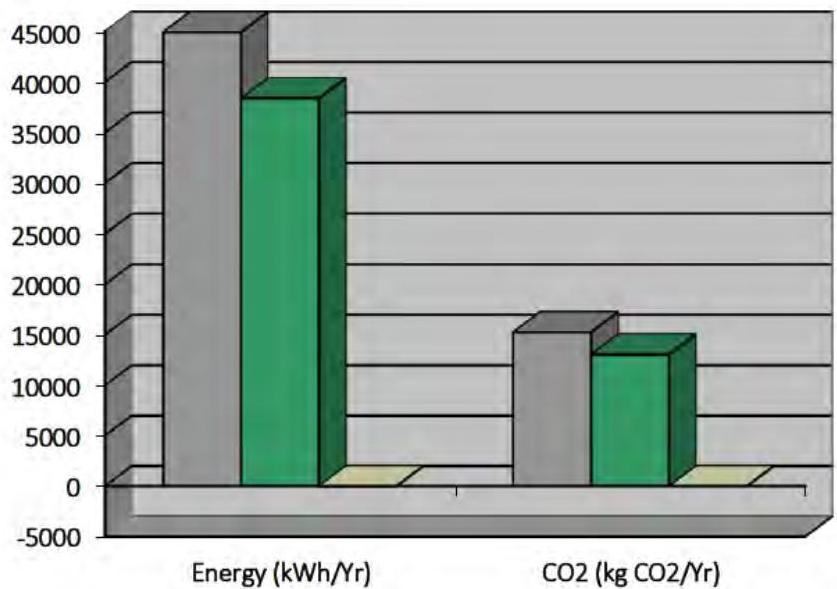
The following table demonstrates how the development achieves the reduction in carbon dioxide emissions from LZC technologies. The chart below illustrates the improvements over the Building Regulations Compliant Baseline:
2.3.4 Upgrading Existing Development Proposal
It has been discussed that, as a result of Environmental Policy 1 (see section 2.2), the retaining and upgrading of existing buildings, in order to protect to the character and appearance of the countryside, is preferred. However, as Housing Policy 12 mentions, coupled with the climate emergency, if the existing building(s) are incapable of renovation to provide sufficient environmental improvement in order to meet either Building Regulations or comply with the Climate Change Bill, a replacement dwelling is the only acceptable option.
In this sub-section a summary of the issues relating to renovating the existing buildings are provided, along with the estimated carbon emissions and potential EPC ratings of the existing buildings and bestcase scenario upgraded building, with respects to its building envelope and mechanical systems, will be provided. Also, the scale of the renovations required for this proposal would classify it as a ‘major renovation’ meaning it will therefore to need to meet a minimum SAP/EPC rating of 82, which is increasing annually.
The existing buildings have been investigated thoroughly for the potential of their renovation, however, as the figures below will further evidence, they are simply incapable. This conclusion has been reached as a result of multiple factors, the first of which involves the incapacity to provide any floor insulation. The importance of this resides in the fact that floors account for a third of the primary external elements from which heat is lost, and as a consequence significant additional energy demand will be required to offset the losses experienced resulting in increased emissions.
A further factor, which can also be linked with the previous point, is that thermal bridges, of which there will be a significant number, cannot be minimised. Therefore, there will be many areas within the entire building envelopes that heat will continuously be lost, and total air tightness will be non-existent. The minimising of these thermal bridges and subsequent achieving of low air permeability rates is essential for new build dwellings to now achieve compliance with Building Regulations and NZC status, clearly evidencing their significance in reducing energy demand, emissions of buildings and the incapability of achieving any form of environmental improvement with this renovation.
The potential for the installation of mechanical ventilation systems to offset the emissions produced by the existing buildings is also not viable. This is due to the effectiveness of these systems being reliant on buildings being airtight to maximise the circulating of air throughout the building. However, due to the inability to minimise thermal bridges the air change rates of the existing buildings will be high which will result in air and heat being lost as opposed to circulated, completely negating the abilities of these mechanical ventilation systems.
Finally, the primary focus of retaining and renovating is to preserve the character of the countryside, and in order to maintain but also environmentally improve the existing buildings, the external walls will need to be upgraded as they are the largest element of the external envelope and will lose the most heat. However the only feasible way to insulate these walls to not impact on the internal areas of the buildings is to external insulate and render over to a significant degree, yet by upgrading in this way, the entire external façade will be changed resulting the complete loss of its character and vernacular.
Page 19 of 37 December 2020
As mentioned earlier in this sub-section the figures below outline the likely emissions and EPC ratings of the existing buildings. These have been calculated using the same energy hierarchy methodology outlined in section 2.3.1.
| Summary of CO2 Emission Reductions | Total CO2 Emissions (kgCO2/year) | Proposed EPC Rating | Proposed Environmental Impact (EI) Rating |
|---|---|---|---|
| Baseline emissions | 362532.4 | G (1) | G (-10) |
| Improved emissions | 135514.0 | F (36) | F (30) |
Table 4: Summary of CO2 Reductions and EPC ratings
As can be seen from the above table, even when existing buildings are upgraded to the highest level possible, the emissions that will still be produced from development equate to 129 tonnes/CO2/year. This falls substantially short of the NZC requirement that the Climate Change Bill 2020 has been adopted to achieve and remains a heavy net emitter of greenhouse gas meaning it cannot be deemed as providing a sufficient environmental improvement. Furthermore, the resultant SAP rating achieved is 36 which falls substantially short of the required rating of 82 required to be compliance, not to mention achieving EPC and EI ratings of F’s, which are below the legally allowable rating of E in domestic buildings in the United Kingdom.
Additionally, when this is compared with the proposal outlined in 2.3.3, which achieves an EPC rating of a high A (101), as well as meeting the NZC carbon target, it is determined that this is evidence of sufficient environmental benefit in providing a replacement dwelling.
Page 20 of 37 December 2020
2.3.5 Subterranean Proposal
It has also been discussed that, as a result of Environmental Policy 1, a staggered down the east slope with portion being situated subterranean within the hill should be considered.
This, however, would result in a scheme that does not follow the Charters Institution of Building Services Engineers (CIBSE) guidelines, which in TM60 – Good practice in the design of homes states in two separate sections:
The guidance also emphasises the importance of prioritising passive design to reduce the need for mechanical and electrical systems, reducing costs and energy demands…
Lighting design should prioritise the use of natural light.
The subterranean scheme would be limited in the amount of passive solar gain and natural light it would be receiving as a result of minimising its externally exposed areas but having much of the dwelling underground. This would result in a significant reliance on multiple mechanical ventilation systems to adequately circulate air throughout the dwelling to maintain a healthy internal environment that is suitable for living in, and artificial lighting to supplement the reduced natural light received. Therefore the design is in complete contradiction with the CIBSE guidelines as it prioritises systems that require energy.
Proposing a scheme that prioritises systems requiring additional energy to function will also result in a development that is in conflict with Housing Policies 12 and 14 as it will have a worsened environmental performance. This is due to this proposal producing increased amounts of carbon emissions as a result of requiring these systems be almost continuously active in order to maintain adequate living environments.
A further issue with proposing a subterranean scheme that has a significant reliance on mechanical systems is that the decreased environmental performance will need to be offset elsewhere within the development; whether that be through increased insulation in the external building envelope or increased renewable technologies. This consequently will increase the embodied carbon of the development due to more emissions being produced from the additional construction materials, the buildings processes required to implement these and the transportation.
The table below provides a summary of the estimated operational carbon emissions and potential EPC ratings of the subterranean building. These have been calculated using the same energy hierarchy methodology.
Page 21 of 37 December 2020
| Summary of CO2 Emission Reductions | Total CO2 Emissions (kgCO2/year) | Proposed EPC Rating | Proposed Environmental Impact (EI) Rating |
|---|---|---|---|
| Baseline emissions | 15553.6 | - | - |
| Improved emissions | 10864.1 | - | - |
| Improved emissions (after incorporation of clean energy) | 10812.1 | C (78) | C (80) |
Table 5: Summary of CO2 Reductions and EPC ratings
As can be seen from the above table, the subterranean option would still be producing 10 tonnes/CO2/year, which is 4 tonnes more than the current proposal, when compared with the same technologies (see row 5 and column 2 of table 2).
Furthermore, the estimated EPC rating without the addition of PV of this subterranean option is a low C (78) which, when compared with the high B (87) achieved by the current proposal also without PV, is far lower and evidently less efficient.
Page 22 of 37 December 2020
2.4 Adaptation to Climate Change
In addition to the primary building design and fabric, many other issues that will influence creating a Sustainable Development, including flood prevention, material use, waste minimisation and transport. All of these issues feature within the Isle of Man climate change reports, the Strategic Plan 2016 and national climate change action plans, as areas that need to be addressed in order to proficiently pursue sustainable developments, NZC and maximise carbon sequestration.
This section of the report will analyse the proposal against all of the relevant aspects of creating a sustainable development and how it subsequently addresses the relevant planning policies discusses in section 2.2. These should all be taken into consideration from the start of the development and promoted throughout the building construction on site in order to maximise their benefits. Additionally, features which enable more efficient usage should also be specified to encourage the end building users to maintain efficient use once construction has been completed.
Action Plan 3.1 of the Isle of Man Government Action Plan for Achieving Net Zero Emissions by 2050 outlines how a strategic plan is to be development for delivering 75% of the Islands electricity from renewable sources by 2035. Therefore the Isle of Man is going to ever increasingly benefit from the decarbonization of the electrical grid and associated emission and energy demand benefits that will come with it.
As evidence of the benefits associated with this and to be more representative, robust and up to date, the table in section 2.3.3 includes two extra columns for the SAP 10.0 and SAP 10.1 carbon factors, as these are to be adopted in the updated Building Regulations and more characteristic of an all-electric energy source for modern, fabric first high-quality buildings.
The calculations appropriately demonstrate improvement in CO2 emissions in excess of the Building Regulations and when using the SAP 9.0, 10 and 10.1 carbon factors, the development still achieves NZC, meaning that the current proposal is futureproofed against any updates or changes that may affect environmental performance.
These improvements are in completely line with Climate Change Bill 2020 target of achieving NZC.
Furthermore, the proposed building services strategy will enable the development to track the ongoing carbon reductions being delivered by grid-scale infrastructure. Therefore, the development’s carbon footprint will continue to improve over its useful life.
Page 23 of 37 December 2020
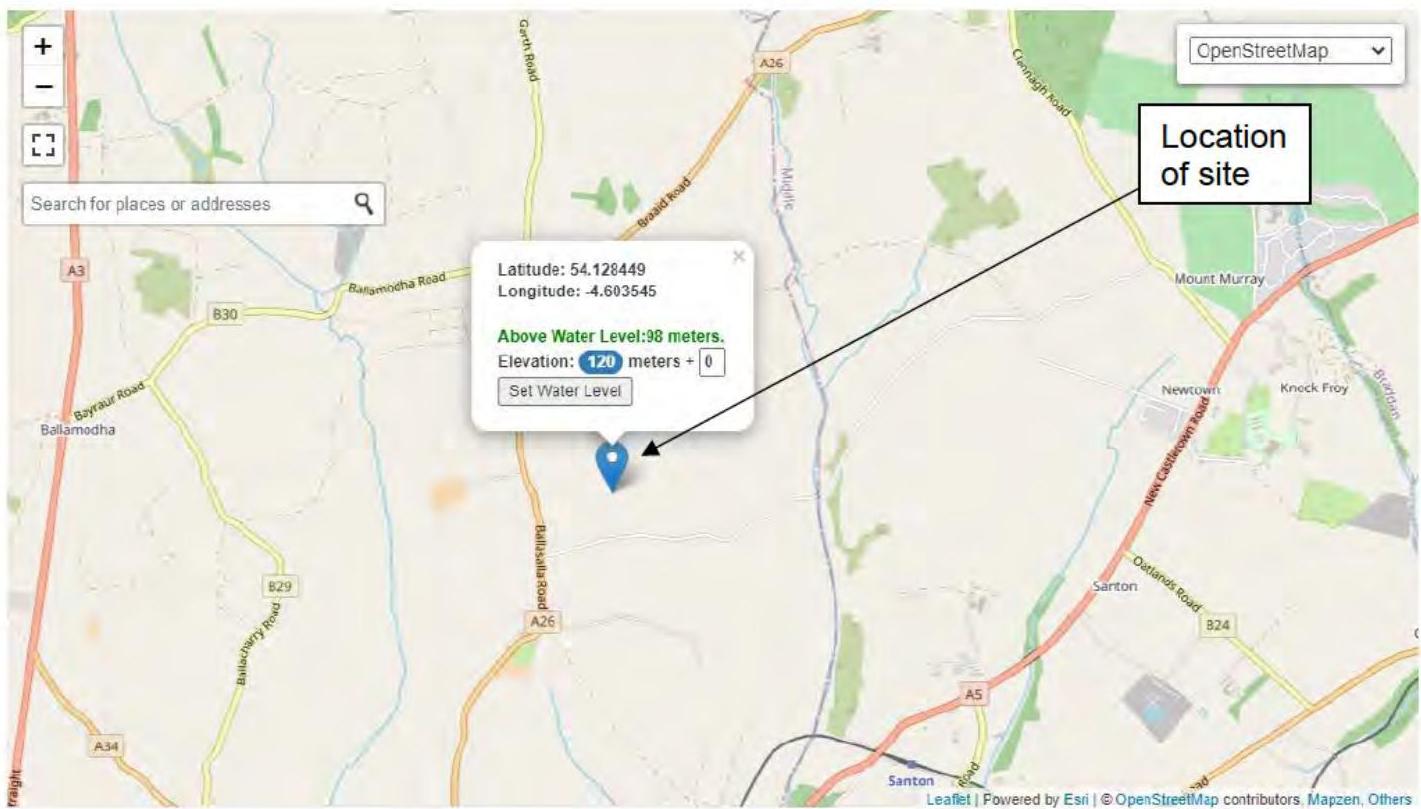
Fig 4: Flood Risk Map
The above map and snippet have been taken from FloodMap website and shows that the site is situated at an elevation of $120\mathrm{m}$ , which is around 98m above water level. Additionally, there are no flood risk maps for the site location and surroundings areas, further indicating that there is minimal to no risk of flooding.
2.4.3 Green Blue Infrastructure 2.4.3.1 Sustainable Drainage Systems (SUDs)
Even though it has been shown that the proposed scheme is located on a site with a low to zero flood risk, it should not detract from the need to ensure that the levels of surface water run-off do not increase from the existing development to the proposed, especially due to the new scheme having a different footprint and resulting in new areas of impermeable surfacing. The Town and Country Planning Act also outlines that sustainable drainage needs to be investigated for all sites.
Therefore the development will look to singular or multiple SUDs features to aid in the harvesting, infiltrating, storing or treating of surface water. Examples that will be investigated for the proposed site include swales, permeable paving, filter strips/drains, rainwater harvesting (which will also benefit internal water consumption), green roof and basins or ponds.
By incorporating SuDs, flood risk can be managed and mitigated. Section 1.1 of the SuDs Manual (Ciria C753) states the following:
“Sustainable drainage systems (SuDS) can deliver multiple benefits.
Surface water is a valuable resource, and this should be reflected in the way it is managed and used in the built environment. It can add to and enhance biodiversity, beauty, tranquillity and the natural aesthetic of buildings, places and landscapes and it can help make them more resilient to the changing climate.”
The general concept of SUDs is to manage the flood and pollution risks in developed areas. This is done by efficiently managing surface water run-off by either slowing down the surface water run-off, or by reducing the quantity of surface water run-off. There are different methods to achieve this such as:
The SuDS Manual describes the four pillars of SuDS design as Water Quality, Water Quantity, Amenity and Biodiversity as illustrated in Figure 3 below:
Page 25 of 37 December 2020
Fig 5. Representation of figure 2.1 of the SUDs Manual
SuDS are increasingly gaining popularity as a holistic solution to a wide range of pressing issues including flood risk, water pollution, groundwater depletion, biodiversity loss and urban decline.
Drainage Hierarchy
To alleviate pressure on existing sewer networks and to address issues of climate change the following hierarchy has been developed and implemented from a planning perspective.
The Planning Practice Guidance, states that:
“generally, the aim should be to discharge surface run-off as high up the following hierarchy of drainage options as reasonable practicably:
The “Building Regulations Approved Document H” refer to this discharge hierarchy.
Page 26 of 37 December 2020
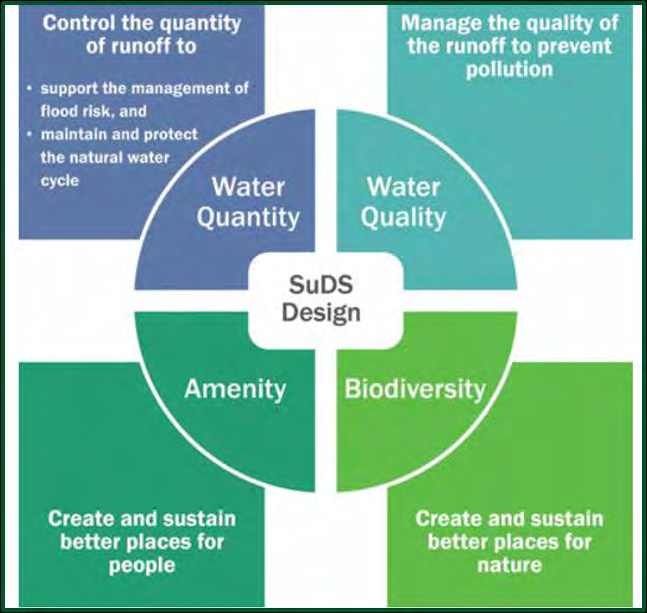
Table 6. Outline of types of green/blue infrastructure and associated benefit
Similarly, to the previous section on SUDs, the nature of the proposal: including the demolishing of an existing building and potential change in area of impermeable surface, there could be adverse impacts on the surrounding ecology as well potential for the enhancement. This particular issue arises in the Town and Country Planning Act, Action Plans 5.7 and 5.9 as well as Environmental Policy 1.
The proposal acknowledges the importance of ecology and biodiversity and will ensure the retention of as much ecology as viable including all important ecological features. It will also look to enhance the ecological value of the site and increase biodiversity by including a large amount of additional hedge and tree planting throughout the site, as can be seen on the site location plan included in section 2.1. This biodiversity approach meets the requirements of biodiversity net gain, whereby the natural environment is to be left in better state than before construction. This would put the development in line with also planning policy acts and policies mentioned in the first paragraph of this sub-section, in addition to future policy for the whole of England, which seeks to make biodiversity net gain mandatory.
| Description | Benefit |
| Flood risk management | SuDS aim to have an attenuating affect by slowing down and storing surface water run-off |
| Drainage resilience | Future proofing designed to be resilient against climate change |
| Natural flow regime protection | Mimic natural drainage arrangements to emulate natural flow |
| Water quality | Filter out pollutants and discharge cleaner water |
| Water reuse | Can be strategically placed to clean and capture water for reuse |
| Biodiversity and ecology | SuDS use vegetation and natural landscape to support biodiversity and ecology |
| Amenity | Improve visual integrity and desirability of the site by implementing green and blue features |
| Carbon reduction | SuDS can reduce carbon use throughout the life cycle including construction, maintenance, and demolition |
| Microclimate | Aim in reducing heat island effects |
| Education | Educate and engage the general public about surface water management |
A further benefit that can be attributed to the additional tree planting proposed is trees ability to sequester carbon from the atmosphere, to further contribute to Action Plans 5.7 and 5.9 and the Town and Country Planning Act.
Part G of the Building Regulations requires all new dwellings to have an internal water consumption of no greater than 110 litres / person / day, unless specified to be less. Therefore, fittings proposed have low flow rates, capacities, effective flush volumes etc. Example targets for these to achieve the required internal consumption are as follows:
Table 7. Internal Water Efficiency Flow Rates The above rates will achieve a total internal water consumption of 106.31. The specifying of 'A' rated appliances should be prioritised where possible.
Adequate bin provision will be included as part of the proposal so that the various types of recycling can be collected separated or collectively, whichever is preferred, as well as household waste.
In line with Strategic Policies 1,3 and 4 the proposed development will look to recycle as much of the demolished building as is viably possible to ensure that construction waste sent to landfill is considerably reduced. As a result, this will also reduced the embodied carbon, environmental pollution
| Appliance | Unit of measure | Amount (litres) |
|---|---|---|
| WC (Dual flush) | Full flush volume | 4 |
| WC (Dual flush) | Part flush volume | 2.6 |
| Taps (excluding kitchen) | Flow rate l/min | 5 |
| Kitchen taps | Flow rate l/min | 6 |
| Bath | Capacity to Overflow | 170 |
| Shower | Flow rate l/min | 8 |
| Washing Machine | Litres / kg dry load | 8.17 |
| Dishwasher | Litres / place setting | 1.25 |
and disturbance that would be associated with the continuous transportation of construction waste to landfill and the journey back. This strategy is also in line with the waste hierarchy.
Of all global energy related carbon dioxide emissions, buildings and construction account for almost 40% (UN Global Status Report 2018). Around 15% of these are emissions associated with constructing new buildings (UKGBC). This point, coupled with Environmental Policy 1, Housing Policy 14 and Strategic Policies 1, 3 and 4 all outlining the importance and need to maintain the character and appearance of the countryside clearly define the importance of prioritising the limiting of embodied carbon and promoting the use of local materials.
Therefore, as discussed briefly in the previous subsection on construction waste, the proposal includes the recycling and reusing of as much of the demolished building as is viably possible. The main section of the house is to utilise this retained material from the existing buildings to ensure that the focal point of the house retains the character of the existing site, whilst also considerably reducing its potential embodied carbon.
Where new materials are to be used, such as within the proposed modern section of the house, careful consideration of their environmental impact will be taken. This will be achieved by ensuring that only materials that score well under The Green Guide to Specification. This useful online tool can be used as a reference that provides guidance on the relative environmental impacts for a wide range of different building specifications. The BRE’s Environmental Profile Methodology determines the Life Cycle Assessment (LCA) of materials, which is what the Guide’s specifications are based on.
In order to take full advantage of low impact materials, elements key to the scheme will be specified to achieve ratings of between A+ and C under The Green Guide’s ratings. Insulation materials that are specified will also have a global warming potential (GWP) of 5 or less, with an ODP of 0. Additionally, 100% of all timber used as part of the scheme will be responsibly sourced from suppliers that are either Forest Stewardship Council (FSC) accredited, Programme for the Endorsement of Forestry Certification accredited, or a similar recognised accreditation body.
To reduce emissions of gases with high global warming potential (GWP) and nitrogen oxide (Nox) into the atmosphere, new buildings will be specified with insulating materials that have a GWP of less than 5. This will follow throughout the development to reduce the impact that the construction phase has upon climate change.
Additionally, the following measures will be implemented:
• Pollution Prevention Guidance will be adhered to in respects of air (dust) and water (ground and surface) pollution during the demolition and construction phase. Page 29 of 37 December 2020
The above findings and technology will all help to promote healthy housing for the end residents which has been identified by the World Health Organisation (WHO) as an increasingly important factor in increasing quality of life, preventing disease and illness, and mitigating climate change.
As a result of the site being situated in a rural location the access to public transport is restricted and therefore travelling by car will be a necessity. However, there is a substantial garage being provided as part of the scheme which will be more than adequate for housing bicycles in order to promote the use of these for smaller journeys. It is also proposed that at least one electric vehicle charging (EVC) point will be included so as to provide the ability for the end residents to swap to the more environmentally friendly electric car in the future. This will also futureproof the proposed development against the Climate Change bills as they look to transition the island away from fossil fuel cars.
Page 30 of 37 December 2020
Solar Hot Water (Thermal)
Solar water heating systems are one of the more familiar renewable technologies used at the moment. They use the energy from the sun to heat water, most commonly for hot water needs. Solar heating systems use a heat collector that is usually mounted on a roof in which the sun heats a fluid. This fluid is used to heat water that is stored in either a separate hot water cylinder or in a twin-coil hot water cylinder (the second coil is used to provide additional heating from a boiler or other heat source).
Solar hot water panels could be used however, PV will provide slightly better savings and avoid the need for water storage cylinders when compared.
Renewable Technology Not Chosen.
Photovoltaic Panels (PV)
Photovoltaic modules convert sunlight directly to DC electricity. The solar cells consist of a thin piece of semiconductor material, in most cases of silicon. Through a process called doping, very small amounts of impurities are added to the semiconductor, which creates two different layers called n-type and ptype layers.
Certain wavelengths of light are able to ionize the silicon atoms, which separates some of the positive charges (holes) from the negative charges (electrons). The holes move into the positive or p-layer and the electrons into the negative or n-layer. These opposite charges are attracted to each other, but most of them can only re-combine by the electrons passing through an external circuit, due to an internal potential energy barrier. This flow of electrons produces a DC current.
A PV array can be mounted on the suitable roof space. The amount proposed at this stage is 15.0kWp Site Wide PV Array (Approx. 38no. 400W Panels) implemented onto a suitable roof space, orientated southeast/southwest.
Chosen Renewable Technology
Page 31 of 37 December 2020
Ground Source Heat pumps
A heat pump is a device that takes up heat at a certain temperature and releases it at a higher temperature. The essential components of a heat pump are heat exchangers (through which energy is extracted and emitted) and a means of pumping heat between the exchangers. The effectiveness of the heat pump is measured by the ratio of the heating capacity to the effective power input, usually known as the coefficient of performance (COP). Ground-source heat pumps (GSHP) extract heat from the ground. They are classified as either water-to-air or water-to-water units depending on whether the heat distribution system in the building uses air or water. Ground source heat pumps either use long shallow trenches or deep vertical boreholes to take low grade heat from the ground and then compress it to create higher temperatures.
A GSHP is proposed for this development due to it being a clean and efficient energy source and allowing the achieving of NZC. It is also a technology that will benefit the most from the decarbonization of the electrical grid and therefore remain as efficient in the future.
Chosen Renewable Technology
Air Source Heat pumps
Air source heat pumps absorb heat from the outside air. This is usually used to heat radiators, underfloor heating systems, or warm air convectors and hot water in your home. An air source heat pump extracts heat from the outside air in the same way that a fridge extracts heat from its inside.
The system performs down to air temperatures of -20°c which means that they are more than suitable for installations within the UK. Hot water and Heating can be provided 365 days a year. The hot water is produced without the aid of electrical immersions and at 55°c is more than hot enough for baths and showers.
There are two main types of air source heat pump system:
Air Source heat pumps are a good option to provide heating and cooling however, the preferred heat pump of choice for this proposal is the GSHP.
Page 32 of 37 December 2020
Biomass Heating
Biomass is any plant-derived organic material that renews itself over a short period.
Biomass energy systems are based on either the direct or indirect combustion of fuels derived from those plant sources. The most common form of biomass is the direct combustion of wood in treated or untreated forms. The use of biomass is becoming increasingly common in some European countries.
The environmental benefits relate to the significantly lower amounts of energy used in biomass production and processing compared to the energy released when they are burnt. This can range from a four-fold return for biodiesel to an approximate 20-fold energy return for woody biomass. Biomassfuels can be used to produce energy on a continuous basis (unlike renewables such as wind or solar energy) and it can be an economic alternative to fossil fuels as it is a potential source of both heat and electricity.
However, Biomass systems have particular design management and maintenance requirements associated with sourcing, transportation and storage and are therefore more commonly used in commercial developments rather than domestic installations. It can be less convenient to operate than mains-supplied fuels such as natural gas and are more management intensive and require expertise in facilities management. Sources of biomass can also fluctuate, so boilers should be specified to operate on a variety of fuels without risk of overheating or tripping out.
A communal biomass system would not be feasible for this development due to the expense associated with the necessary output to heat all dwellings on the site.
Renewable Technology Not Chosen
Wind
Wind turbines convert the kinetic energy in wind into mechanical energy that is then converted to electricity. Turbines are available in a range of sizes and designs and can either be free-standing, mounted on a building or integrated into a building structure.
The cost and savings associated with this technology when compared with the preferred option of PV panels mean it not the most feasible option and therefore has not be proposed.
Page 33 of 37 December 2020
| Planning Document Policy/Action | Justifications of compliancy |
| Climate Change Bill 2020 – All Clauses | The Sustainable Design Strategy includes efficient design measures that aspire to Passive House design levels, glass stack that promotes passive solar gain and natural ventilation, a GSHP as a clean source of main heating and hot water and PV panels. These all result in the proposed development achieving a low carbon status and meeting the NZC requirement as stipulated within the Climate Change Bill. |
This statement has assessed the proposed development at the Ballacroak site against the relevant climate change, environmental, housing and strategic policies and targets, as outlined within: Climate Change Bill 2020, The Isle of Man Government Action Plan for Achieving Net Zero Emissions by 2050 and the Isle of Man Strategic Plan 2016 and the Town and Country Planning (Amendment) CT 2019, through the following of the energy hierarchy, the modelling of the scheme in the FSAP 2012 software and addressing all aspects of a sustainable development.
As part of this process, the development was designed with a fabric first approach; with U-values, design air permeability and ventilation targets all aspiring to Passive House design standards. Additionally significant emphasis has been put on optimising passive solar gain in order to utilise the benefits that are associated; the omission of mechanical ventilation, the lack of reliance on artificial lighting, the reduction in overall heating demand and the easier achieving of NZC. This approach demonstrates a holistic low energy design concept, involving very low limiting values and thus led to high-energy performance targets and being defined as a low carbon development and ultimately allowing NZC to be achieved.
Furthermore, an LZC feasibility assessment was carried out, with all suitable technologies investigated for their suitability to the site and development. The assessment determined that a GSHP would be incorporated into the scheme as the main source of heating and hot water and 15kWp system would be proposed, which would equate to 38No panels. These systems would provide bring the reduction in carbon emission to $100\%$ , across SAP 9.0, 10.0 and 10.1 carbon factors and the subsequent classification of NZC.
The development will also be adapting to climate change by incorporating sustainable drainage measures into the design, protecting existing ecology, enhancing biodiversity to achieve net gain, providing cycle storage and EVC ports within the garage, ensuring that internal water consumption does not exceed 110L/person/day, prioritizing the reusing and recycling of the demolished buildings and using only locally sourced and indigenous materials when necessary.
Finally, table 8 below outlines how the proposed scheme complies with all the relevant policies, action plans and targets required for approval.
| Action Plan 3.1 | The proposed development proposed a GSHP as the main heating source which is a highly efficient method of heating with the current electrical grid however it will only further improve its environmental performance as the electrical grid of the Isle of Man is decarbonised. |
|---|---|
| Action Plan 5.7 & 5.9 | SUDs will be incorporated into the external design of the scheme to ensure that the dwelling is proofed against any potential future flooding whilst also allowing the capturing, treating and storing of surface water run-off. The scheme is to retain existing ecology of importance whilst including tree and hedge planting to enhance the ecological value of the site to achieve biodiversity net gain and also sequester large amount of carbon from the atmosphere. |
| Strategic Policy 1 | The scheme is to retain the existing single track road as the access point of the site. All existing buildings that are demolished will be recycled, to as great an extent as possible, to ensure the re-using of scarce indigenous building materials that were present. |
| Strategic Policy 3 & 4 | The proposal will reuse and recycle as much of the demolished buildings as possible, whilst including local materials where this is not possible, in order to respectively minimise and maximise the embodied carbon and environmental performance of the development. This will also allow for the retention of much of the existing character and appearance of the site. An additional benefit of this will be reducing the need for trips to the landfill and the associated environmental pollution and disturbance that is caused as a result of this. |
| Strategic Policy 5 | The scheme is achieving a NZC status, with the potential of being carbon positive with the inclusion of a solar battery, using a clean energy system that can utilise energy produced on site, will be biodiversity net gain and also maximise carbon sequestration. |
| Environmental Policy 1 | The proposed scheme results in a development that’s environmental performance is significantly better than the existing buildings, even when upgrades are maximised. This is achieved due to it’s increase in size, from the glass stack and large amounts of glazing included within the modern section of the proposal, because of the benefits associates; they provide passive solar gain, natural and cross-ventilation and considerable natural light thereby omitting the need |
| Housing Policy 12 |
Table 8. Summary of relevant policy and target points with justifications
As a result of all the above, the proposed scheme allows the development to comply with all policies, action plans and targets as stipulated by the Isle of Man government.
| Housing Policy 14 | for mechanical ventilation systems and artificial lighting and all emissions associated. The development also achieves low carbon and NZC statuses which further emphasises the improvement in the environmental performance of the site, with section 2.3.4 outlining how this would not be possible if the existing buildings were renovated. |
Appendix A – Energy Demand Assessment – Ballacroak
| House Type | Ballacroak | TOTAL (kWh/yr) | TOTAL (kgCO2/yr) | TOTAL (kgCO2/yr) | TOTAL (kgCO2/yr) | |||
|---|---|---|---|---|---|---|---|---|
| Total floor area | 86.83 | SAP 9.0 | SAP 10 | SAP 10.1 | ||||
| BASELINE Dwelling Emission Rate (DER) | Total Energy Demand (kWh/yr) | Total Energy Demand (kWh/yr) | Carbon Emission Factor | Associated Total CO2 (kgCO2/yr) | Carbon Emission Factor | Associated Total CO2 (kgCO2/yr) | Carbon Emission Factor | Associated Total CO2 (kgCO2/yr) |
| Main Heating Fuel Requirement (DER) | 40583.69 | 40583.7 | 0.216 | 13587.4 | 0.210 | 8522.6 | 0.136 | 5519.4 |
| Secondary Main Heating Fuel Requirement (DER) | 0 | 0.0 | 0.519 | 0.0 | 0.233 | 0.0 | 0.136 | 0.0 |
| Secondary Heating Fuel Requirement (DER) | 0 | 0.0 | 0.216 | 0.0 | 0.233 | 0.0 | 0.136 | 0.0 |
| Water Fuel Requirement (DER) | 3150.27 | 3150.3 | 0.216 | 1054.7 | 0.210 | 661.6 | 0.136 | 428.4 |
| Electricity Pumps Fans Requirement (DER) | 75 | 75.0 | 0.519 | 38.9 | 0.233 | 17.5 | 0.136 | 10.2 |
| Electricity Lighting Requirement (DER) | 1116.26 | 1116.3 | 0.519 | 579.3 | 0.233 | 260.1 | 0.136 | 151.8 |
| TOTAL PER DEVELOPMENT | 44925.2 | 15260.4 | 9461.7 | 6109.8 | ||||
| AFTER ENERGY SAVING MEASURES Dwelling Emission Rate (DER) | Total Energy Demand (kWh/yr) | Total Energy Demand (kWh/yr) | Carbon Emission Factor | Associated Total CO2 (kgCO2/yr) | Carbon Emission Factor | Associated Total CO2 (kgCO2/yr) | Carbon Emission Factor | Associated Total CO2 (kgCO2/yr) |
| Main Heating Fuel Requirement (DER) | 34007.4 | 34007.4 | 0.216 | 11385.7 | 0.210 | 7141.6 | 0.136 | 4625.0 |
| Secondary Main Heating Fuel Requirement (DER) | 0 | 0.0 | 0.519 | 0.0 | 0.233 | 0.0 | 0.136 | 0.0 |
| Secondary Heating Fuel Requirement (DER) | 0 | 0.0 | 0.519 | 0.0 | 0.233 | 0.0 | 0.136 | 0.0 |
| Water Fuel Requirement (DER) | 3225.16 | 3225.2 | 0.216 | 1079.8 | 0.210 | 677.3 | 0.136 | 438.6 |
| Electricity Pumps Fans Requirement (DER) | 30 | 30.0 | 0.519 | 15.6 | 0.233 | 7.0 | 0.136 | 4.1 |
| Electricity Lighting Requirement (DER) | 1116.26 | 1116.3 | 0.519 | 579.3 | 0.233 | 260.1 | 0.136 | 151.8 |
| TOTAL PER DEVELOPMENT | 38378.8 | 13060.4 | 8085.9 | 5219.5 | ||||
| FINAL Dwelling Emission Rate (DER) | Total Energy Demand (kWh/yr) | Total Energy Demand (kWh/yr) | Carbon Emission Factor | Associated Total CO2 (kgCO2/yr) | Carbon Emission Factor | Associated Total CO2 (kgCO2/yr) | Carbon Emission Factor | Associated Total CO2 (kgCO2/yr) |
| Main Heating Fuel Requirement (DER) | 9944.62 | 9944.6 | 0.519 | 5161.3 | 0.233 | 2317.1 | 0.136 | 1352.5 |
| Secondary Main Heating Fuel Requirement (DER) | 0 | 0.0 | 0.519 | 0.0 | 0.233 | 0.0 | 0.136 | 0.0 |
| Secondary Heating Fuel Requirement (DER) | 0 | 0.0 | 0.519 | 0.0 | 0.233 | 0.0 | 0.136 | 0.0 |
| Water Fuel Requirement (DER) | 1241.89 | 1241.9 | 0.519 | 644.5 | 0.233 | 289.4 | 0.136 | 168.9 |
| Electricity Pumps Fans Requirement (DER) | 30 | 30.0 | 0.519 | 15.6 | 0.233 | 7.0 | 0.136 | 4.1 |
| Electricity Lighting Requirement (DER) | 1116.26 | 1116.3 | 0.519 | 579.3 | 0.233 | 260.1 | 0.136 | 151.8 |
| BE CLEAN TOTAL PER DEVELOPMENT | 12332.8 | 12332.8 | 0.519 | 6400.7 | 0.233 | 2873.5 | 0.136 | 1677.3 |
| PV Energy Produced (DER) | 12350.2 | 12350.2 | 0.519 | 6409.8 | 0.233 | 2877.6 | 0.136 | 1679.6 |
| TOTAL PER DEVELOPMENT | -17.5 | -9.1 | -4.1 | -2.4 |
Page 37 of 37 December 2020
Copyright in submitted documents remains with their authors. Request removal
View as Markdown