Loading document...
| Appeal Decision | ||
| Amended |
| Headland House Bradda Head Port Erin Isle of Man IM9 6PP British Isles | Received 23.6.07, DOLGE 04 1243 Town and Country Planning Acts 1934 to 1999 PLANNING and BUILDING CONTROL DIRECTORATE Date and Officer Initials Initial Decision | Land Engineering & Water Management Site Surveys & Infrastructure Design Construction / Project Management Cost Control & Feasibility Studies 04 1243 |
RECEIVED ON 23 JUN 2004 DEPARTMENT OF LOCAL GOVERNMENT AND THE ENVIRONMENT
> "1999, 2000 & 2001 BRITISH NATIONAL & INTERNATIONAL AWARD WINNERS" > For our achievements within the Construction & Landscaping Industry > Millennium Humanitarian Achievement Award for Rehabilitation Projects in Third World Countries
Tel/Fax: +44 (0) 01624 836020, Pronto Mobile Tel: +44 (0) 7624 472307 E-mail: sales@ robertkellyassociates.com - Website: www.robertkellyassociates.com Directors: Robert Langdon Kelly & Stephanie Belinda Kelly (Secretary) Company Incorporated Isle of Man 107549C V.A.T. No. 002 1526 42
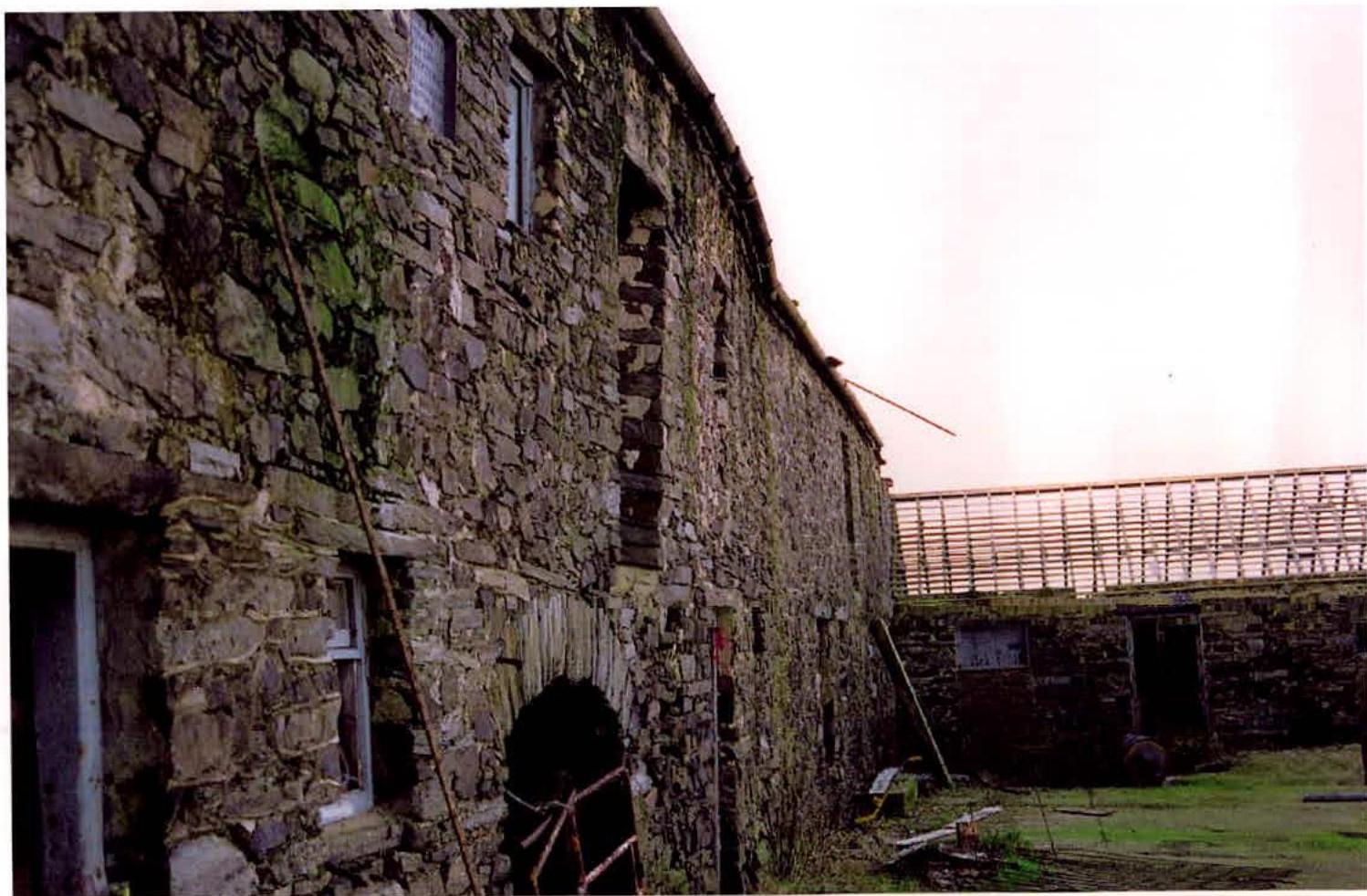
Ballacurn Mooar, Ballaugh
Work commenced in 2002 on the refurbishment of the existing barns and outbuildings as per current planning approval dated 10 December 1999, drawing nos. 479/98/21A, 22 & 15B and building control approval dated 18 September 2002, and drawing nos. 61-01-5/5b/6/6a/7/7a/8.
The programme and schedule of works consisted of the existing buildings being broken down into three sections:-
Existing Buildings prior to commencement of Contract
The single storey "L" shaped building has been completely renovated to include new concrete floors, 125 mm internal cavity thermolite block skin walls and new timber roof re-slated using new slates, the dimensions and profile all as existing. The existing external stonework walls have been repaired using existing stone from off the site. Over the window and door heads the timber lintels were removed and replaced with pre-stressed reinforced concrete lintels, over the exposed heads steel angle plates bridge to allow manx stone to be built over.
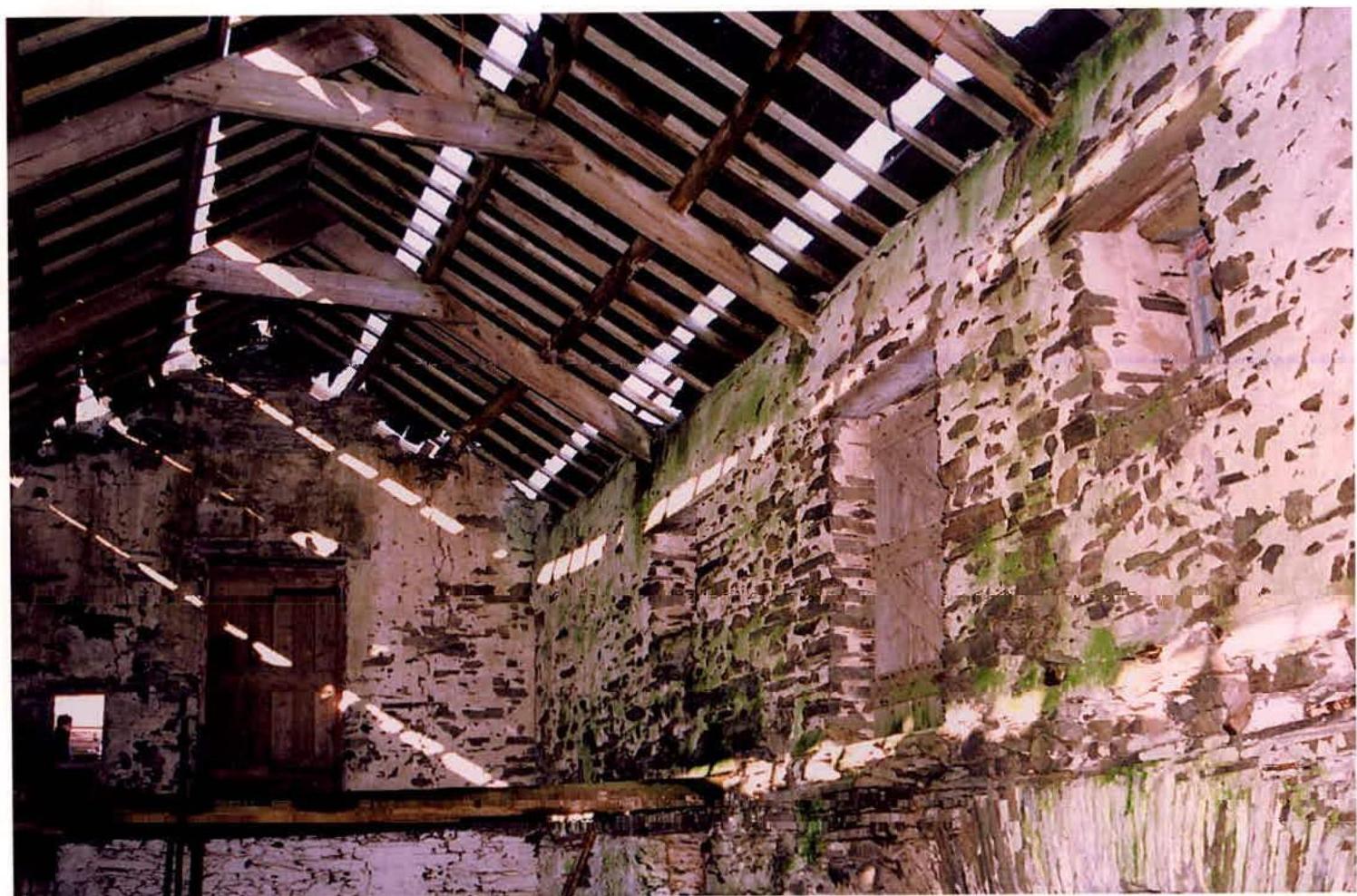
The proposed library and store, once again has had the same treatment as the single storey building which is best described as constructing a completely new building sited inside the existing shell. A new exposed “A” frame and purlin roof structure have replaced the existing decayed timbers, again exactly to the same profile and dimensions as the original. Above the new rafters a new roof covering consisting of Kingspan Insulation board, breathable felt and new slates completes these roof areas.
One set of the existing perished “A” frames from each of the roofs of the proposed library and single storey building have been retained on site, the remaining “A” frames forming the roof structure of the barn built in 1831 are still in situ on that building.
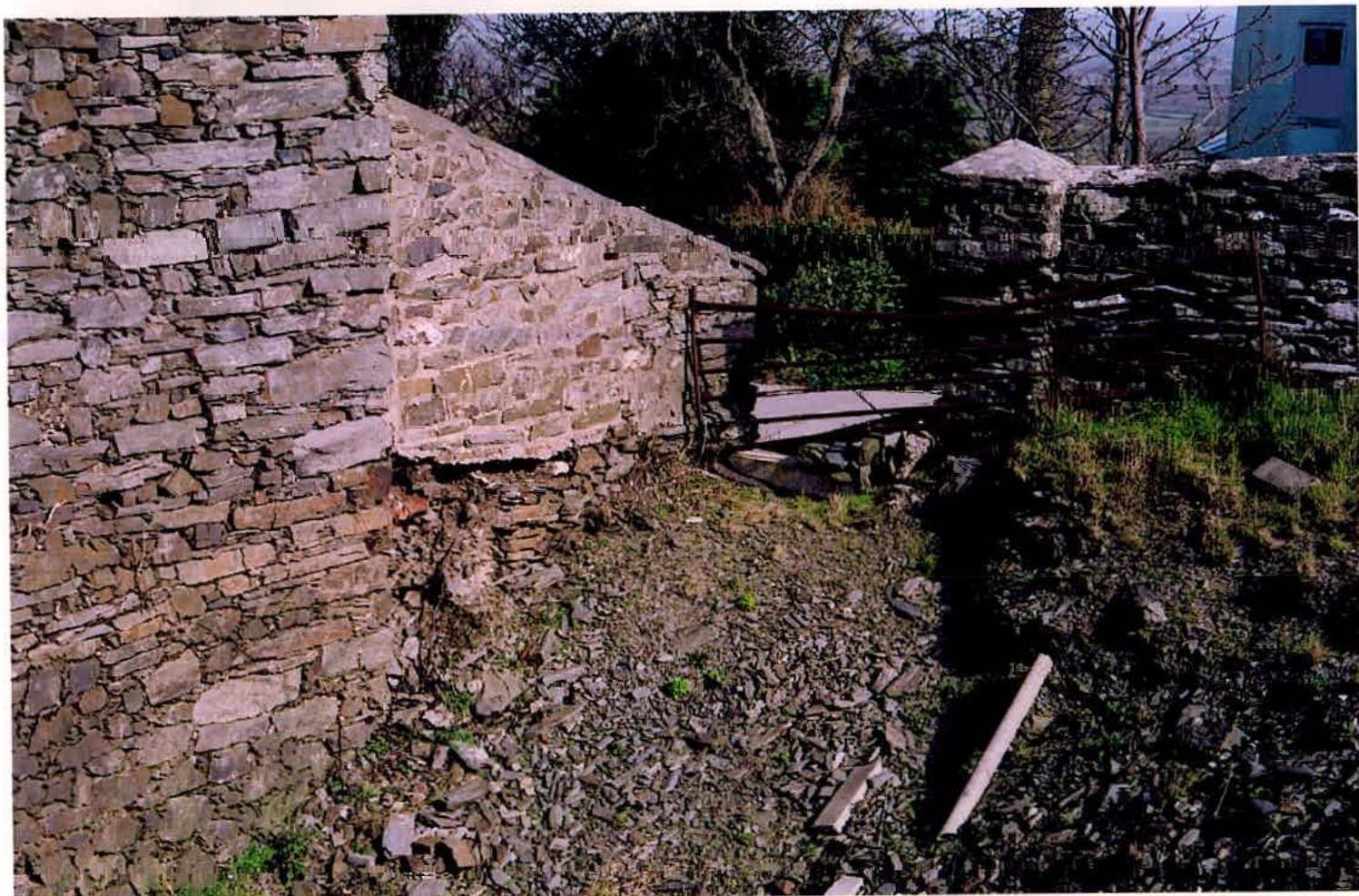
Earlier this year we opened four small pockets of the existing manx stone gable wall of the first barn built Circa 1831, so as to remove the perished existing purlins which spanned from the 2nd adjoining barn built later, thus allowing us to re-seat new purlins which form part of the new “A” frame and roof structure over the library.
Once these four areas were uncovered it was apparent that the manx wall construction was different from the abutting barn and “L” shaped single storey buildings which were built later. Both the walls of these later buildings were constructed using sand/cement/lime mortar. The original barn is constructed by means of a dry stone wall method, which entails the stone being bedded and packed by consolidating an earth/clay material. The external and internal face of these walls have been pointed with sand/cement at some stage to give the wall protection.
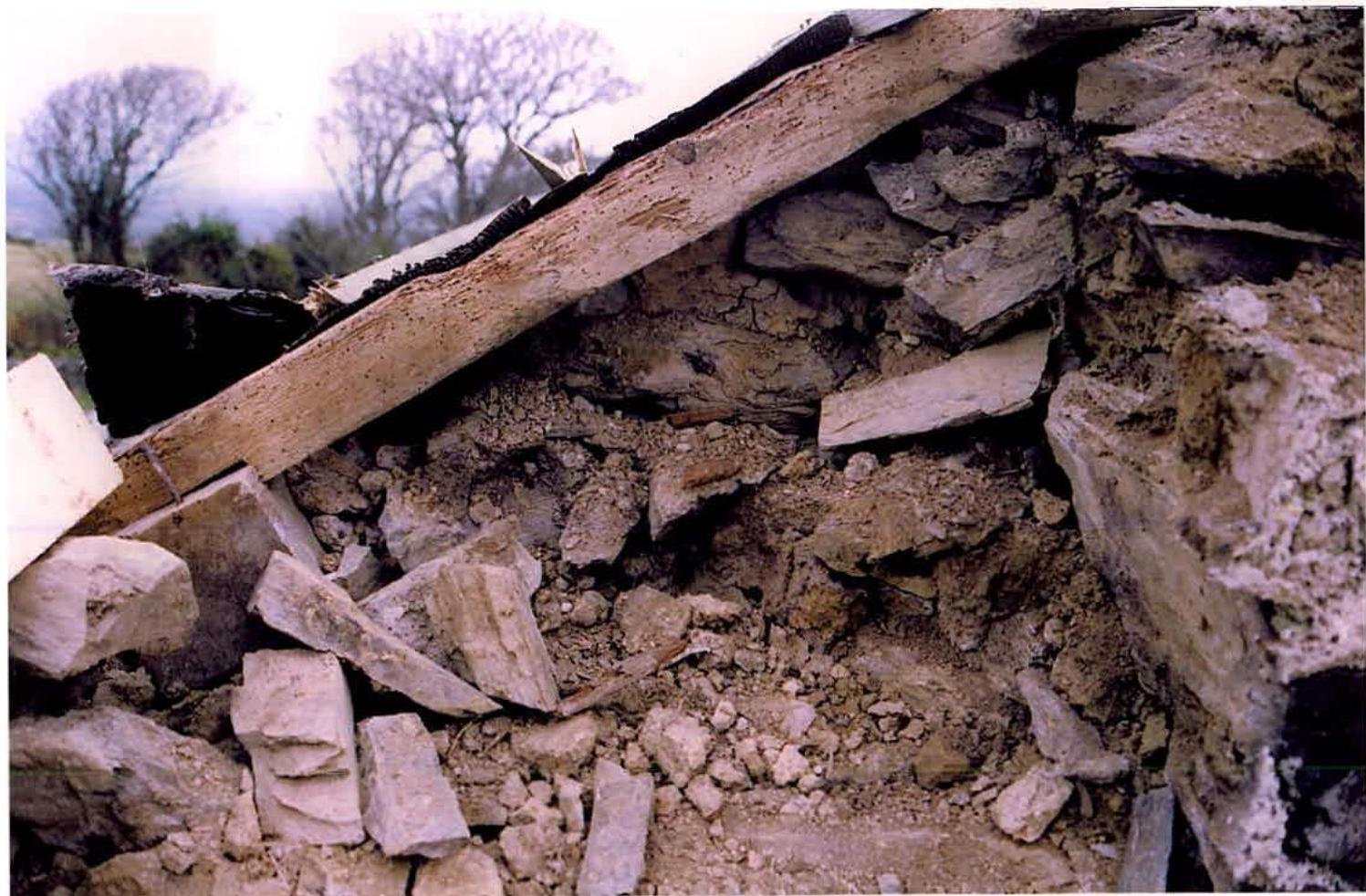
Exposed pocket showing construction of manx dry stone wall
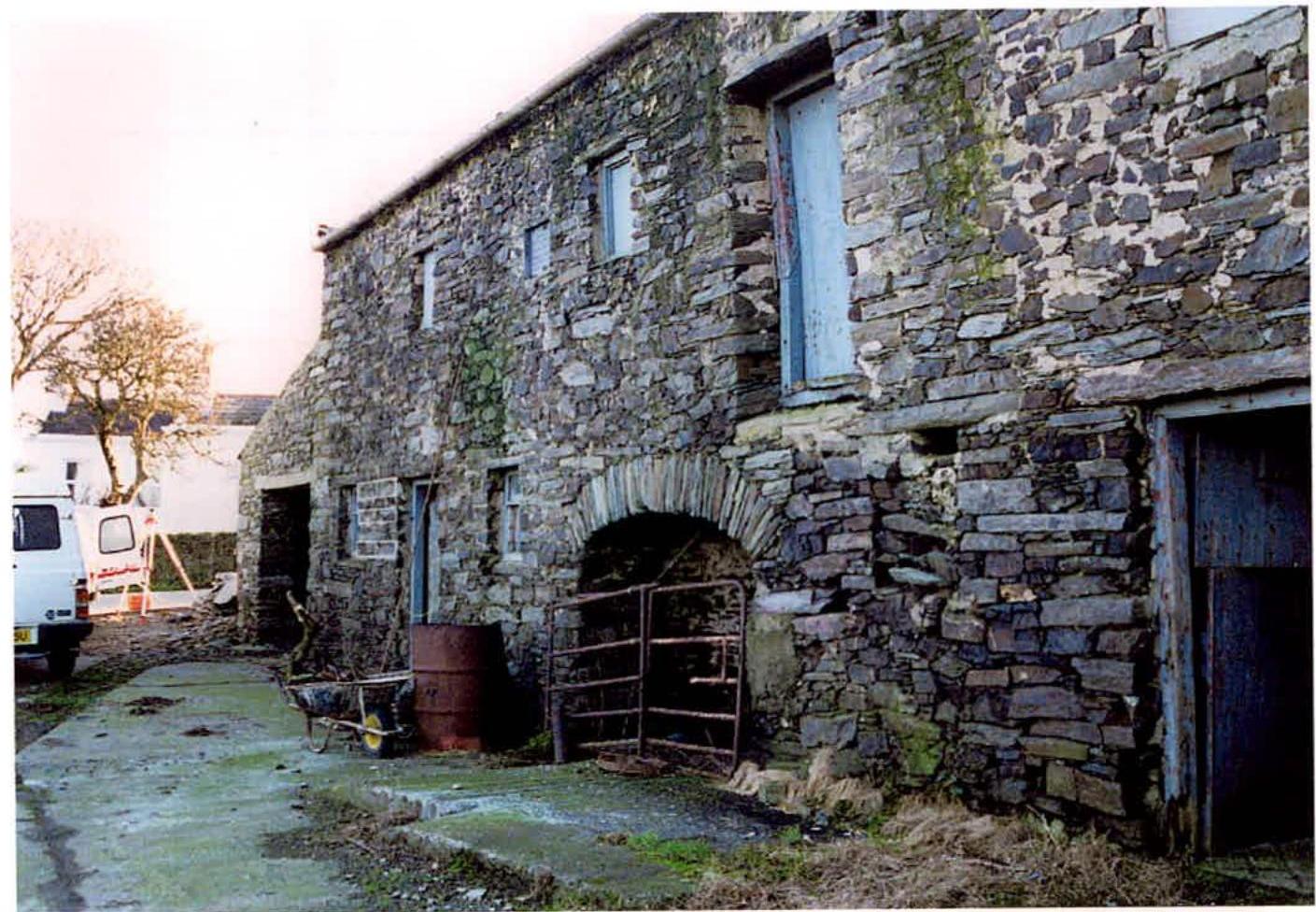
We have known from the commencement of the project the front wall (north facing) which overlooks the court yard has had a severe lean and distorts out approximately 400 mm in its full height and it has been our intention to remove this section of wall and rebuild as is.
On closer examination, it is our opinion and that of the Government Building Inspector Mr Brian Ledley that the existing “A” frames over this building are pinning down the front and back walls thus supporting and stopping the building from twisting causing it to collapse. Obviously from a health and safety point of view, as well as not having planning permission to demolish this section of the building, we have left it alone and intact. We have been advised to submit a new planning application to enable this building to be demolished and a new building erected in the same footprint reclaiming the original manx stone so as to bring it back to its former glory abutting against the other newly refurbished buildings.
The single storey L shape and double storey library/store area have been refurbished to bring them inline with current building regulations, yet externally the building work has been approached sympathetically so as not to lose their originality. From the onset my client's brief was to keep as much of the quirkiness and character as possible and importantly to restore the buildings without them in their finished state looking like a new build.
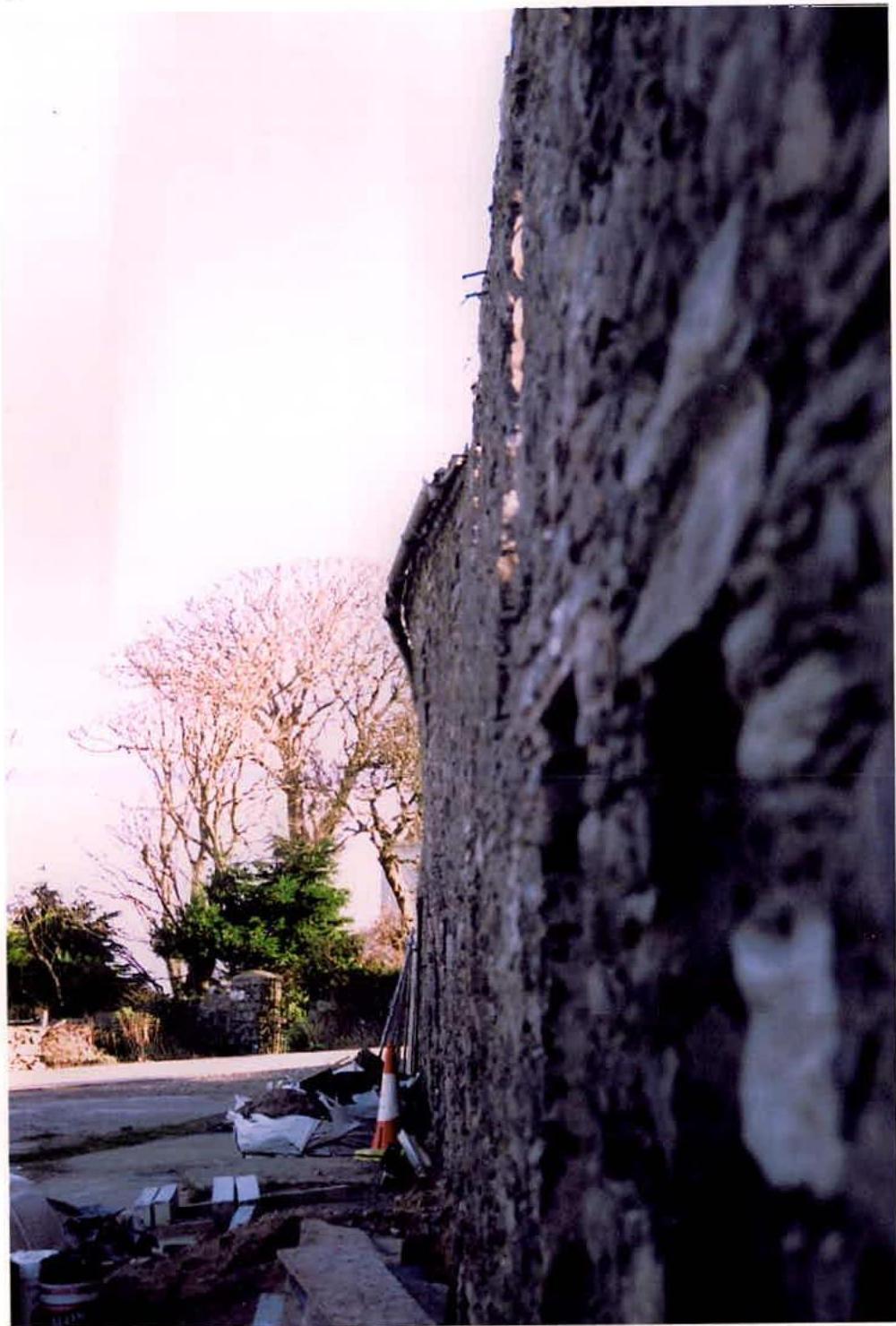
Further examination of this building shows areas of the manx walls having little or no foundation, therefore, we feel that we cannot carry out the work which is required using the same building method which was used to restore the other buildings.
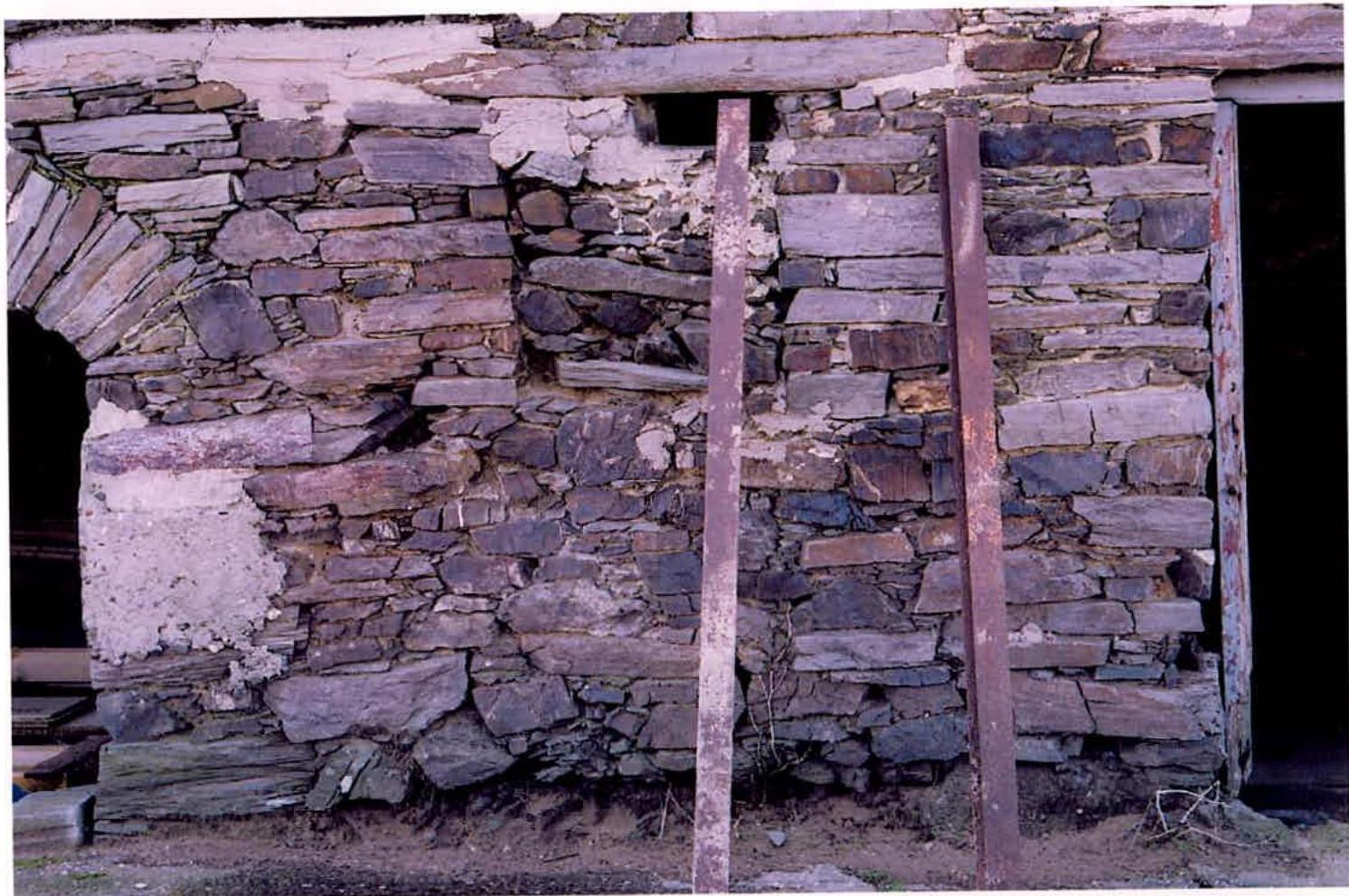
Ballacurn Mooar, Ballaugh
With regard to the application for the change of timber windows/doors to upvc, it is my experience that in extreme areas of heavy weather and over a long period of time, sealed units stand up to the inclement weather best. Although at Ballacurn Mooar the site and views are spectacular on a good day, during my time working on this project good days have been very rare. This hill farm takes the full force of all the northerly weather coming across from Scotland, while behind it Snaefell funnels its weather down the hillside straight in to the south elevation of the site. In fact, this site has no shelter from any wind direction that hits our Island.
Even during the summer months, this exposed site has a fresh feel and an extra layer of clothes as well as a balaclava are required when outdoors.
The farm and outbuildings are accessed by driving up Ballacobb Lane out into open countryside. The lane serves two farms and Ballacurn is approached by a private left hand lane, some 3/10ths of a mile long, the farm itself consisting of a farm house, barn buildings and 140 acres of land which are worked catering for sheep.
The nearest neighbour is a farm approximately 1/4 mile away in the westerly direction. It is fair to say that the farm's position in relation to the surrounding countryside, although exposed, cannot be seen by any other inhabitant.
The main farm house is situated 100 yards away from the barn complex and has upvc windows and doors installed throughout.
From an asthetic point of view I can appreciate the use of timber on a barn building which obviously would be in keeping with the building's originality but ask the committee to look favourably on the use of upvc - possibly a slimline section so as them to be discreet in situ and not draw your attention to them.
It is important to note in relation to the position of the proposed windows and doors, they will have to be set back approximately 600 mm into the window and door reveals from the existing manx stone external face. These unusually deep rebates have come about because of the thickness of the existing manx stone walls and their relation with regard to the damp proof course behind the newly formed internal cavity wall, so as to comply with building byelaws, therefore all doors and windows on these buildings will be set back in deep shadow.
In particular, the building abutting the 1831 barn has a distortion of some 200 mm in its full height and the existing 500 mm thick external stone walls have been built with an exaggerated twist. Although these walls are stable, this has obviously caused problems from an asthetic point of view both internally and externally. When the new “A” frames and purlins were fitted they had to match across our newly built square and plumb internal walls and they also had to sit onto pad stones on the distorted manx stone external walls. Internally when looking up at the purlins and “A” frames they have to look square and yet externally the roof has to work in so that the roof tiling operation becomes square and level and does not have feathered cuts in the slates. The completed structure had to be proportional from an asthetic point of view.
Most probably when these buildings were constructed against the original barn their use to the farmer was more important than how it sat square and in line. The stone would have been quarried from around the farm and old ship timbers were used for roofing and lintels over doors and windows.
These three main factors obviously have a knock-on effect with regard to time and money, yet when this work is completed the building will be as nearly as possible indistinguishable from the original scheme, with which my client is more than happy.
Copyright in submitted documents remains with their authors. Request removal
View as Markdown