Loading document...
THE REFECTORY ~ BISHOPSCOURT KIRK MICHAEL
PLANNING STATEMENT ADDENDUM
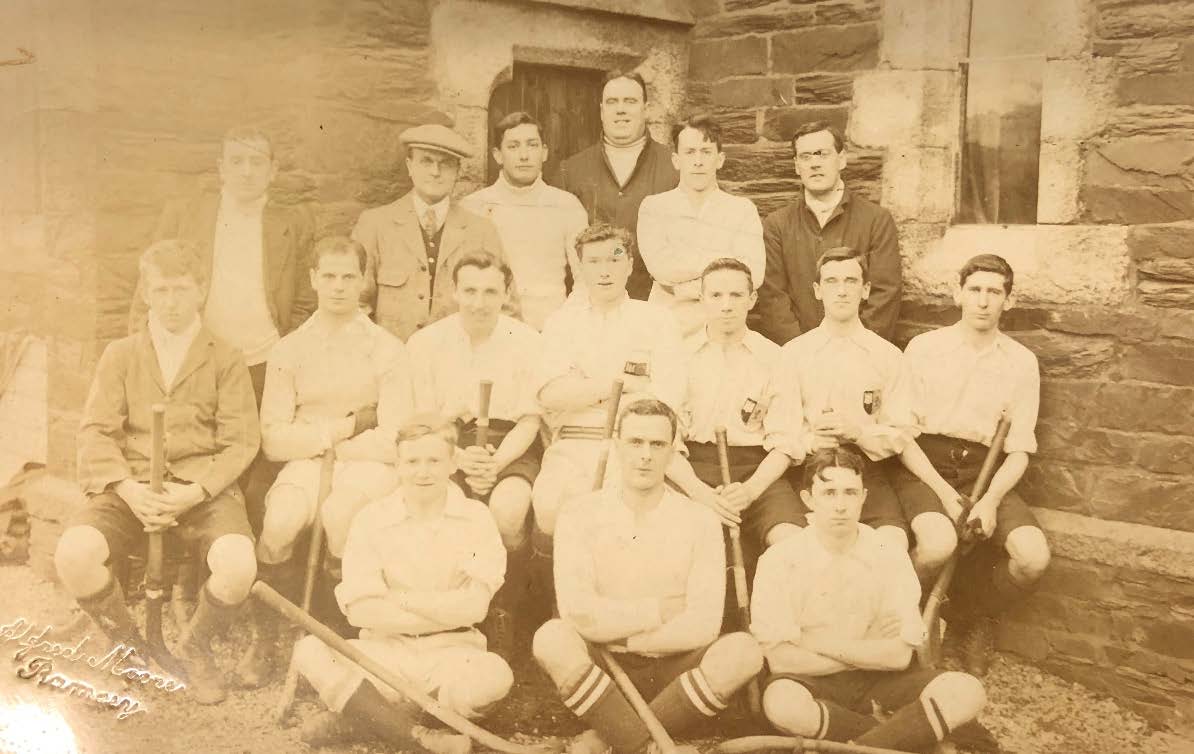
Figure 1. Staff, ordinands and visitors of the Bishop Wilson Theological College at the Refectory c. 1910-1911 during the episcopate of Bishop Drury. Note the clear glazing in the metal windows.
RK/6296 March 2024
Several previous applications have been made for major and minor works to the Refectory at Bishopscourt, including its buildings and grounds. The history of this building – built as a school by Bishop Powys’s niece Georgina Currie in the 1850s and subsequently repurposed as the college dining room in the late 19th century – is extensively detailed in the planning statements of these previous applications. The minor amendments to previous approvals requested in the present application are the result of closer study of more recently found historical sources and a better understanding of the history of the building due to approved opening-up works. The current amendments relate only to the Refectory building itself and to paved surfaces directly adjoining its walls and no more than one metre away from them. They do not relate to drives, walks or the landscape. The Refectory is a Registered Building (NGC/MB RB No. 23, 26th September 1983) and although for a time renamed Holly Lodge its older name has been reinstated.
Applications in the names of the present owners to date:
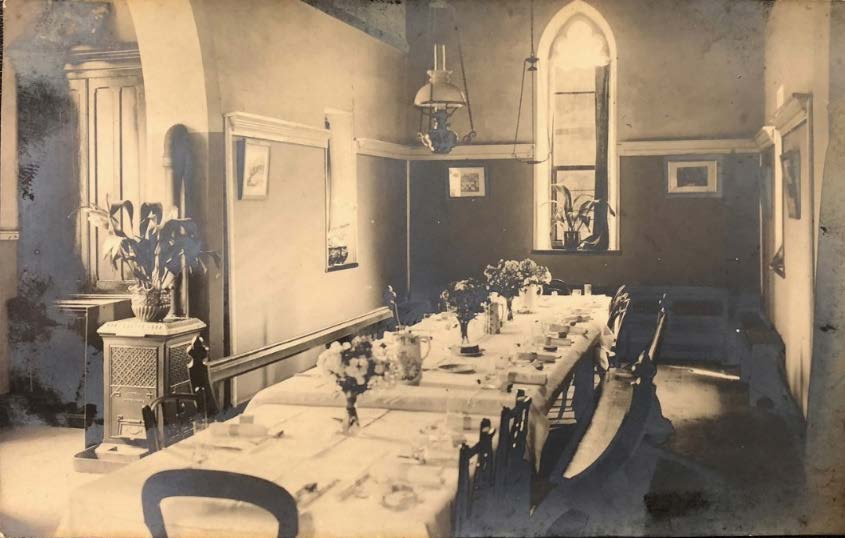
Figure 2. Refectory Interior c.1911. The interior layout is being restored to this more open form as much as is practically possible while retaining an upstairs bedroom.
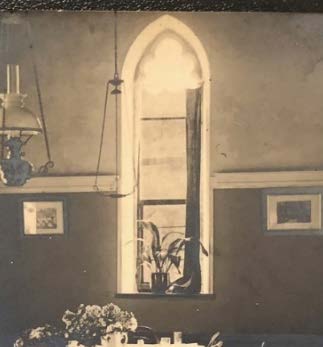
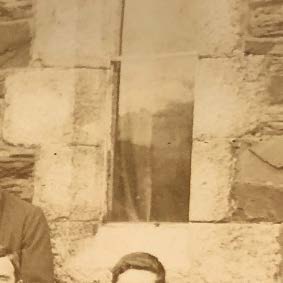
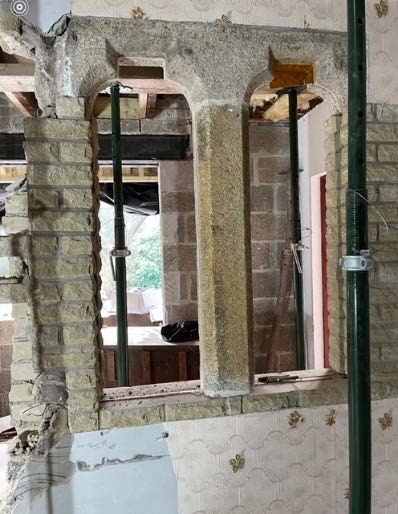
Figure 3. The Refectory windows c.1911.
A closer study of the 1911 photographs shows that the Refectory windows were plainly glazed, without the lead mullions we had previously conjectured as the original design. Permission is requested to re-instate plain glazing to reflect this. In the 1850s this represented a more expensive, higher-status form of glazing in keeping with the quality of the Refectory architecturally and was also of practical benefit to a school.
Figure 4. Granite window surround from the Refectory in a house in Ballaugh.
The remnant of a granite window surround for a pair of tudor-style windows has been found in a house in Ballaugh and offered back to Bishopscourt. The present owner’s father bought the stone from the owners of the Refectory in the 1970s and they are an exact match to surviving Refectory windows. We propose to re-instate these windows at the back of the building where a large section of wall was demolished in the 1970s – there is no evidence in original masonry elswhere of their presence. Likewise, previously approved windows for re-instatement which were conjectured to have evidence of scars behind cement render have not been found and have been noted on plan and removed from the proposals.
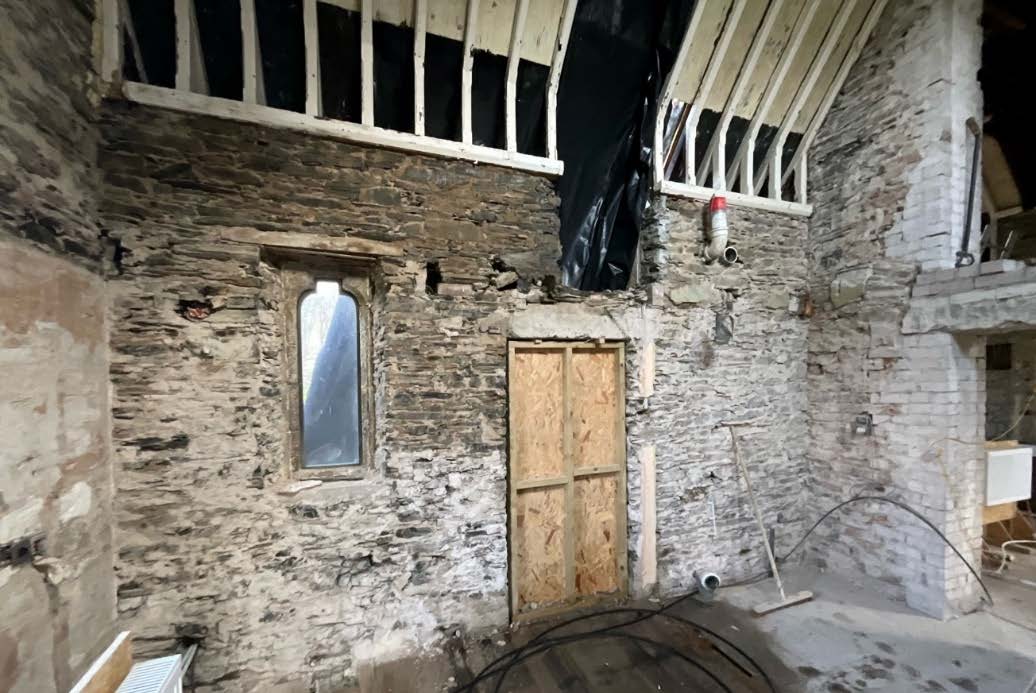
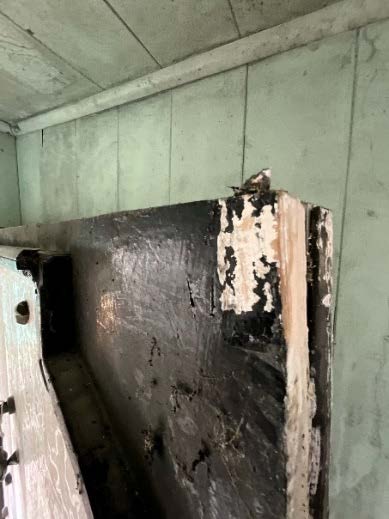
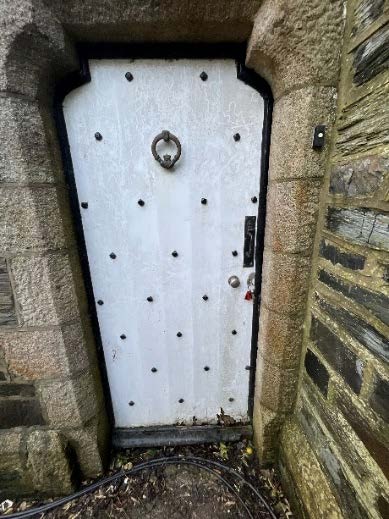
Permission was sought and granted to restore any missing granite quoins to door EDG02 and to block up external door EDG03 on account of its being a later addition. However, removal of the modern crazy-paving tower and of internal cement render has revealed no granite quoins to EDG02. It is therefore proposed to retain plain masonry around its opening, which was clearly an unoriginal alteration at an unknown date. Likewise, it is proposed to retain existing opening EDG03 and to introudcue a new door, so as not to loose this record of changing use and plan form over time. Front door EDG01 is not the old door it first appeared to be, but a modern replacement suffering from rot. It is proposed to replace this to match the door in the 1911 photograph of a hockey group.
Figure 5. Original window WG06 and later door EDG02 from within Kitchen G.07.
Figure 6. Front door EDG01 – a modern replacement of the original.
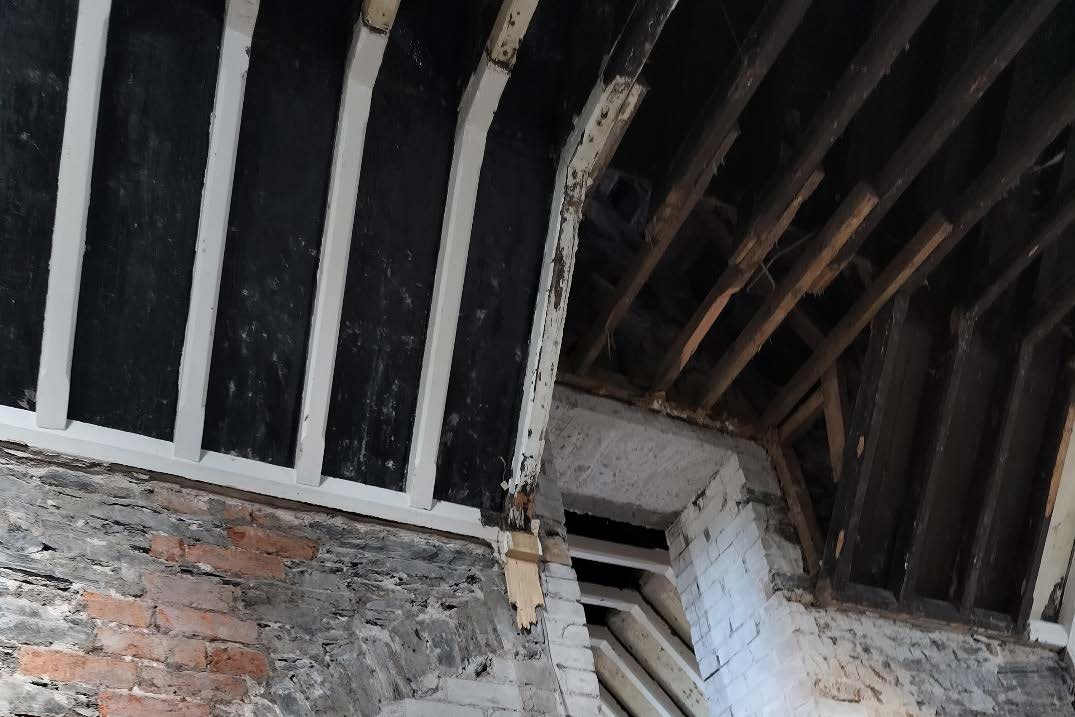
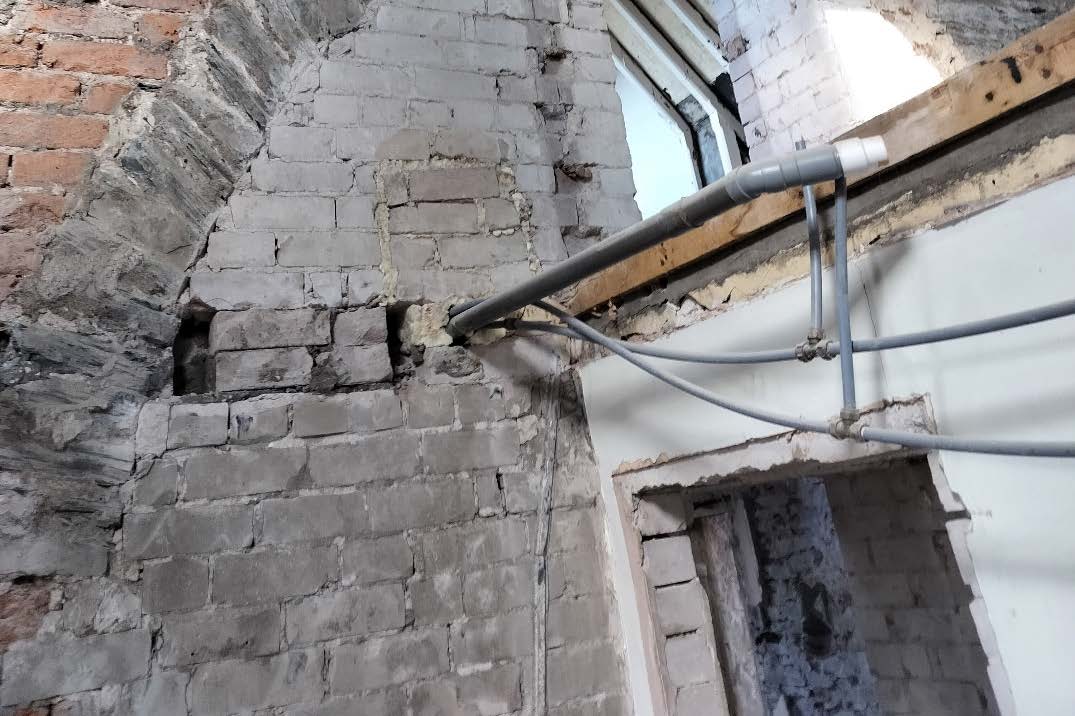
The tall chamfered arches which link the main section of the Refectory with the kitchen behind and the hall in front have had their cement render removed and masonry exposed to the view of the engineers. Remedial work is required to make both of these sound – they support the original chimneys above and have flues running alongside them – and an alteration to the first floor layout is necessitiated by instability of the arch between Landing F.01 and Bedroom F.04, with the top of the arch filled in either side of the altered existing door, which broke the through the top of the arch when inserted in the 1970s. The ground floor section of the arch will remain open, as will the arch in the Hall.
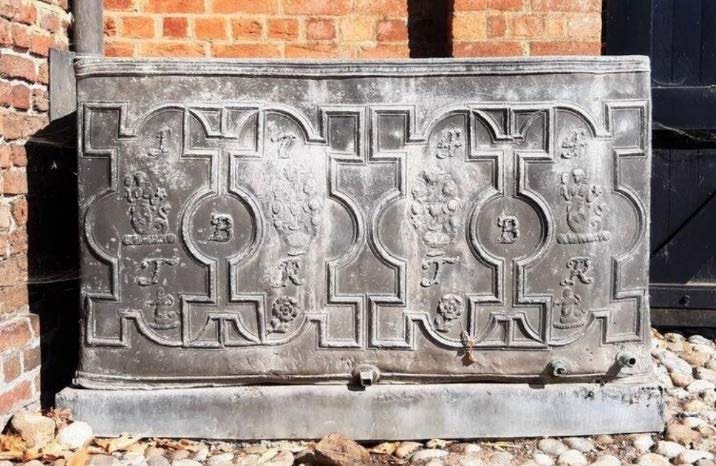
We propose to replace all of the building’s modern rainwater goods with painted castiron of a traditional design. In order to assist with garden irrigation during the summer months, three free-standing lead cisterns are proposed in order to catch and store rainwater from the Refectory rooves.
Museum’s collection is here proposed. Surface Drains
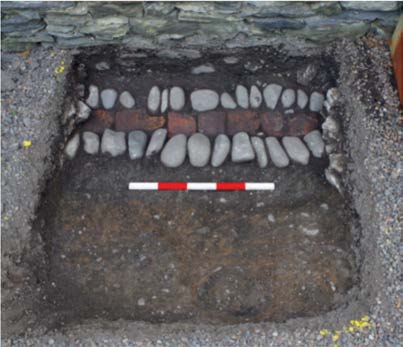
The Refectory has existing vents below the suspended timber floors – these have previously been approved for restoration and replacement with cast-iron. The existing concrete surface drain and pavers have also been approved for removal. We propose to replace it with a brick-and-cobble surface drain and gullies connected to the existing drainage system. The brick-and-cobble design is taken from an old example uncovered at the Wash House at Bishopscourt, and will aid air circulation under the building and keep masonry dry and free from soil banking up against it over time.
Figure 9. The concrete surface drain approved for removal and the brick-and-cobble surface drain uncovered at the Wash House.
Copyright in submitted documents remains with their authors. Request removal
View as Markdown