Loading document...
Architectural Glazing Solutions
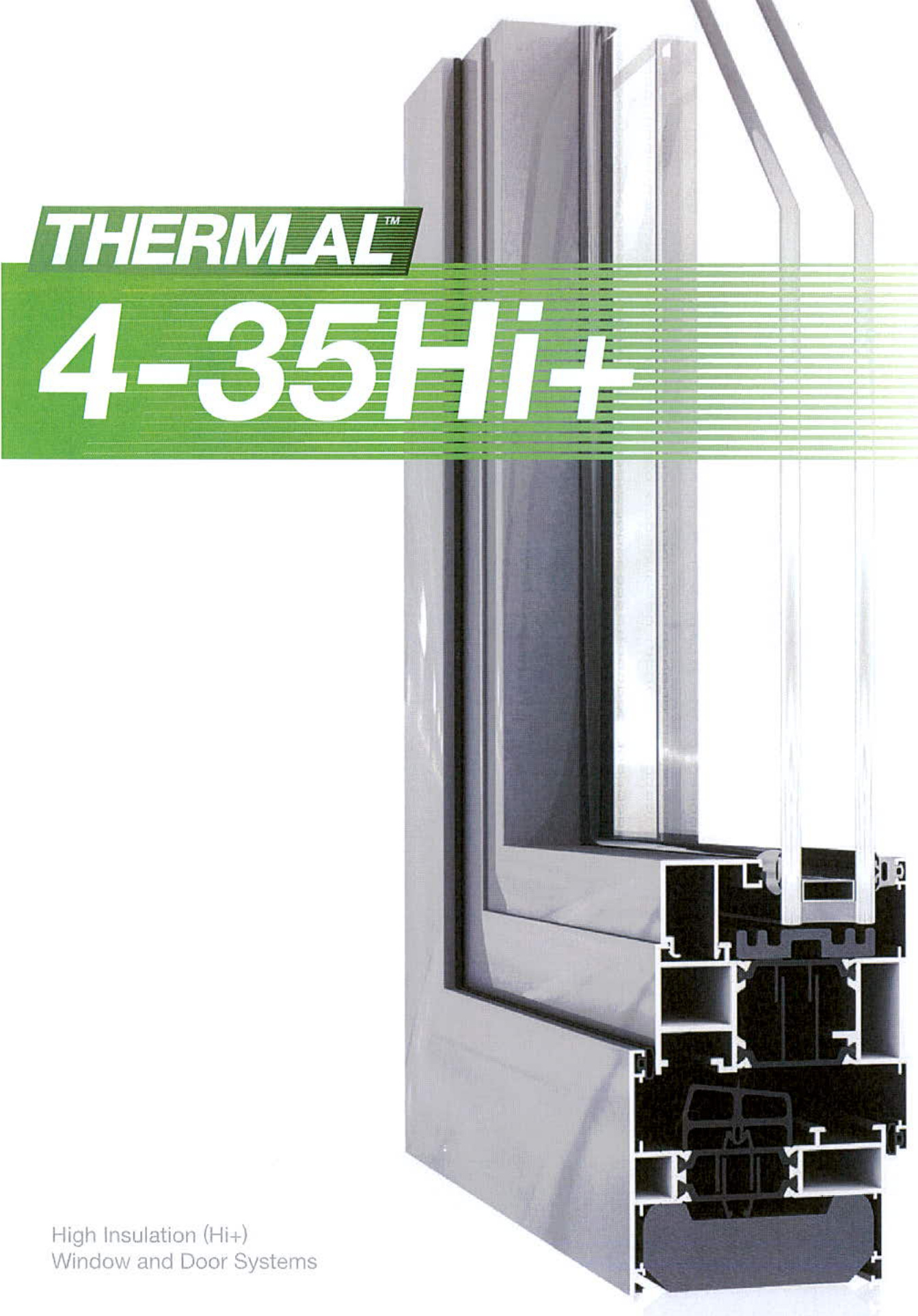
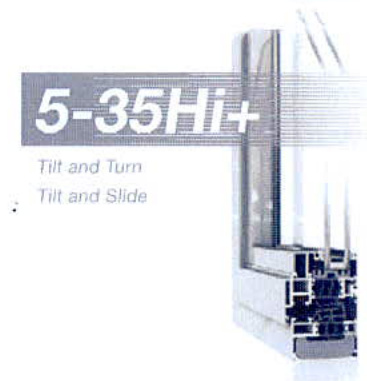
To comply with the latest building regulations Metal Technology has developed a range of high performance window and door systems. Using the latest technology, the company has developed bespoke thermal gaskets, cellular foams and polyamide thermal isolators which will allow architects and designers to achieve low $U$ values.
75mm Frame Systems (Available in Hi and Hi+ Formats)
Metal Technology has an approved network of fabricators throughout the UK and Ireland to ensure geographical continuity and capacity, with companies specialising in all market sectors.
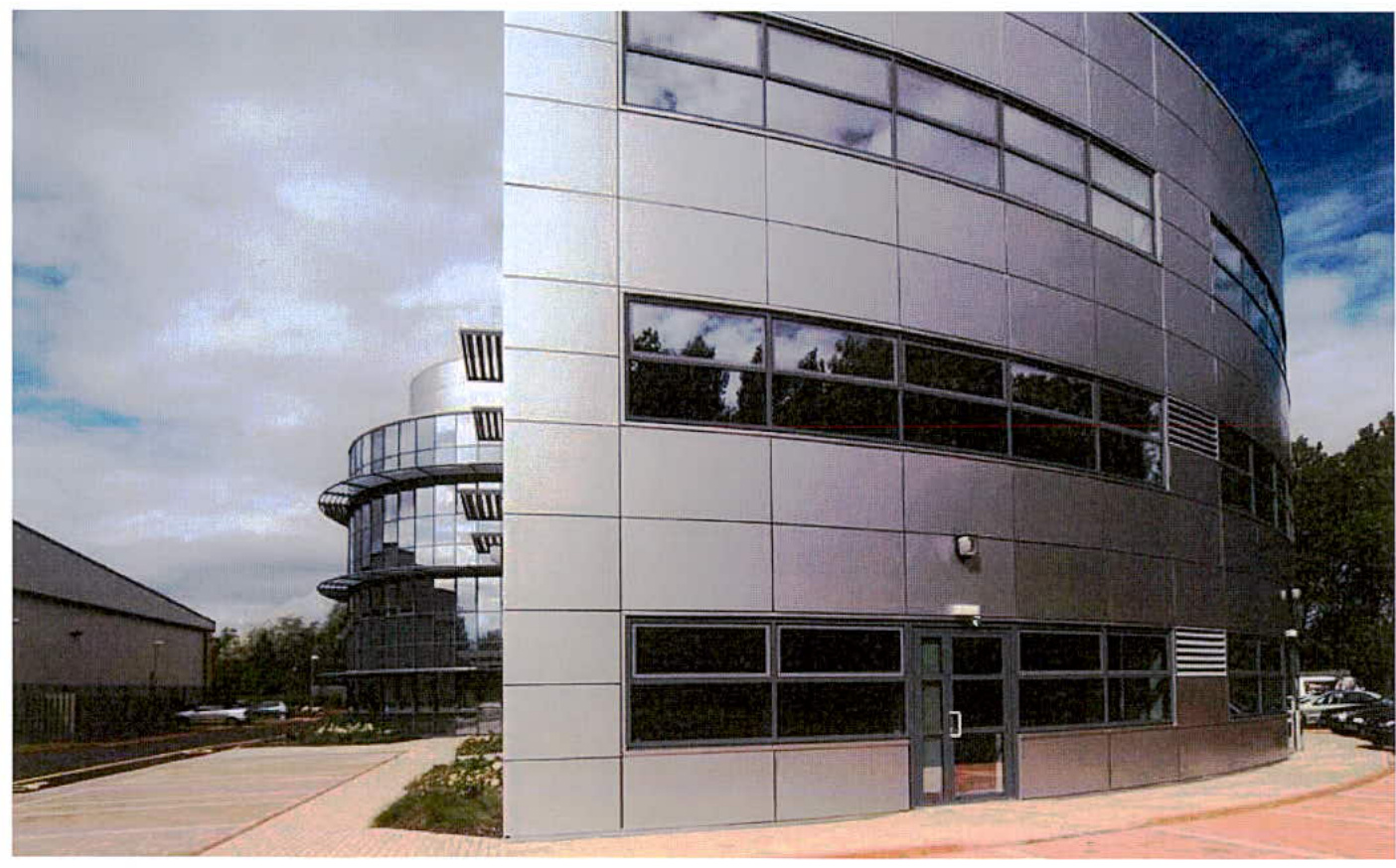
Market Sectors Metal Technology products are designed for a diverse range of buildings within the construction market. Key sectors include: Commercial, Retail, Education, Health, Residential/Housing, Hotel/Leisure.
Metal Technology's System 4-35Hi+ offers the designer a wide and diverse range of profiles that will provide structural integrity, weather performance, thermal enhancement and security. The high performance $4-35 \mathrm{Hi}+$ glazing system complies with the following standards: BS 6375 pt 1, 2 and 3, PAS 24 and is acoustically tested in accordance with BS EN ISO 140-3 and BS EN ISO 717-1.
Independently Weather Performance Tested to BS 6375-1
| Air Infiltration BS EN 1026 | Class 4 |
|---|---|
| Watertightness BS EN 1027 | Class E1050 |
| Wind Resistance BS EN : 12211 | Class E2400 |
| Achievable whole window U-value | Centre pane U-value | |
| 1.1 W/m²K | 0.6 W/m²K | |
| 4-35Hi glazed-in casement | 1.62 W/m²K | 1.30 W/m²K |
| 4-35Hi glazed-out casement | 1.56 W/m²K | 1.25 W/m²K |
| 4-35Hi+ glazed-in casement | 1.39 W/m²K | 1.04 W/m²K |
| 4-35Hi+ glazed-out casement | 1.34 W/m²K | 0.98 W/m²K |
Metal Technology's THERMAL range, in conjunction with the correct glass specification, is designed to aid compliance with the latest thermal requirements of the current building regulations. The polyamide thermal break profiles have been specifically designed to minimise heat transfer across the window profiles.
Thermal performance is further improved through the introduction of specially designed thermal gaskets and foam profiles. These reduce radiation heat loss across the air cavities within the window profiles to provide additional thermal enhancement.
The following table, based on a standard commercial GGF window configuration and warm edge spacers, demonstrates how such improved U-frame values then contribute to improving the overall thermal performance of a complete window.
| U-frame values | ||
| 4-35Hi | 4-35Hi+ | |
| Fixed light outer frame | 1.92 W/m²K | 1.34 W/m²K |
| Outer frame and glazed-out vent | 2.56 W/m²K | 1.69 W/m²K |
| Outer frame and glazed-in vent | 2.57 W/m²K | 1.69 W/m²K |
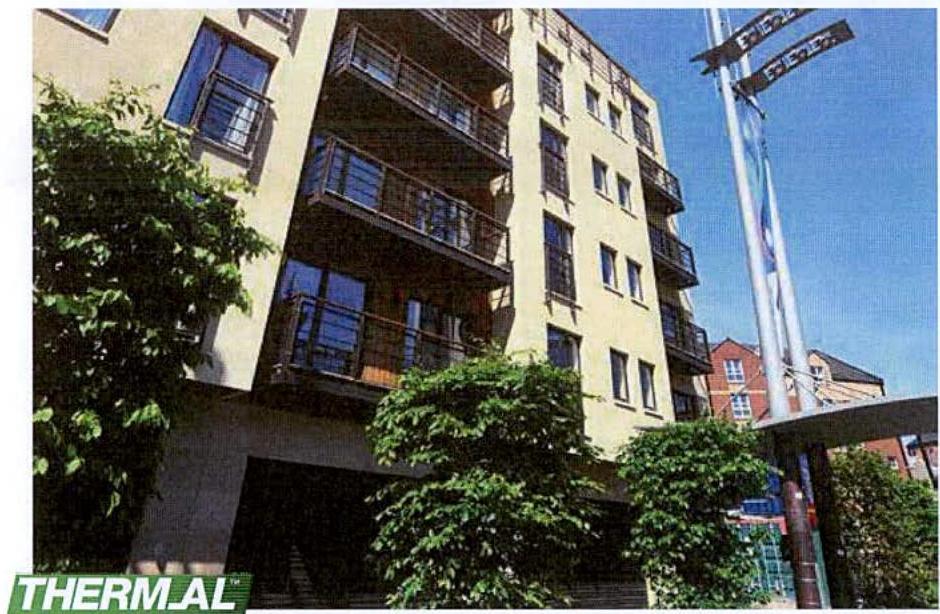
Metal Technology can provide tailored U-value calculations using their dedicated estimating software to calculate overall project average window U-values for their full range of systems.
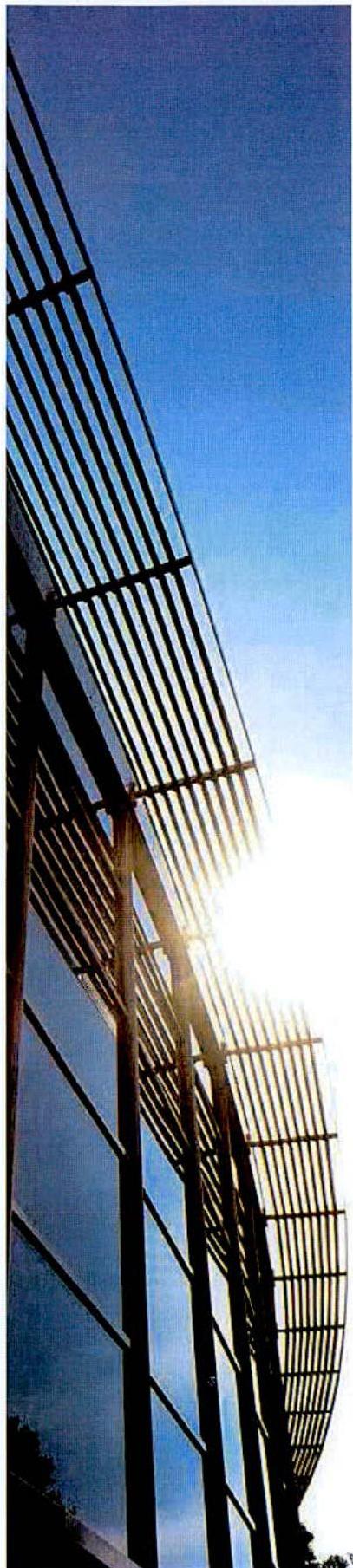
When assessed in accordance with the profile mass formula, as set out in the BRE's Green Guide for sustainable design and environmental performance, Metal Technology's 4-35Hi and 4-35Hi+ Systems achieved an 'A' rating.
Metal Technology's 4-35Hi and 4-35Hi+ Systems have been assessed by an approved simulator in accordance with the BFRC's guidelines, using their official Window Energy Rating software, and have been proven to be capable of achieving an 'A+' rating.
| Vent Width | Vent Height | Vent Weight | |
|---|---|---|---|
| Top Hung Casement | 2000mm | 2000mm | 100 Kg |
| Side Hung Casement | 1000mm | 1800mm | 60 Kg |
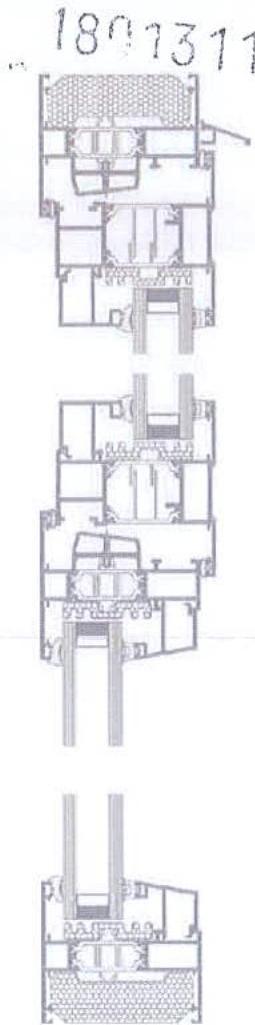
The Metal Technology 4-35Hi+ polyamide casement window suite has been developed with a diverse range of profile options. Bespoke thermal isolators and insulation combined with structural mullions, vents and outer frames offer architects and designers the ability to achieve flexible design solutions.
The specification defines materials, construction, finishes, glazing and security.
Aluminium profiles are extruded from aluminium alloy 6060T6, T5 or T4 complying with the recommendations of BS EN 12020-2 / BS EN 755 Parts 1 to 9. Polyamide thermal breaks are produced from glass reinforced nylon sections designed to withstand temperatures in excess of $200^{\circ}\mathrm{C}$, allowing the sections to be powder coated after thermally breaking.
Frame members are mitre cut at $45^{\circ}$, corners are reinforced with extruded aluminium crimping cleats and corner braces, and a secure joint is formed by pneumatically crimping into the extruded crimping cleat. Mullion and transom bars are square cut shaped and fixed securely to the frame by means of stainless steel screws and fixing cleats. All frame joints are sealed during construction against entry of water using Metal Technology's single and two-part adhesive. Metal Technology recommend that only A2 or A4 Austenitic (300 series/class 70) stainless steel fixing screws are used in the assembly of their products.
The range of sections can be provided in either of the following range of finishes: Anodised to BS EN 12373-1 or BS 3987. Powder organic coated to BS 6496 or BS EN 12206-1. Where a different colour is required internally and externally, Metal Technology can accommodate this.
The system can be glazed internally or externally and can accommodate glazing units from 28mm to 47mm.
System 4-35Hi+ has passed PAS 24 "Specification for Enhanced Security Performance" as generally accepted on Secure by Design projects. To conform, the window hardware must be in accordance with the tested sample as detailed in Metal Technology's technical literature. Security products should be labelled by the fabricator in accordance with BS 4873.
Detailed installation instructions are provided in Metal Technology's technical literature which should be strictly followed.
Maximum height and maximum width cannot be achieved simultaneously. This table provides basic guidance, please refer to size limitation charts in Metal Technology's technical literature for further details.
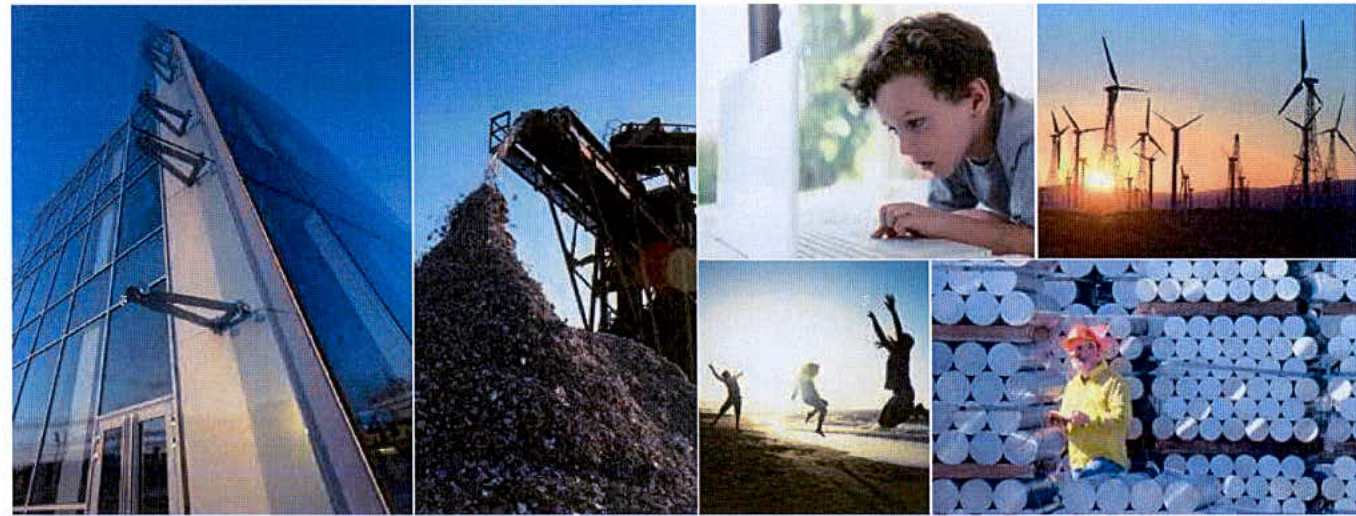
Where we can influence the design and use of our products in developments, we will base decisions on a sustainable basis where the health and safety of the occupants can be combined with the conserving of resources for future generations. As an industry we are using resources more efficiently with the minimum of energy consumption, to deliver a project that is flexible, durable, has longevity, and where practical, using fixtures and fittings that can be reused.
ISO 14001 is an international quality system for environmental management, providing a framework to allow businesses to minimise the impact of their operations on the environment. It seeks to establish a company policy for planning environmental objectives and for complying with laws, directives and regulations.
The intrinsic qualities of aluminium, its infinite recyclability, strength and lightness, durability and low maintenance qualities mean it is one of the most sustainable building materials to be used.
Aluminium is the earth's third most abundant element after oxygen and silicon (ahead of iron).
Aluminium does not emit dust, vapour or particles and is not toxic to touch.
Given its durability and resistance due to applied surface treatments such as anodising or powder coating, aluminium structures need only regular cleaning with neutral detergents followed by rinsing with water.
Aluminium is non-flammable and, when it reaches its melting point in the event of a fire (about $650^{\circ} \mathrm{C}$ ), it gives off no flammable gases or vapours.
Recycling is a valuable asset in the battle against the greenhouse effect. The global aluminium industry has made great strides during the last century to reduce its environmental impact at all stages of the supply chain. Aluminium extraction and refining companies have reduced their energy requirements by almost $70 \%$ since 1900.
This has seen the growing use of hydro-electric energy coupled with a vast increase in aluminium that is recycled. At present more than a third of global aluminium production is from recycled metal, a figure that is growing. Recycled aluminium takes just $5 \%$ of the energy needed to produce primary metal with a consequent reduction of $95 \%$ in the greenhouse gases produced. The recycling process is economically attractive and viable. Recycled aluminium meets almost $40 \%$ of the demand for the metal in Europe. Approximately $70 \%$ of the material used to produce Metal Technology extrusions is recycled.
Aluminium is infinitely recyclable with no loss of its properties: The aluminium cycle is a closed life cycle.
The Delft University of Technology in the Netherlands has investigated the collection rate of aluminium in buildings. Demolition case studies in six different European countries (France, Germany, Italy, Spain, the Netherlands and the United Kingdom) were carried out and the data gathered shows that collection rates are over $95 \%$.
Steeple Road Industrial Estate Steeple Road I Antrim Northern Ireland | BT41 1AB Telephone +44 (0)28 94487777 [email protected] metaltechnology.com
This document has been printed on $100 \%$ recycled paper.
Copyright in submitted documents remains with their authors. Request removal
View as Markdown