The company are seeking to develop a 55 unit holiday lodge park to complement the existing 18 hole links golf course. These lodges will be sited near the existing buildings and to each side of the 1st and 18th tees. Although there will be car parking to each unit, it is eventually proposed that there will be a club house, bar and restaurant within the large stone barn. Consequently, it will be necessary to provide some form of external lighting to the footpaths serving the lodges so as to minimise the risk to the health and safety of users of such.
Constraints
We are aware that the Isle of Man has the largest concentration of 'Dark Skies' sites in the British Isles (26) and Glentruan is within one such area. The Northern Lights can be occasionally seen from the site as can the Orion Nebula and Great Andromeda. It is therefore essential that we minimise the amount of upwards lighting to avoid contributing to unwanted light pollution.
Although there are no known bat roosts in the area, the Isle of Man has 7 species present. However, we cannot discount the fact that there may be foraging bats present. The insects which are attracted to artificial lighting are a food source for bats. Whilst Pipistrelles tend not to be affected by light, some of the other species present on the island e.g, Brown Long Eared Bats avoid light completely and may therefore avoid the site altogether.
Glare or any other form of intrusive light may cause a nuisance to occupants of the lodges so it is important to plan the type of lighting carefully.
Mitigation
Lighting should be so designed to be directed where it is needed to avoid light spillage. The angle of the lighting; the use of hoods, cowls, louvres and shields; the brightness and colour of the luminaires and the number of hours during which lighting will be in use will all have an impact in maintaining the lowest level of light pollution without compromising the health and safety of the footpath users.
Timers will be used to control the 'lit' time and any security lighting will be set to a minimum time also. Movement sensor activated lighting can be used to avoid continuous lighting in appropriate areas.
Planting or man-made features can be used as a lighting barrier, with the advantage that the former may help to introduce a foraging route.
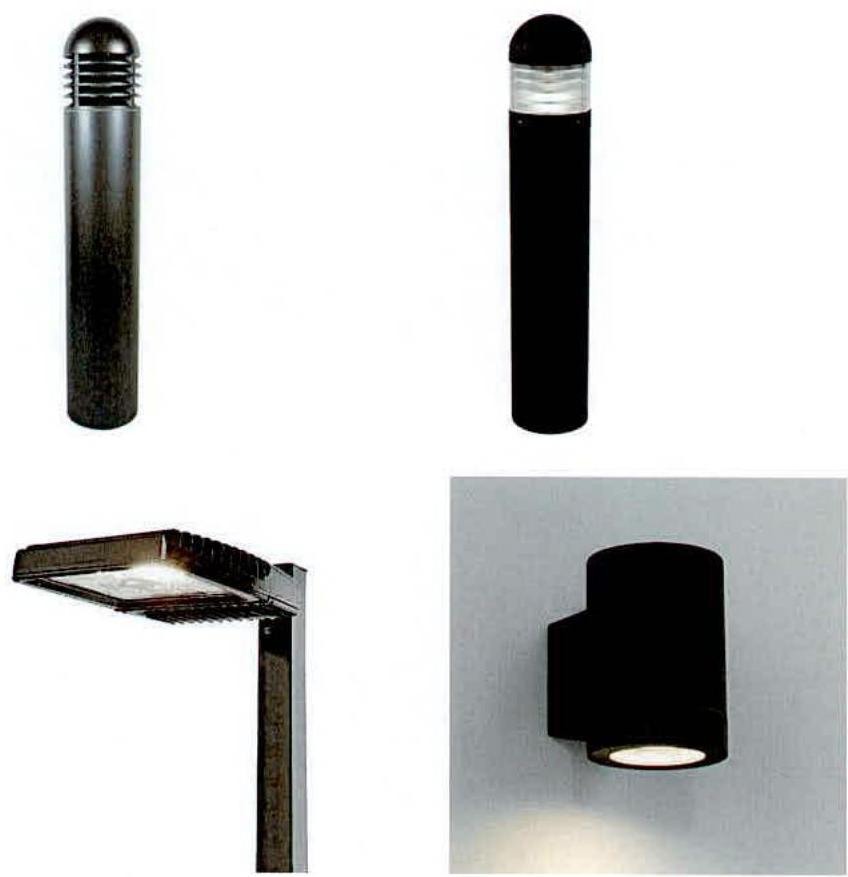
The height of the lighting columns will be kept as low as possible (1 metre or less) as this helps to reduce light pollution. If taller columns are necessary these would be specified so as to enable light to be directed downwards at a more acute angle thus reducing horizontal spill. We would envisage a maximum level at ground level of 3 lux.
Luminaires will be chosen carefully with 'warm' rather than 'daylight'.
Where no light is needed, no light will be provided and the intention is that there are some stretches with no lighting in order to facilitate any bat foraging or migration through the area.
Outdoor lighting to lodges, other than that necessary for safety and security reasons, would be shielded and downward facing. The Company can specify lighting limitations and Owners will be made aware of the lighting policy prior to purchasing their lodge and the reasons behind it explained. Planting and orientation of lodges, will also assist in reducing the amount of light spillage.
Lighting to the renovated barn (bar/clubhouse/restaurant) will be designed as part of the overall plan and will take into account the fact that light spillage must be minimised.
Floodlighting will not be required.
Appropriate planning conditions can be applied to enforce lighting requirements.
Typical Lights:
Copyright in submitted documents remains with their authors. Request removal