**Document:** Villiers Square Breeding Bird Bat Assessment
**Application:** 24/10086/AIR — Information in relation to conditions 6 & 7 for PA 23/01223/B - Bat and Bird surveys for Villiers Square, Fort Street, Douglas.
**Decision:** Permitted
**Decision Date:** 2024-09-12
**Parish:** Braddan
**Document Type:** report / bat_report
**Source:** https://planningportal.im/a/33080-braddan-villiers-square/documents/1578029
---
# Villiers Square Breeding Bird Bat Assessment
## Villiers Square Protected Species Survey
Breeding Bird & Roosting Bat Assessment (Technical Note)
### August 2024
## Control sheet
|Ecology Vannin: 7-8 Market Place, Peel, Isle of Man.|Ecology Vannin: 7-8 Market Place, Peel, Isle of Man.|
|---|---|
|Title:|Villiers Square – Breeding Bird & Roosting Bat Assessment|
|Client:|Tevir Group|
|Prepared by:|Greg Watson – Trainee Ecologist|
|Verified by:|Amy Dunderdale - Ecologist|
|This report is prepared by Ecology Vannin Consultancy Services for the sole and exclusive use of Isle of Man (IoM) Tevir and their contractors in response to their particular instructions. No liability is accepted for any costs, claims or losses arising from the use of this report or any part thereof for any purpose other than that for which it was specifically prepared or by any party other than Tevir. Any biological records for wildlife found in survey will eventually be submitted to Manx Biological Recording Partnership.
Ecology Vannin Consultancy Services is the trading name for Wildlife Limited, Reg Company No: 077379C. Wildlife Limited is a wholly owned subsidiary of Manx Wildlife Trust (MWT), Reg Company No: 005297C.This report does not prevent MWT pursuing its charitable objectives in relation to planning. This technical note has been prepared by an environmental specialist and does not purport to provide legal advice. You may wish to take separate legal advice. The information which we have prepared and provided is true and has been prepared and provided in accordance with the BS42020 2013 and Chartered Institute of Ecology and Environmental Management’s Code of Professional Conduct and guidelines for preliminary ecological appraisals (CIEEM 2017). We confirm that the opinions expressed are our true and professional bona fide opinions.
Signed (Author) Signed (QA)
|
|---|
Ecology Vannin Villiers Square Technical Note 2
## Biographies
Greg Watson BSc (Hons) is a trainee ecologist who was born on the Isle of Man with experience in protected species surveying including bats, lizards and frogs. Greg holds a first-class Bachelor of Science degree with honours in Wildlife Conservation which has given him field skills for ecological surveying and census techniques. Further, Greg has acquired a strong understanding of the legal frameworks in the United Kingdom and the Isle of Man surrounding the protections afforded to habitats and species. He also has experience in avian species monitoring including Birds of Conservation Concern (BoCC) such as hen harrier and arctic tern and has been the leader of a protection and monitoring team for the rare breeding European bee-eater in Norfolk, England.
Amy Dunderdale BSc (Hons) MSc is an ecologist with several years’ experience in baseline ecological survey and assessment and some specialist protected species surveys including for bats and reptiles. Amy holds a Biology bachelors degree from the University of Durham and a masters degree in Wildlife Management and Conservation from University of Reading. She has experience working in ecology consultancy in the UK including experience in completing PEAs and BREEAM Land Use and Ecology reports.
## Executive Summary
A site assessment was undertaken to establish the potential for the site to be used by, along with any evidence of use by, nesting birds and roosting bats on the Villiers Square site. This follows a recommendation provided within a PEA report (Ecology Vannin, 2022) as well as the requirements in planning conditions 6 & 7. A number of PRFs were identified on structures on site however, no evidence of roosting bats was found, and these PRFs are low suitability to roosting bats. Breeding evidence of house sparrow was observed on the roof of a building that will not be directly impacted by the proposed development. Precautionary checks for nesting birds are recommended during the construction phase and provision of 4 triple cavity swift nest boxes on the new development.
Key constraints and mitigation are:
- • Timing of works
- • Provision of Swift Nest Bricks
- • Precautionary Checks for Nesting Birds (March -August Inclusive)
## 1.0 Legal Context
Bats, Common lizard, Common frog
### 1.1 Horseshoe bat (all species) Rhinolophidae and typical bats (all species)Vespertilionidae, Common Lizard (Zootoca vivipara) and Common Frog (Rana
Ecology Vannin Villiers Square Technical Note 3
temporaria) are all protected under Schedule 5 of the Isle of Man Wildlife Act 1990 (as amended).
- 1.2 As such, a person is deemed to have committed an offence if he or she:
“damages or destroys, or obstructs access to, any structure or place which any wild animal included in Schedule 5 uses for shelter or protection; or disturbs any such animal while it is occupying a structure or place which it uses for that purpose”.
Birds
- 1.3 All wild birds are afforded protection under the Isle of Man Wildlife Act 1990 (as amended). An offence is deemed to have been committed if:
“any person intentionally or recklessly — (a) kills, injures or takes any wild bird; (b) takes, damages or destroys the nest of any wild bird while that nest is in use or being built; or (c) takes or destroys an egg of any wild bird”.
- 1.4 In addition, species listed on Schedule 1 of the act makes it an offence to:
“intentionally or recklessly — (a) disturbs any wild bird included in Schedule 1 while it is building a nest or is in, on or near a nest containing eggs or young; or (b) disturbs any nest or egg of such a bird; or (c) disturbs dependent young of such a bird”.
IOM Climate Change Act 2021
- 1.5 The Climate Change Act 2021 amends the Town and Country Planning (Development Procedure) Order 2019. Applications for planning approval will need to demonstrate:
(iii) the maintenance and restoration of ecosystems; (iv) biodiversity net gain.
- 1.6 This change is not currently implemented as it requires an ‘appointed day order’, but 10% biodiversity net gain (BNG) is best practice within the UK planning system (UK National Planning Policy Framework and the Environment Act 2021).
- 2.0 Methodology Desk Study
- 2.1 In line with best practice (CIEEM, 2017) a desk study was used to identify records of rare or protected species or species of ecological interest within 500m. The sources of information consulted are biological species records are from the Manx Biodiversity Recording Partnership (MBRP) and Manx Bat Group (MBG).
Ecology Vannin Villiers Square Technical Note 4
- 2.2 Key documents and legislation consulted comprise:
- • Wild Birds Preservation Act 1932
- • Isle of Man Wildlife Act 1990 (as amended)
- • Isle of Man Biodiversity Strategy (DEFA, 2015)
- • Isle of Man Strategic Plan (DoI, 2016)
- • IUCN Red Data lists
- • Birds of Conservation Concern in the Isle of Man (Morris & Sharpe, 2021)
- • Villiers Square PEAR (Ecology Vannin, 2022)
- • Vegetation and Invasive Plant Species Clearance Technical Note (Ecology Vannin, 2024)
Preliminary Roost Assessment and Breeding Bird Assessment
- 2.3 A survey was undertaken to assess the suitability of the site to support nesting birds and roosting bats. A search for evidence of nesting birds on site as well as features for roosting bats on the exterior and interior of structures was carried out.
- 2.4 A check of all safely accessible external and internal structural niches deemed suitable for use by roosting bats (e.g., roof voids, ridge beams, gaps in stonework, gaps between stonework and window and door lintels) was undertaken. This was aided by the use of an endoscope and high-powered torch. A check for evidence of nesting birds included an observation survey focussed on seeing adult birds carrying food and becoming agitated as well as and search for corpses, old nests, birds using 8x42 close focussing binoculars.
## Survey limitations
2.6 A single room within building 1 was not accessible to internally inspect for signs of roosting bats, however, photos of the internal area were able to be taken using a phone held through a gap in the door. The internal areas of building 4 were also not accessible during this survey. These limitations are dealt with in the discussion and recommendations.
Ecology Vannin Villiers Square Technical Note 5
- 3.0 Context
- 3.1 Ecology Vannin was commissioned by Tevir group to carry out a Preliminary Roost Assessment (PRA) and Breeding Bird Assessment in accordance with planning condition 7 and 8. This is prior to demolition of 3 structures and begin enablement works on a site known Villiers Square, Douglas, Isle of Man (OS centroid grid reference SC 38279 75508).
- 3.2 The roost assessment was undertaken on 14/08/24 by trainee ecologist Greg Watson. Conditions were warm 19oC and overcast with periods of light rain and a moderate breeze. The breeding bird assessment was completed by ornithologist Rob Fisher on 22/07/24. Site description
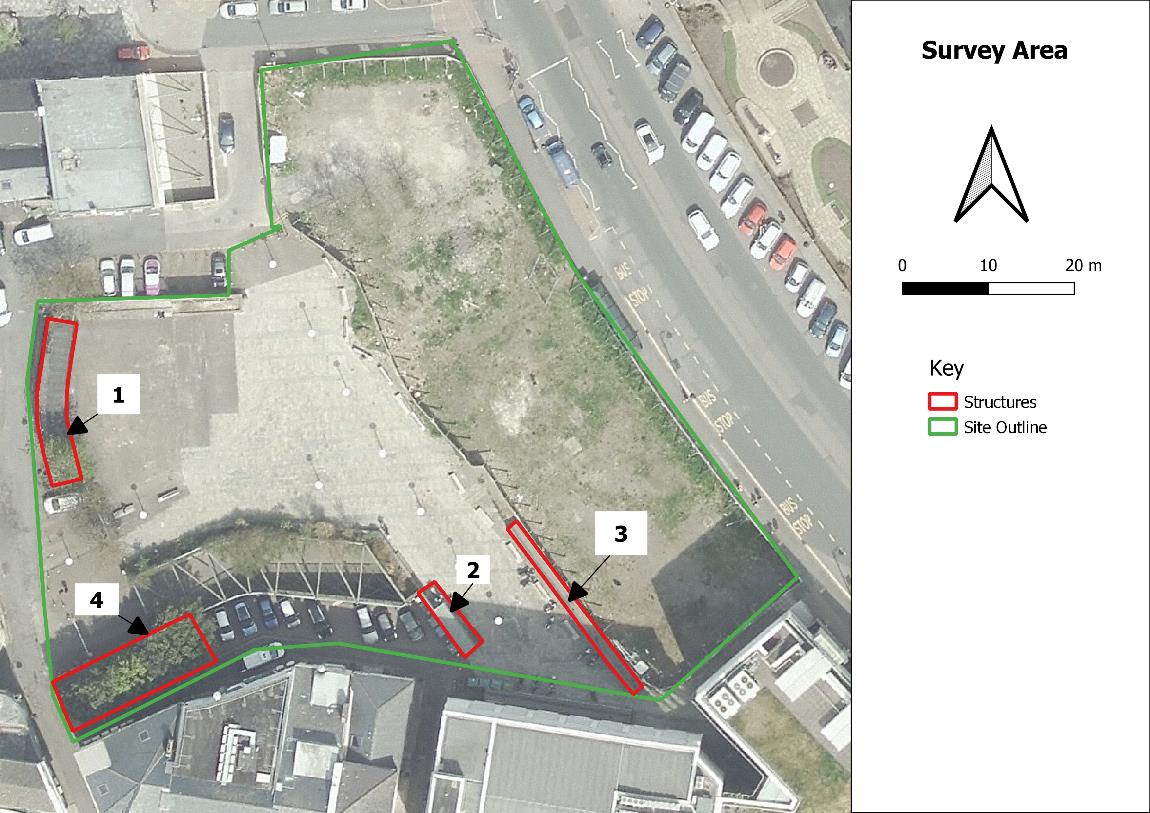
- 3.3 The site comprises of a 0.5 hectare parcel of land, located in the centre of the city of Douglas. It predominantly contains areas of concrete and exposed earth but holds some areas of low-cut vegetation. There are also 4 buildings/structures present on site.
Figure 1: Aerial photograph of the site and structures surveyed for birds and bats (© IOM Government aerial imagery 2018).
## 4.0 Results
Species
Ecology Vannin Villiers Square Technical Note 6
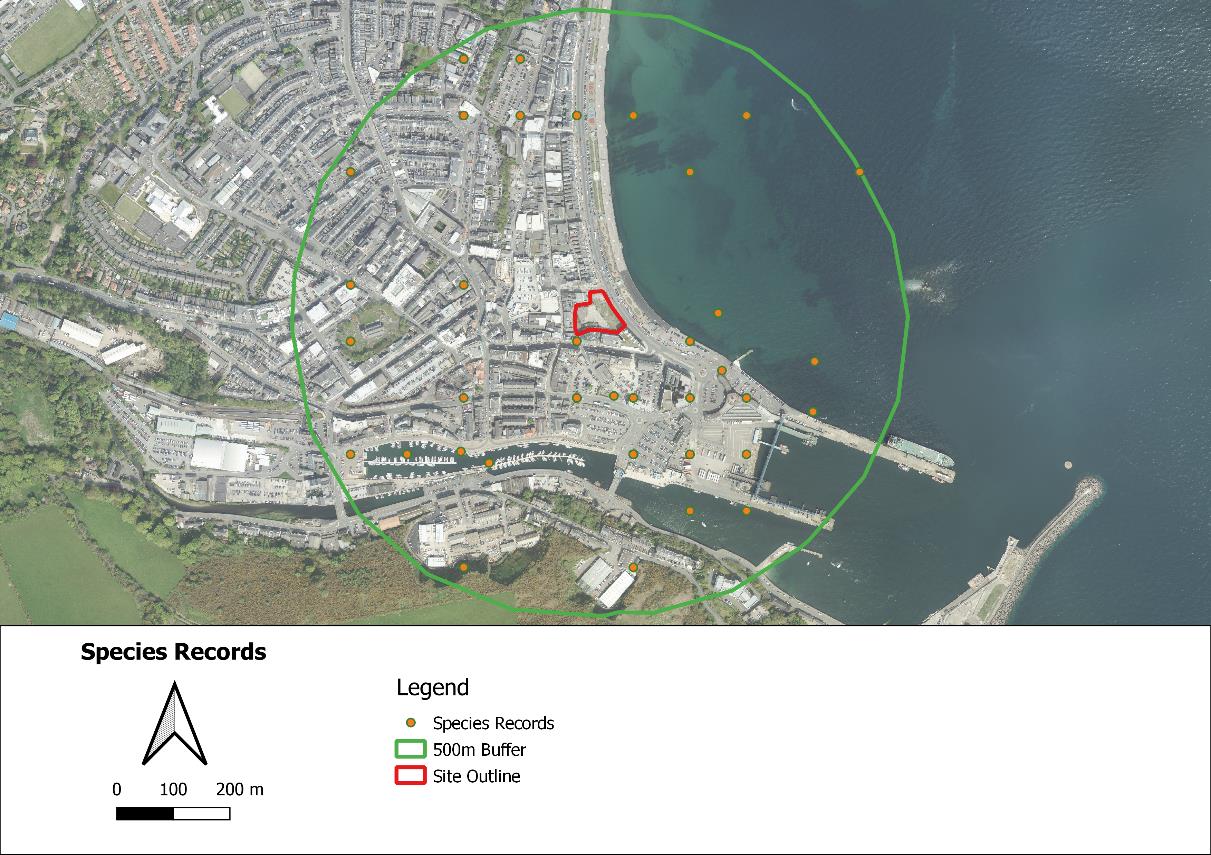
- 4.1 An interrogation of all MBRP species records from within 500m was undertaken. These totalled 136 records of which 10 are birds records and 1 is a bat. The distribution of all MBRP records within 500m is displayed in Figure 2 below.
Figure 2: Aerial photograph of site and all species records within 500m (© IOM Government aerial imagery 2018).
- 4.2 A single Leisler’s bat (Nyctalus leisleri) was recorded to the SE of the site, at a proximity of circa 250m.
- 4.3 Bird species Include species from the Isle of Man’s Birds of Conservation Concern (BoCC) Red List; Black Guillemot (Cepphus grille), Amber List; Grey Wagtail (Motacilla cinerea), Mute Swan (Cygnus olor) and Green List; Goldfinch (Carduelis carduelis), Pied Wagtail (Motacilla alba), Blackbird (Turdus merula), Chaffinch (Fringilla coelebs), Wren (Troglodytes troglodytes), Starling (Sturnus vulgaris). Roosting Bat Assessment
- 4.4 A single storey flat roofed bin storage building (building 1) is situated to the west of the site. It remains in a good condition with one of its wooden doors having been damaged recently by activity associated with an ongoing development occurring adjacent to the structure. There are two external potential roost features (PRFs) on the northern concrete wall that provide access to the inside of the building. The internal area is partitioned into four separate rooms of a similar layout. Electrical appliances can be found in the one room with the other rooms currently being used for storage. Wooden roof joists support the flat roof with a gap present between the roof and partitioning wall of each room. Scaffold supports run length way across each room. Internal temperatures were warmer than that of outside 19oC at the time of survey. Photograph 9 shows the inside of the inaccessible room that is described in the limitations.
Ecology Vannin Villiers Square Technical Note 7
## Ecology Vannin Villiers Square Technical Note 8
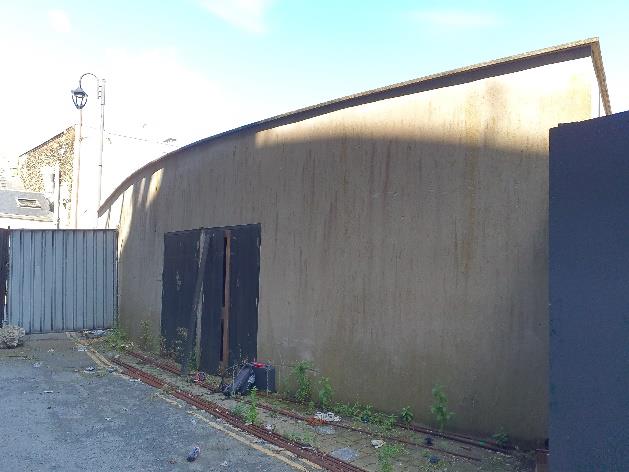
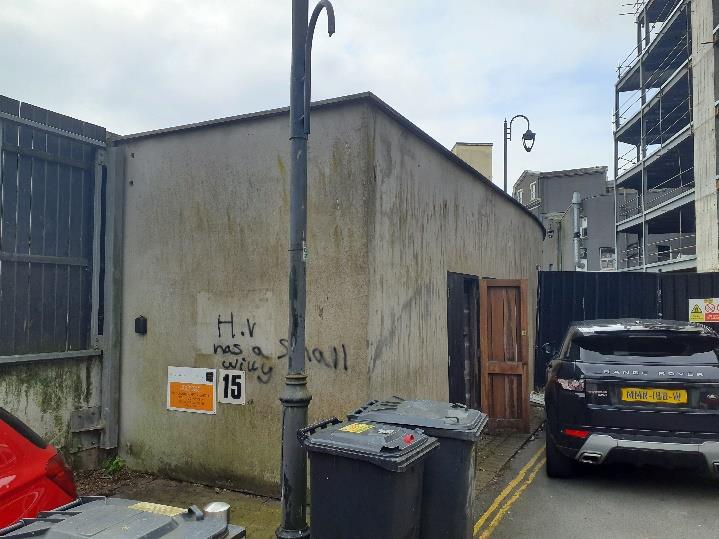
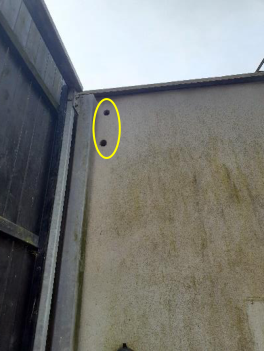
Photographs 1 – 9: Building 1 to the west of the site with PRFs highlighted.
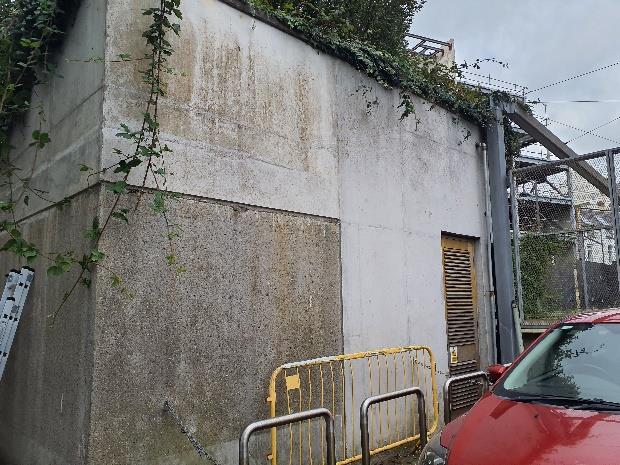
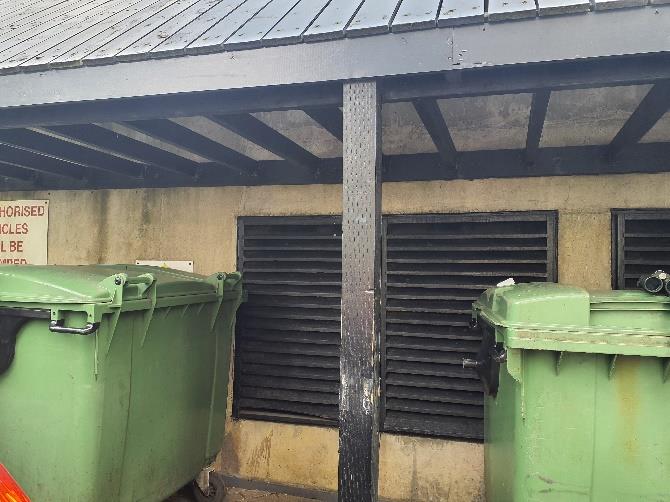
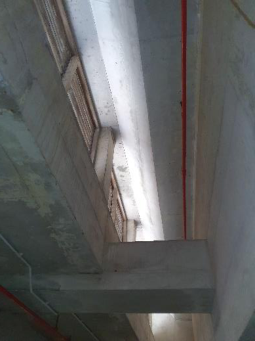
4.5 A single storey utilities building is situated to the southwest of the site (building 4 in figure 1). It is comprised of concrete walls and flat roof that has been colonised by vegetation, including Ivy (Hedera helix) and Buddleia (Buddleja davidii) and a few young trees. This building contains a number of PRFs on its walls in the form of cavities from inlets around 3.5m above ground level (photo 14). The matted thick Ivy on the roof may present a roosting opportunity under its overhang. This building also includes 5 wooden vented louvre doors. A concealing frame is formed by wooden planking and a metal border holds a space behind it and the wall which is a possible PRF (photo 2). The PRFs highlighted were inspected using an endoscope apart from the vents seen in photo 2 due to safety risks.
Ecology Vannin Villiers Square Technical Note 9
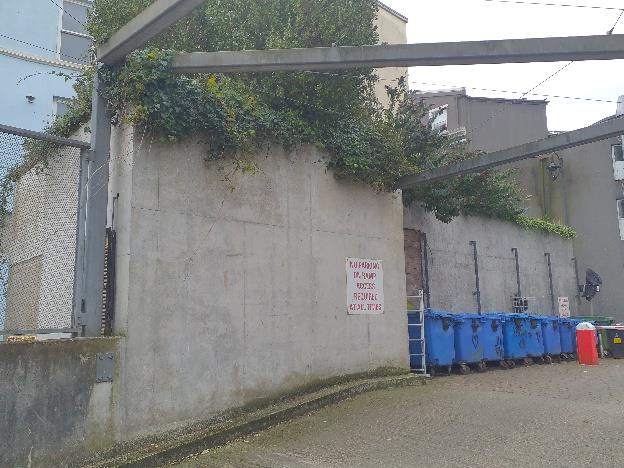
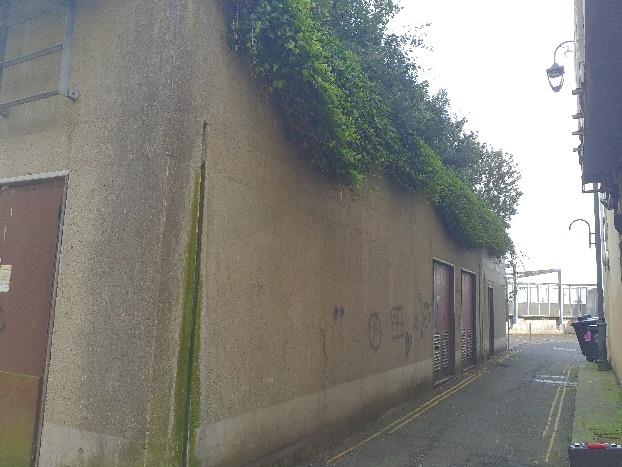
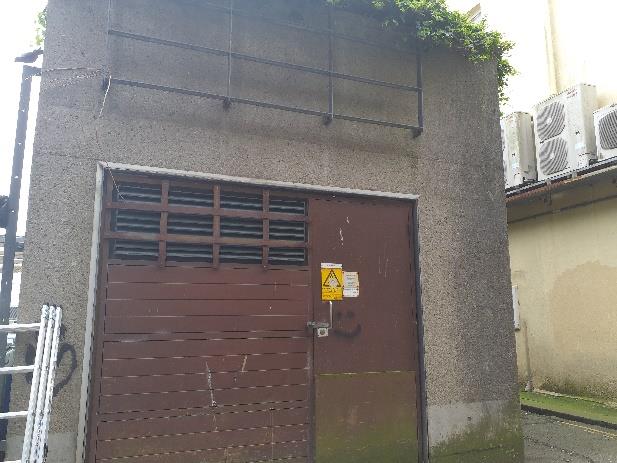
Photographs 10 - 15: Building 4, a utilities building with PRF’s highlighted by yellow circles.
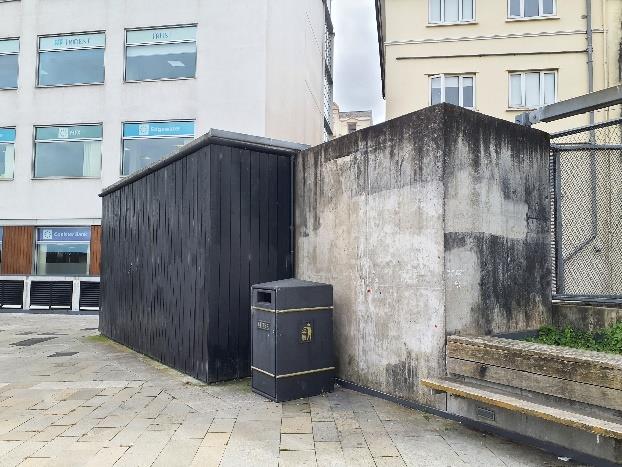
4.6 A single storey ventilation structure and a lean-to bin store sits to the South of the site (structure 2 in figure 1). A single inlet hole presents a PRF which was inspectable using the endoscope. Louvred vents allow for airflow from the underground car park seen in photo 19.
Photographs 16 - 19: Ventilation structure associated with the underground carpark, PRF highlighted by yellow circle.
Ecology Vannin Villiers Square Technical Note 10
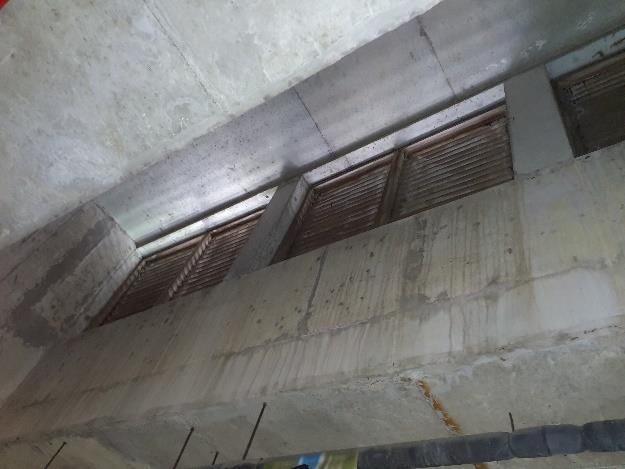
- 4.7 A structure containing louvred vents associated with the underground carpark runs along the fence line to the South of the site (building 3 in figure 1). The internal area behind the vents, opens up into the car park as seen in photo 21.
Photographs 20 & 21: The ventilation structure associated with the underground car park.
Breeding Bird Assessment
- 4.8 The wider site comprises of sealed concrete area to the west and gravel area to the east that is enclosed by a fence, these areas containing little suitable material for ground nesting birds. The 4 associated structures detailed in the roosting bat assessment are the only existing structures on site along with a metal frame over the underground carpark entrance. The roofs of these structures are flat which in the case of building 4 has allowed for a thick cover of shrubs and ivy to establish, providing a suitable nesting feature. There are two strips of low-cut shrubs in what was a hedge line, these were trimmed in spring 2024 following guidance from a Vegetation and Invasive Plant Species Clearance Technical Note (Ecology Vannin 2024). The cutting of these features along with two trees has likely removed suitable structure for nesting birds on site.
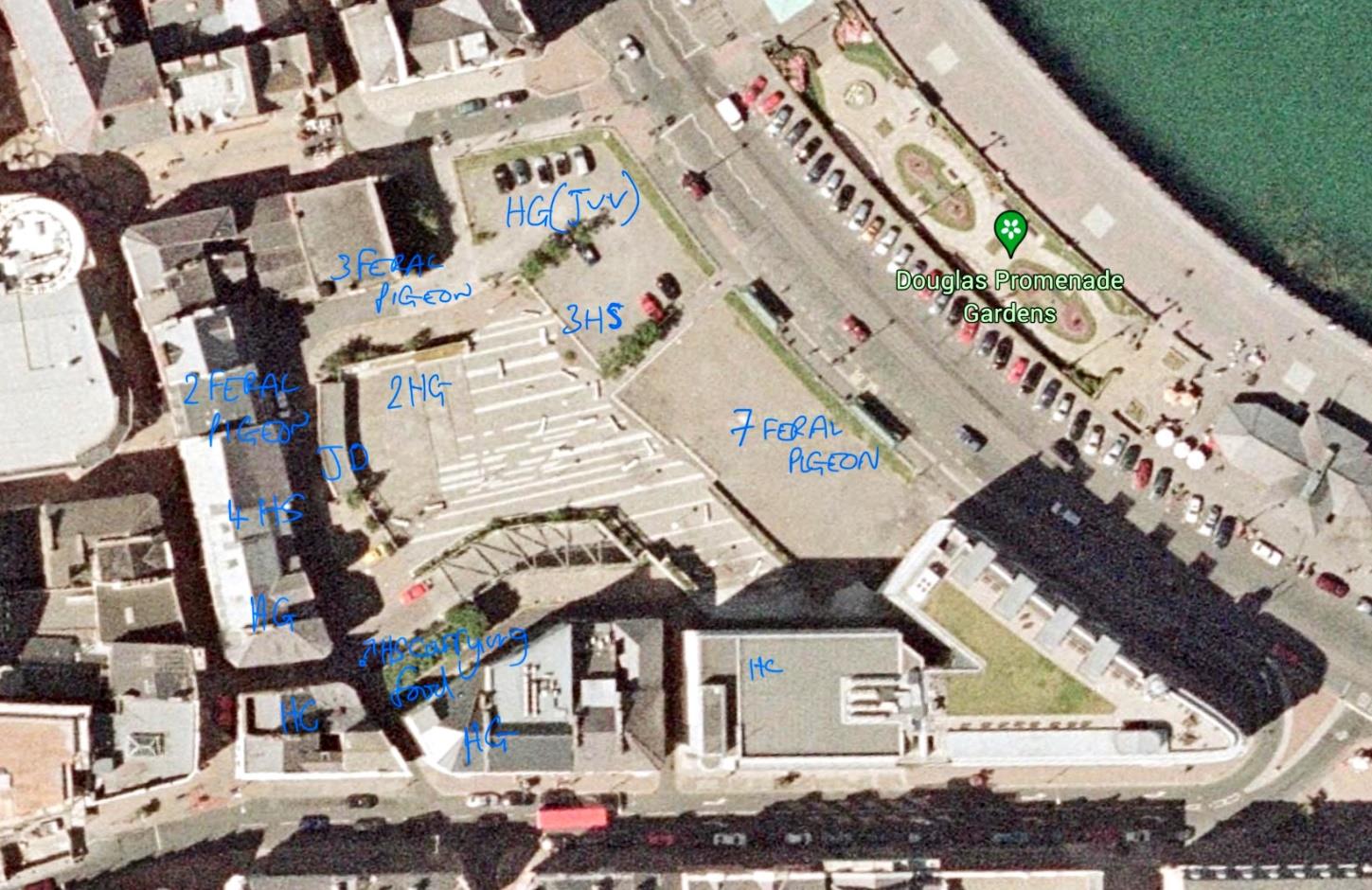
- 4.9 The birds observed on site during the assessment include Feral Pigeon (Columba livia), Herring Gull (Larus argentatus), House Sparrow (Passer domesticus) and Hooded Crowe (Corvus cornix). Observations of note include the presence of a Juvenile herring gull within the fenced gravel area to the east of site. This may be a bird in its first year, however, it is suspected that this individual flew into the fenced area and unlikely fledged from a nest on site. An adult male house sparrow was seen carrying food into the vegetation on top of building 4, indicating an active nest was present. All site observations and notations are included on a map in appendix I.
Ecology Vannin Villiers Square Technical Note 11
- 5.0 Discussion and Recommendations
- 5.1 The structures on site included a number of PRF’s that were able to be inspected using endoscope and torch. The inspection of these PRFs along with internal areas of structures due for demolition (structures 1,2 & 3) concluded that there was no evidence of roosting bats at the time of survey. Internal conditions (microclimate) may provide suitable conditions for roosting bats, however, this would require knowledge of temperatures throughout the year. A single identified access point also reduces the suitability for bats to access the internal areas. As highlighted in the limitation, the inside of the most southerly room was not accessible, however it was deemed as low suitability for roosting bats being the furthest point from any access point. The few cavity PRF’s identified are likely too exposed to provide the suitable shelter for crevice dwelling species such as Common Pipistrelle (Pipistrellus pipistrellus). Further, areas behind louvred vents on structures 2 & 3 provided little to no niches for a roosting bat, with the underground car park posing an unattractive space for roosting bats due to bright lighting and lack of roosting niches to use. Overall, the structures on site are deemed to be of low suitability to roosting bats. Moreover, the site is largely isolated from vegetated areas and not connected through a green corridor to any highly suitable foraging habitat.
Building 4 presented a few cavity PRF’s that were able to be inspected using an endoscope, this did not reveal any evidence of roosting bats within these niches. Louvered vents may present access inside the building however, it is not known how suitable internal areas are for roosting bats as these areas were not accessible at the time of survey. The hanging Ivy on the roof of the building may also offer roosting opportunities for crevice dwelling species.
- 5.2 As a result of the absence of roosting evidence in structures (1,2 & 3), it is recommended that the proposed demolition should take place as soon as possible following this survey. Building 4 is not included within the demolition plans and is of low/moderate potential for roosting bats, however, it is recommended that further advice should be sought by a suitably qualified ecologist if demolition is proposed in the future, or roof vegetation is to be managed.
- 5.3 The site is largely of low suitability to nesting birds, with nesting interest having been further being reduced after clearance of shrubs and trees on site in spring 2024. Structures 1,2 and 3 that are due for demolition offer few nesting opportunities. The behaviour displayed by the adult house sparrow on building 4 suggest an active nest at the time of survey. The exact location of the nest was not confirmed, however, house sparrow are known to nest among Ivy and other shrubs. The roof vegetation on building 4 presents nesting habitat for both house sparrow and other passerines. Any management of this vegetation in the future must be undertaken outside of the bird nesting season (March - August inclusive), if this is not possible nesting bird checks should be carried out by a suitably qualified ecologist prior to any management.
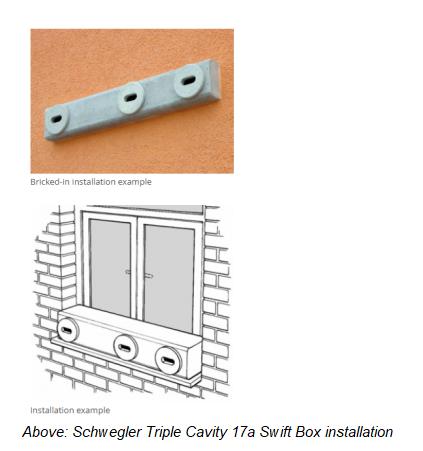
- 5.4 Recommendation within the draft BREEAM PEAR report (Ecology Vannin,2024) details the provision of 4 swift nest boxes (see appendix II) on the proposed development. These ‘universal swift bricks’ are known to be effectively used by other passerines such as house sparrow, therefore, this recommendation is further endorsed for incorporation onto the new development.
Ecology Vannin Villiers Square Technical Note 12
As a precaution, any rubble or building material left on the gravel area to the east of the site during the construction phase should be checked for nesting herring gull by site operatives during the nesting season (March-August inclusive). If a nesting bird is found on site during the construction phase, then work should stop within the immediate area and Ecology Vannin should be contacted on 07624 261233 for advice.
Ecology Vannin Villiers Square Technical Note 13
## Appendix I: Breeding Bird Survey Notes a Map of the Site
Ecology Vannin Villiers Square Technical Note 14
## Appendix II: Recommended Swift Nest Box Provision
Ecology Vannin Villiers Square Technical Note 15
---
*Data sourced from the Isle of Man public planning register under the [Isle of Man Open Government Licence](https://www.gov.im/about-this-site/open-government-licence/).*
*Canonical page: https://planningportal.im/a/33080-braddan-villiers-square/documents/1578029*