**Document:** Braaid Road Technical Note
**Application:** 23/10103/AIR — Information in relation to conditions 3 & 4 for PA 22/01148/B for a precautionary working method statement for breeding birds and common lizard and a landscape plan.
**Decision:** Permitted
**Decision Date:** 2023-09-19
**Parish:** Marown
**Document Type:** report / ecology_report
**Source:** https://planningportal.im/a/27304-marown-fields-321756-321755/documents/1327610
---
# Braaid Road Technical Note
Braaid Road Technical Note
August 2023
## Control sheet
|Ecology Vannin: 7-8 Market Place, Peel, Isle of Man.|Ecology Vannin: 7-8 Market Place, Peel, Isle of Man.|
|---|---|
|Job number:|EV 23_43|
|Title:|Braaid Road – Technical Note|
|Client:|Ian Kelly|
|Prepared by:|Sarah Hickey - Ecologist|
|Verified by:|Adam Denard – Senior Ecologist|
|Date of Issue:|August 2023|
|Version:|2|
|Revisions:|1|
|Status:|FINAL|
|This report is prepared by Ecology Vannin Consultancy Services for the sole and exclusive use of Ian Kelly and their contractors in response to their particular instructions. No liability is accepted for any costs, claims or losses arising from the use of this report or any part thereof for any purpose other than that for which it was specifically prepared or by any party other than Ian Kelly. Any biological records for wildlife found in survey will eventually be submitted to Manx Biological Recording Partnership.
Ecology Vannin Consultancy Services is the trading name for Wildlife Limited, Reg Company No: 077379C. Wildlife Limited is a wholly owned subsidiary of Manx Wildlife Trust (MWT), Reg Company No: 005297C.This report does not prevent MWT pursuing its charitable objectives in relation to planning. This report has been prepared by an environmental specialist and does not purport to provide legal advice. You may wish to take separate legal advice. The information which we have prepared and provided is true and has been prepared and provided in accordance with the BS42020 2013 and Chartered Institute of Ecology and Environmental Management’s Code of Professional Conduct and guidelines for preliminary ecological appraisals (CIEEM 2017). We confirm that the opinions expressed are our true and professional bona fide opinions.
Signed (Author) Signed (QA)
|
|---|
## Contents
- 1.0 Introduction ................................................................................................................ 4
- 2.0 Policy and Law........................................................................................................... 5
- 3.0 Discharge of Planning Conditions............................................................................... 6
- Appendix I: Proposed Work................................................................................................... 8
- Appendix II: Planned Hedgerows.......................................................................................... 9
## Biographies
Sarah Hickey BSc (Hons) MRes, ACIEEM is an ecologist with several years’ experience in baseline ecological survey and assessment and specialist protected species surveys for bats, Common Lizard and Common Frog. Sarah holds a master’s degree in Research in the Natural Environment from the University of Edinburgh and has contributed to the Independent Climate Action Report for the IOM Government (Appendix 10 (a) Peatlands).
Adam Denard BSc (Hons) has been a professional ecologist for over 10 years, with particular emphasis on recording and assessing habitats in England and the Isle of Man for their potential to support protected species. Adam regularly produces professional ecological reports within the Isle of Man planning system for ecological appraisals, impact assessments, mitigation plans and specialist protected species surveys.
- 1.0 Introduction
- 1.1 Ecology Vannin was commissioned by Ian Kelly to produce a Precautionary Working Method Statement (PWMS) for Common Lizard and breeding birds and produce a landscaping plan for the proposed work. This is in relation to planning conditions 3 and 4 for an approved planning application (22/01148B) to widen an existing vehicle entrance and associated works.
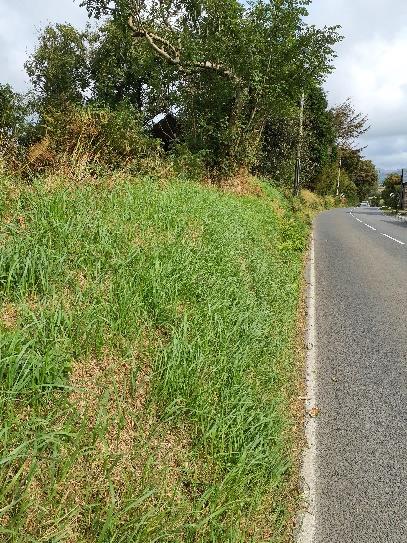
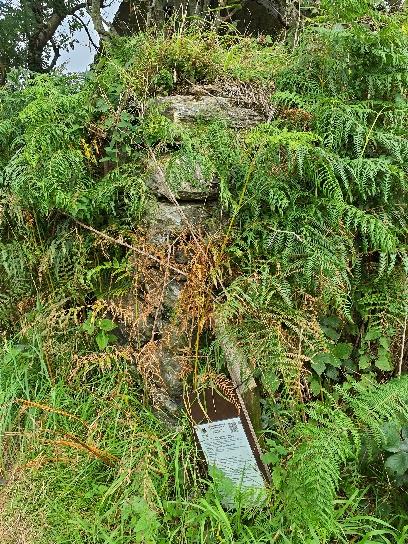
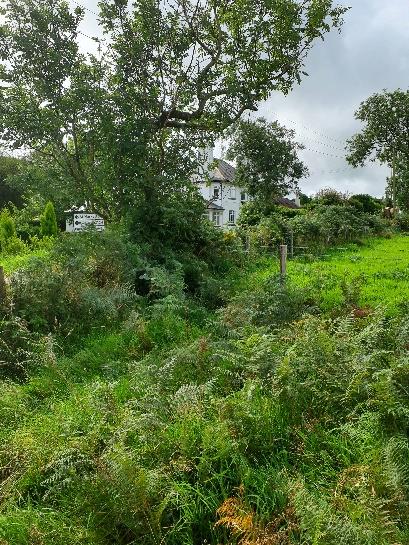
- 1.2 The existing vehicle entrance is flanked by a traditional Manx hedgebank approximately 1.5m high. The hedgebank has exposed stone either side of the entrance and is covered with vegetation, which is grass-dominated at the roadside and bracken-dominated at the field side. Scattered Ash trees are growing on top of the hedgebank, some of which have been felled due to ash-dieback. None of the remaining trees had potential roost features for bats. The field adjacent to the hedgebank is a modified grassland field with a sward height of approximately 20cm.
Photographs 1 – 3: Roadside hedgebank (left), exposed stone gateway (centre) and fieldside hedgebank (right).
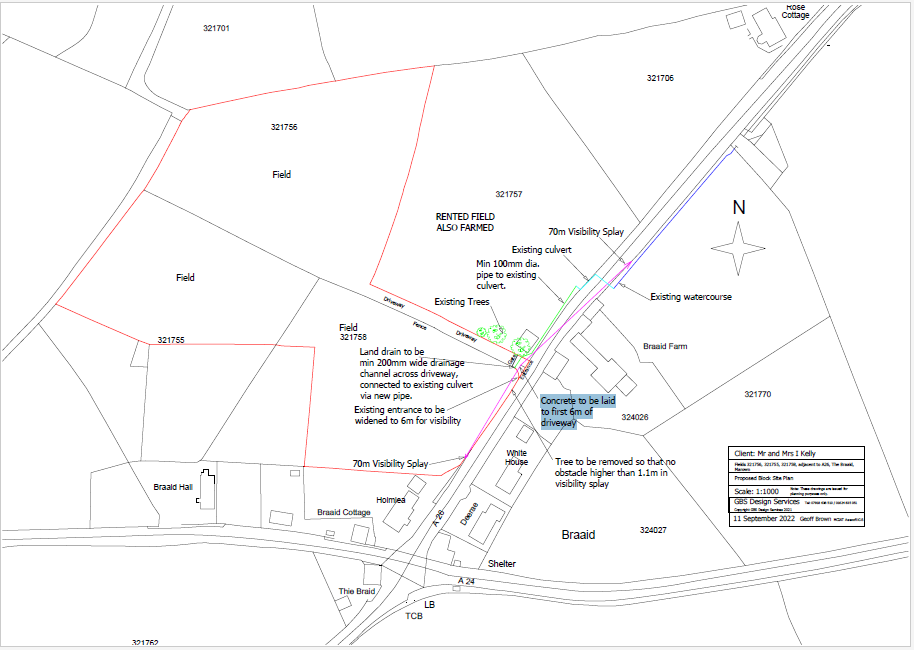
- 1.3 The planning application involves the removal of a section of hedgebank to widen the entrance to 6m and the lowering of approximately 60m of hedgebank (see Appendix I for details). This report aims to give guidance to minimise the risk of offences under the Isle of Man Wildlife Act 1990 (as amended) and potentially enhance the area for biodiversity.
- 2.0 Policy and Law Wildlife legislation
- 2.1 The Isle of Man Wildlife Act 1990 (as amended) is the main piece of wildlife legislation that enables the designation of statutory protected sites (Marine Nature Reserves (MNRs), Areas of Special Scientific Interest (ASSIs), National Nature Reserves (NNRs) and Areas of Special Protection (ASPs), the protection of listed fauna and flora and the control of invasive species. Bats, Common lizard, Common frog
- 2.2 Common Lizard (Zootoca vivipara) is protected under Schedule 5 of the Isle of Man Wildlife Act 1990 (as amended).
- 2.3 As such, a person is deemed to have committed an offence if he or she:
“damages or destroys, or obstructs access to, any structure or place which any wild animal included in Schedule 5 uses for shelter or protection; or disturbs any such animal while it is occupying a structure or place which it uses for that purpose”.
Birds
- 2.4 All wild birds are afforded protection under the Isle of Man Wildlife Act 1990 (as amended). An offence is deemed to have been committed if:
“any person intentionally or recklessly — (a) kills, injures or takes any wild bird; (b) takes, damages or destroys the nest of any wild bird while that nest is in use or being built; or (c) takes or destroys an egg of any wild bird”.
- 2.5 In addition, species listed on Schedule 1 of the act makes it an offence to:
“intentionally or recklessly — (a) disturbs any wild bird included in Schedule 1 while it is building a nest or is in, on or near a nest containing eggs or young; or (b) disturbs any nest or egg of such a bird; or (c) disturbs dependent young of such a bird”.
### Schedule 8 invasive alien plants
- 2.7 Certain plant species are listed on Schedule 8 of the Wildlife Act due to the threat of invasive spread into native habitats. It is an offence:
“if any person plants or otherwise causes to grow in the wild any plant which is included in Part II of Schedule 8”
Planning Policy
- 2.8 The Isle of Man Strategic Plan has been prepared in accordance with Section 2 of, and Schedule 1 to, the Town and Country Planning Act 1999. Of particular relevance to ecological impact considerations and planning are contained within Environment Policies. Key policies relating to species, habitats and protected areas are provided in Appendix V.
- 3.0 Discharge of Planning Conditions Condition 3
‘Prior to the commencement of the development hereby approved, a Precautionary Working Method Statement for breeding birds and common lizards, written by a suitably qualified ecologist, shall be submitted to Planning and approved in writing by the Department. The development shall only be carried out in accordance with the details as approved, and shall thereafter retained as such.’
Precautionary Working Method Statement for Birds
- 3.1 Trees and scrub along the hedgebank should be retained where possible for their value to nesting and foraging birds.
- 3.2 The removal of any trees and scrub will be undertaken outside of the bird nesting season (March to August inclusive for species likely to use the site).
• If this is not possible, checks for nesting birds will be make by an ecologist prior to any work being undertaken. Checks must be done no more than five days prior to clearance.
- 3.3 If any nesting birds, or anything suspected of being nesting birds, are observed during work, work must stop immediately, and advice sought from Ecology Vannin
(844432) or DEFA (651577).
• Signs of nesting include presence of agitated adults calling, a suspected active nest, nest with eggs, sounds of chicks calling, adult carrying nest material or food for young.
Precautionary Working Method Statement for Lizards
- 3.4 Prior to the removal of hedgebanks, vegetation on and in the immediate vicinity of the hedgebanks will be cut to a minimum height of 10cm.
- • This will be done by starting the cutting at the existing entrance and moving slowly outwards, to allow any lizards to move to suitable adjacent habitat.
- • Cutting will be done during the active season for lizards (March to October inclusive) on warm days (at least 12oC).
- • The hedgebank will then be left for 24 – 48 hours to allow lizards to move to suitable adjacent habitat.
- 3.5 The removal or lowering of hedgebanks will be done carefully during the active season for Common Lizards (March to October inclusive) during warm days (12oC or greater), to avoid harm to hibernating lizards and allow individuals to relocate.
- • Hedgebanks will be removed slowly, from the existing entrance outwards, with the operative checking for lizards.
- • If it is not possible to remove hedgebanks during the active season, guidance from an ecologist will be sought and work may need to be supervised.
Condition 4 ‘No development shall commence on site until a landscaping plan has been submitted to and approved in writing by the Department. The landscaping plan shall contain contains details of any planting to be undertaken on top of the lowered bank.’ Landscape plan for the hedgebank area
- 3.6 Landscaping within the site will aim to improve the value of the site for biodiversity by using native woody species of value to wildlife. No invasive non-native plant listed on Schedule 8 of the Wildlife Act will be used.
- 3.7 Turves removed from the existing hedgebanks will be replaced on top of the lowered hedgebank. This will not give full coverage, so a seed mix rich in wildflowers will also be used, such as those provided by Naturescape (seed mix – click hyperlink).
- 3.8 Behind the hedgebank, a hedgerow of Manx native tree species will be planted in compensation for the removal of Ash trees (which were felled due to ash-dieback) from the hedgebank.
- • This hedgerow will be comprised predominantly of Hazel (Corylus avellana), with scattered Holly (Ilex aquifolium).
- • Trees will be bare root and planted 60cm apart.
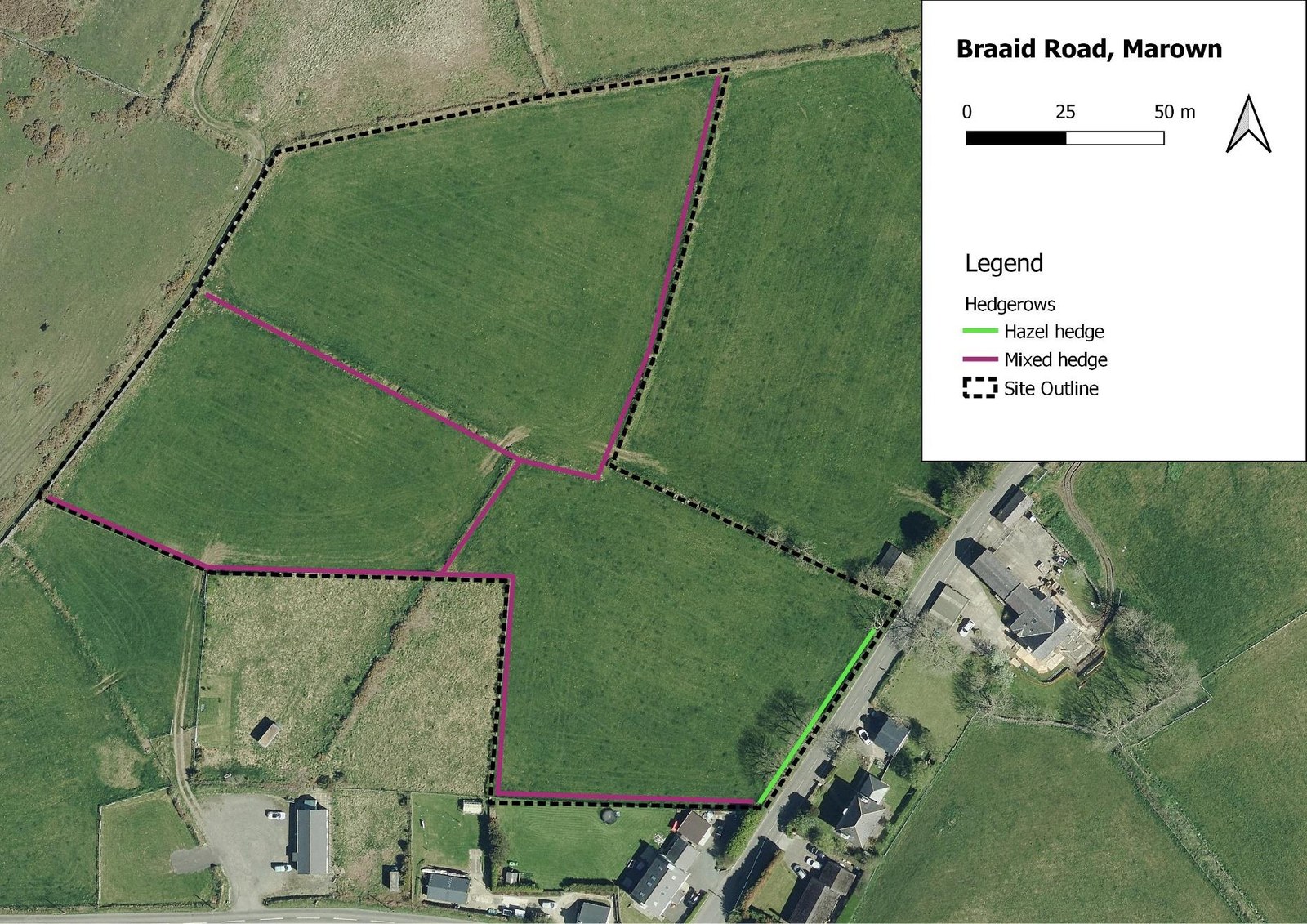
- 3.9 Other species-rich native hedgerows are planned within the wider site (refer to Appendix II). These will follow the lines of existing earth banks, most of which are in poor condition and a covered with scattered European Gorse (Ulex europeaus). New hedgerows will include Hazel, Holly, Hawthorn (Crataegus monogyna), Blackthorn (Prunus spinosa), Crab Apple (Malus sylvestris) and Elder (Sambucus nigra).
- 3.10 The traditional stone wall along the northern and western boundary will not be planted with trees due to the rocky ground and the potential value of the adjacent land for Common Lizard (trees may reduce the suitability of the habitat through shading). Instead, a buffer of at least 2m of grassland will be retained alongside the wall to benefit lizards and invertebrates. This will be cut on a three-year rotational basis, with one third being cut each year.
- 3.11 Scattered trees are also planned within the site. These will include species such as Oak, Rowan and Birch.
- 3.12 All trees will be protected from rabbits using biodegradable plant guards and canes. Once the trees have become established, this will be removed.
- 3.13 All trees will be planted at a suitable time of year (November to February inclusive). A mulch will be used to reduce weeds in the vicinity of the trees. Any failed trees will be replaced. A periodic and rotational cutting regime will be adopted for structural diversity (avoiding the bird nesting season).
## Appendix I: Proposed Work
## Appendix II: Planned Hedgerows
---
*Data sourced from the Isle of Man public planning register under the [Isle of Man Open Government Licence](https://www.gov.im/about-this-site/open-government-licence/).*
*Canonical page: https://planningportal.im/a/27304-marown-fields-321756-321755/documents/1327610*